Using Art to Make a Narrow Hallway Feel Wider
A narrow hallway can feel like a forgotten passage between rooms, but the right artwork turns it into a deliberate part of the home. Colour, scale, spacing, and lighting all influence how wide the corridor appears, while a carefully edited display gives the eye somewhere to pause.
The aim is not to fill every available inch. A successful hallway gallery creates rhythm without visual congestion, guiding attention along the length of the space and making the walls feel considered rather than closed in.
With a few strategic choices, framed prints, paintings, photographs, and mirrors can add depth to even the most compact entrance hall. The best arrangement will reflect the architecture, preserve a comfortable walkway, and connect naturally with the rooms beyond.
Start With The Hallway’s Sightlines
Before choosing art, stand at both ends of the hallway and observe what is visible from each doorway. Artwork placed along the central sightline can draw attention forward, making the corridor feel longer. A strong piece at the far end can also create a destination and prevent the space from reading as a blank tunnel.
Keep the floor and door openings visually clear. Large furniture, deep shelves, or heavily layered wall decor can make a narrow passage feel tighter. If storage is necessary, choose shallow cabinetry with smooth fronts and use the wall above it for a restrained display.
The height of the artwork matters too. Hanging pieces around eye level creates an easy viewing line and helps the corridor feel balanced. In homes with high ceilings, a slightly taller arrangement can emphasise vertical space without overwhelming the walkway.
Choose Scale That Creates Breathing Room
A single oversized artwork can make a hallway feel wider by giving one wall a confident focal point. Choose a piece that leaves visible margins around it rather than extending almost from doorframe to doorframe. The surrounding wall acts as negative space, allowing the artwork to feel intentional and giving the corridor room to breathe.
For a longer hallway, a horizontal print or a sequence of similarly sized frames can reinforce the length of the space. The arrangement should have enough gaps between pieces to remain legible at a glance. Tight clusters often create a busy band that makes both walls seem closer together.
A slim vertical work is useful near the end of a passage or beside a doorway. Its shape can echo the proportions of the architecture while adding height. Avoid filling every wall with tall pieces, however, as repeated vertical lines may make the corridor feel more enclosed.
Build A Gallery With A Clear Rhythm
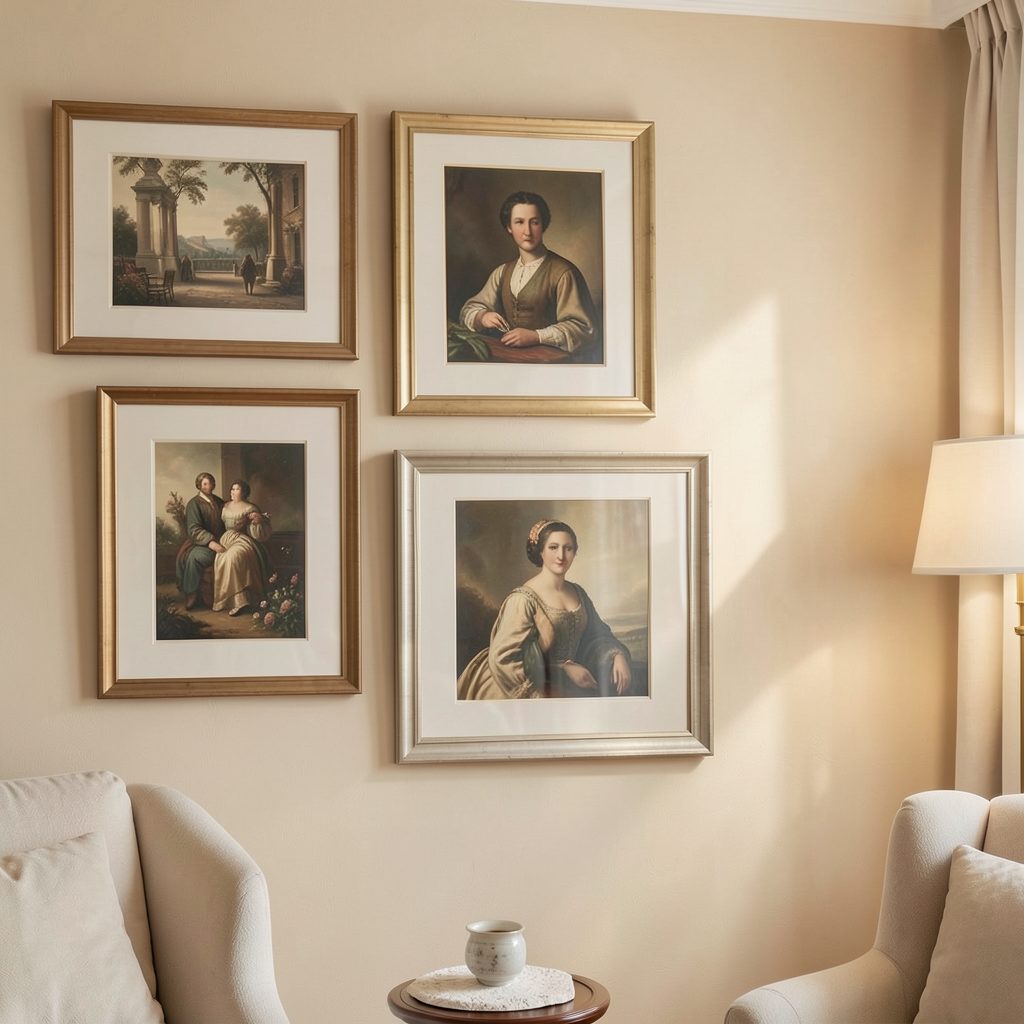
A gallery wall works best when it has an organising principle. You might repeat one frame finish, limit the artwork to two or three colours, or use a consistent border around each print. These small connections create continuity, allowing a collection to feel expansive rather than scattered.
If you are starting from scratch, this guide to starting an art gallery can help you think through curation, positioning, and the relationship between individual works. Even a small hallway display benefits from choosing pieces as a group instead of collecting random images over time.
For a linear arrangement, align the centres or lower edges of the frames and maintain steady spacing. For a salon-style layout, begin with the largest work and build outward, keeping the outside edges relatively contained. Trace the proposed arrangement on paper or use removable templates before making holes in the wall.
Use Colour And Frames To Open The Space
Light wall colours can make a corridor feel more airy, but white is not the only option. Soft greige, pale blue, warm stone, and muted sage can add depth while preserving brightness. When the artwork includes similar tones, the display blends gently into the wall instead of forming a heavy visual block.
Frame choice also affects perceived width. Slim profiles in pale wood, brushed metal, or a wall-matching colour tend to recede. Dark frames can look elegant, especially in a contemporary home, but too many thick black borders may create strong vertical interruptions along both sides of the hallway.
For a collected look without visual noise, learn how to mix frame styles while keeping one element consistent, such as finish, proportion, or mat colour. A gallery with subtle variation often feels more spacious than a rigidly identical set because the eye moves naturally across it.
Add Depth With Mirrors And Lighting
Mirrors are especially effective in narrow corridors because they reflect light and suggest another layer of space. A tall, slim mirror at the end of the hallway can extend the sightline, while a horizontal mirror can visually stretch a short wall. Position reflections carefully so they capture a window, pendant, or attractive artwork rather than clutter.
Artwork needs adequate illumination to contribute to the atmosphere. Picture lights, adjustable wall sconces, or discreet ceiling spots can wash the walls evenly and reduce dark corners. Warm-white bulbs usually flatter paintings and photographs, while a consistent colour temperature keeps the corridor visually calm.
Avoid placing bright lights directly behind the viewer if they create glare on glazed frames. Museum-style low-glare glass is worth considering for works displayed opposite windows or under strong fixtures. The goal is a clear view and an even pool of light, not a dramatic spotlight on every individual frame.
Match The Display To The Wall
Different hallway widths call for different approaches. Use the proportions of the wall, the amount of natural light, and the surrounding interior style to decide whether a single statement piece or a coordinated sequence will work best.
| Hallway Condition | Artwork Approach | Helpful Detail |
|---|---|---|
| Long and narrow | Repeated medium-sized works | Keep spacing even to guide the eye |
| Short with a blank end wall | One horizontal or oversized piece | Create a clear destination |
| Dark with limited daylight | Pale artwork and reflective accents | Add warm, balanced lighting |
| High ceiling | Tall artwork or a vertical pair | Preserve generous side margins |
| Busy with several doors | Small, consistent frames | Align the display along one visual line |
A corridor with many doorways usually benefits from simplicity. Rather than placing art between every opening, select the longest uninterrupted wall and treat it as the main gallery surface. This gives the eye a stable plane and stops the display from competing with the architecture.
If the hallway opens directly into a living room or bedroom, borrow a colour or material from that space. Repeating a timber tone, textile shade, or accent colour creates a visual bridge. The hallway will then feel like part of the home’s design language instead of a separate decorating project.
Keep The Arrangement Light And Livable
The most attractive display is one that remains practical. Frames should be securely fixed, especially in busy family homes, and their depth should not interfere with coats, bags, or passing shoulders. Leave enough clearance around switches, handles, and corners to keep everyday movement comfortable.
Edit the artwork periodically. A narrow hallway can benefit from seasonal changes, but rotating a few pieces is more effective than adding continually. Store unused works safely and bring them back when the arrangement needs a fresh focal point.
Use these principles when planning the display:
- Select one dominant visual idea, such as repeated colour, shape, or frame finish.
- Leave visible wall space around each work so the arrangement can breathe.
- Keep the centre line close to eye level and align frames with the architecture.
- Use mirrors or pale surfaces where the corridor lacks natural light.
- Test the layout with paper templates before hanging the final pieces.
A narrow hallway does not need a large collection to feel expressive. One well-positioned painting, a disciplined row of photographs, or a modest gallery wall can alter the perceived width while adding personality to an overlooked space.
Choose the wall with the clearest sightline, make a simple paper plan, and begin with the artwork you most want to see every day. With thoughtful spacing, supportive lighting, and frames that sit comfortably within the room, your hallway can become a bright visual passage that leads naturally into the rest of your home.