How artwork softens the hard edges of modern furniture
A growing share of Australians live in apartments, with Sydney and Melbourne leading the country's densest inner-city populations. Sofas float a few centimetres above the floor, dining tables expose slim metal or timber legs, and modular shelving turns walls into clean horizontal bands. The visual language is undeniably contemporary, but it can feel rigid when every surface repeats the same straight edges. Art offers one of the few ways to introduce movement, warmth and a different tempo into these rooms without sacrificing the modern feel.
Australians tend to balance clean design with an equally strong pull toward tactile, sun-bleached textures. Walls often want a single focal moment — something that pulls the eye away from the geometry of a marble coffee table or a flat-fronted entertainment unit. A well-chosen canvas, a wide linen-framed print or a hand-thrown ceramic displayed on a console can do exactly that, giving the room a softer landing point. It works as a quiet counterweight to engineered stone tops and powder-coated steel chairs.
This piece looks at how the right artwork — its frame, scale and placement — can ease the visual tension of contemporary furniture. It also touches on local considerations, from apartment body corporate rules to sourcing work from Australian artists and galleries. The aim is practical: spaces that still feel current, but less severe.
Why modern furniture reads as cold without visual breaks
Furniture built around sharp angles and uninterrupted flat panels tends to dominate a room through silhouette alone. A low-line sofa, a square ottoman and a handle-less media console all speak a similar design dialect. Without something organic or curved nearby, the eye finds no rest, and small spaces feel even smaller because nothing softens the perimeter. Designers sometimes describe this as a hardscape effect — a room with too many materials acting like walls rather than surfaces.
In Australian apartments, where rooms frequently double as both living and work zones, the problem is amplified. A dining table, a sofa, a hallway — every piece carries a heavier load. Art running vertically up a wall, or a horizontal canvas above a long sideboard, breaks up the rigid grid of modern casegoods. A single oversized round mirror can interrupt the dominant right angles, especially when it reflects light from a north-facing window.
Choosing artwork that counters rigid lines
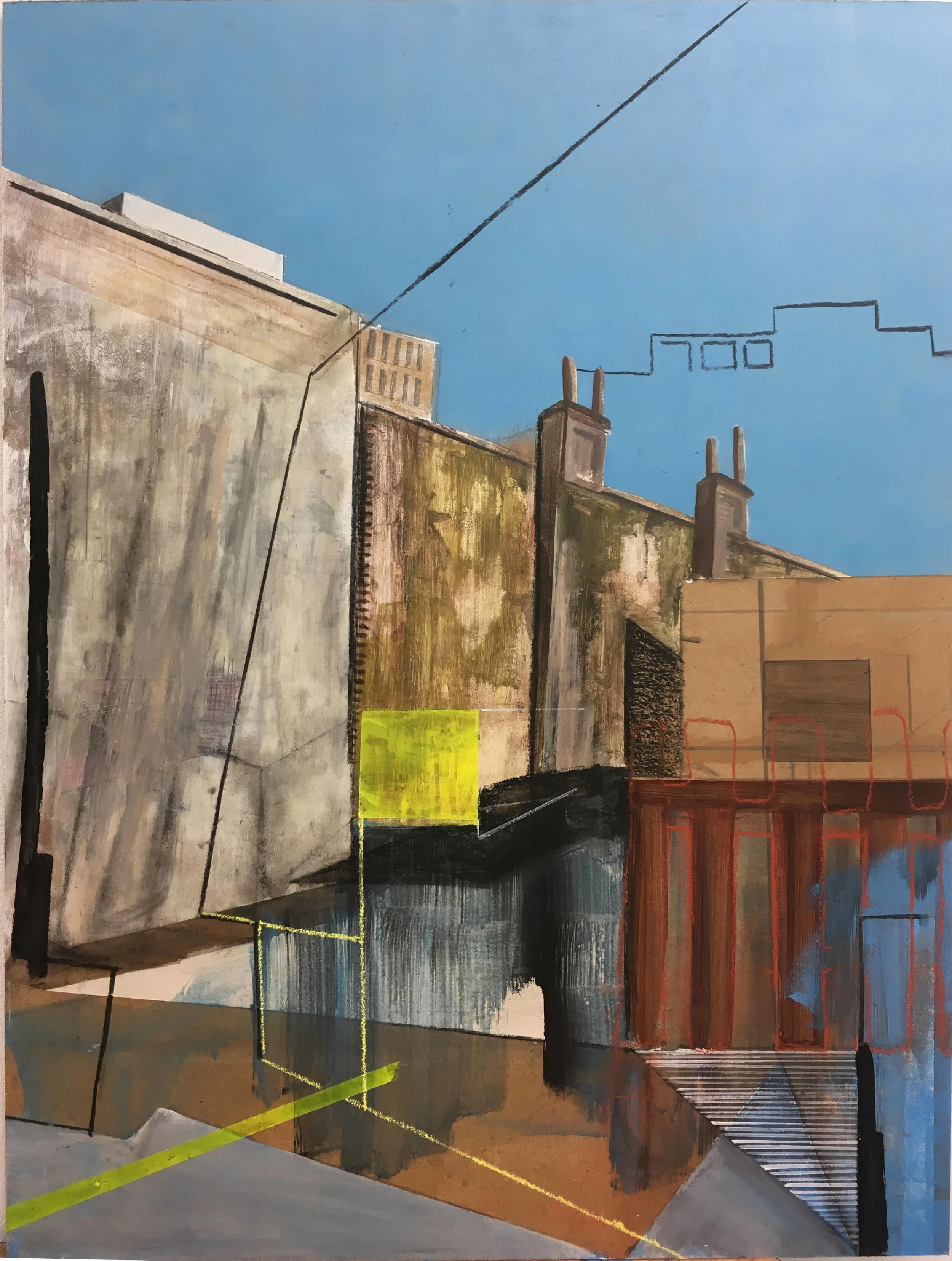
The trick is contrast rather than match. A piece full of flowing brushstrokes, blurred horizons or oversized botanicals will do more against a blocky sofa than another geometric print. Many Australian decorators pair loose, painterly works — think Euan Macleod's expressive landscapes, or gestural abstracts found in Melbourne's studio trails — with the kind of engineered furniture popular in inner-city showrooms. The contrast tells the body that the room is layered rather than uniform.
Subject matter matters. Photographs of water, soft cloud formations or close-up botanicals diffuse visual weight naturally. Textile pieces do the same — embroidered wall hangings from makers such as those at Adelaide's JamFactory catch morning light from a Brisbane balcony or a Perth courtyard differently than a flat print. Where the palette is monochrome (think deep charcoal, off-white and aged brass), warm ochres, sage or terracotta in a painting pull the room away from showroom stiffness. When the décor itself feels industrial, ideas around introducing texture into a room become useful companions to the artwork itself.
Scale, frame and placement that balance the room
Modern furniture is often low, which makes the wall above it disproportionately important. A useful guide for Australian apartments is to hang art roughly 15 to 20 centimetres above the tallest point of a sofa or sideboard — closer than older colonial-era guidelines suggested. A canvas that almost reaches the ceiling underlines the room's height and lets the eye travel upward, breaking the horizontal pull of modern cabinetry.
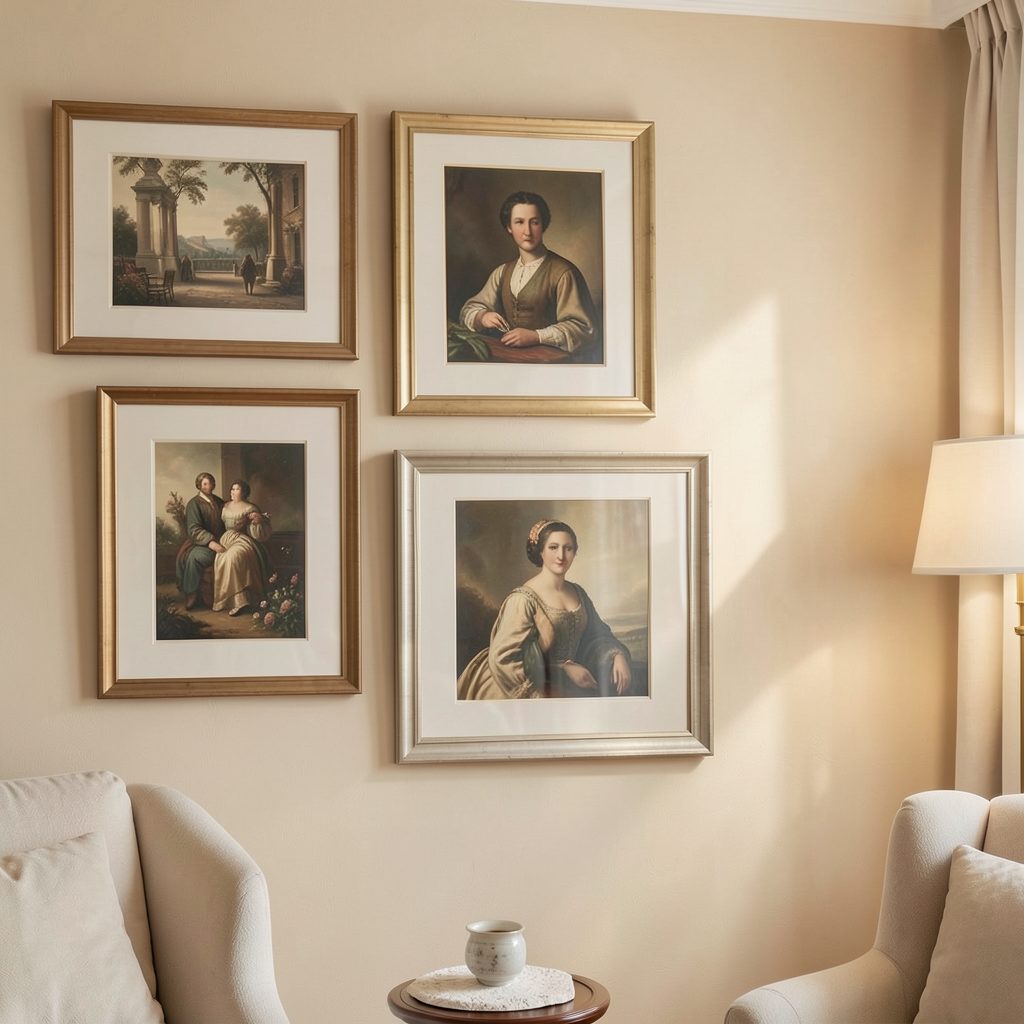
Frames are another quiet softening tool. Slim oak, raw maple or weathered white-washed timber frames shift artwork from contemporary showroom into something warmer. Wide box frames create shadow gaps that catch light, while a deep tray frame projects forward, almost like a soft ledge in the room. Skip glossy black or chrome unless they echo a deliberate hardware finish such as a lamp or tap — even then, mix with at least one warmer piece so the artwork never competes with the joinery.
Local sourcing and apartment-friendly approaches
Buying locally has practical benefits for apartment dwellers. Many Australian galleries deliver flat-packed or pre-stretched works that fit inside small lifts, an underrated concern in older Sydney and Melbourne buildings with narrow service lifts. Galleries such as Sydney's Olsen Gallery and Melbourne's Anna Schwartz Gallery stock works suited to smaller footprints. Sydney Contemporary, the annual art fair, also makes it easier to view pieces in person before committing, which helps when planning around body corporate approval timelines.
Body corporate rules in NSW and Victorian apartment complexes often restrict what can be hung on common walls and exterior render. Lightweight stretched canvases on internal plasterboard usually pose no issue, while heavier framed glass may require approval. Checking strata by-laws before drilling saves disputes. Renters can lean on removable strips rated to the canvas weight — a habit common in share houses around Fitzroy, Newtown and Fortitude Valley. Bedrooms benefit from a gentler approach, and the principles in this bedroom styling approach translate well to softening harder edges around a bed frame or built-in robe.
Recommendations for an art-led softening scheme
- Choose canvases or textiles with visible brushwork, folds or stitched depth rather than flat vector-style prints.
- Match the canvas width to roughly two-thirds of the furniture piece beneath it, so the artwork relates without crowding.
- Sit a round or organically shaped sculpture on a rectangular console to introduce a counter-curve.
- Hang larger works 15 to 20 centimetres above low furniture to lift the eye and balance the room's vertical scale.
- Rotate one or two pieces seasonally — coastal scenes in summer, warmer ochre abstracts in winter — to keep the room feeling lived-in.
- Check strata and rental rules before drilling, and keep removable hanging strips on hand.
- Source from Australian makers where possible, from Sydney Contemporary listings to regional artist-run studios.
Softening modern furniture does not mean abandoning the clean-lined look that suits so many Australian apartments. A single considered canvas, hung with care and framed in warm timber, can shift how a room breathes, letting sunlight move across the wall instead of bouncing off harsh edges. For more ideas on layering materials in compact interiors, explore the Focus LDN journal or subscribe to the email briefings for practical decorating advice delivered weekly.