Using art to accent the architecture of a bay window
A bay window already gives a room a strong focal point, with angled walls, changing daylight and a view that shifts throughout the day. Artwork can sharpen those architectural lines, soften them with colour or create a layered vignette that feels considered rather than crowded.
The best approach treats the window as part of the display. Instead of hanging pictures wherever there is spare wall space, choose pieces, frames and furniture that respond to the bay’s shape. This creates a gallery-style corner that feels integrated with the room, whether you live in a Melbourne terrace, a Sydney apartment or a Queenslander in Brisbane.
Read the shape and light first
Stand back and identify the bay window’s main geometry. A three-sided bay might suit a central artwork above a low bench, while a curved bay can benefit from a sequence of smaller works that follows the arc. Keep the sightline through the glass open, particularly if the window looks onto a garden, laneway or leafy street.
Australian light deserves special attention. A north-facing window can receive strong sun in winter, while western exposure often brings harsh afternoon glare and heat. Even UV-filtering glass cannot remove every risk, so avoid placing irreplaceable works directly in full sun. A framed print, photograph or reproduction on archival paper is usually a more practical choice.
Before buying anything, observe the area from breakfast through the arvo. Notice where reflections fall, how the colours change and whether the window becomes a heat pocket. This simple check will guide your choice of medium, glazing and hanging position.
Choose artwork that echoes the architecture
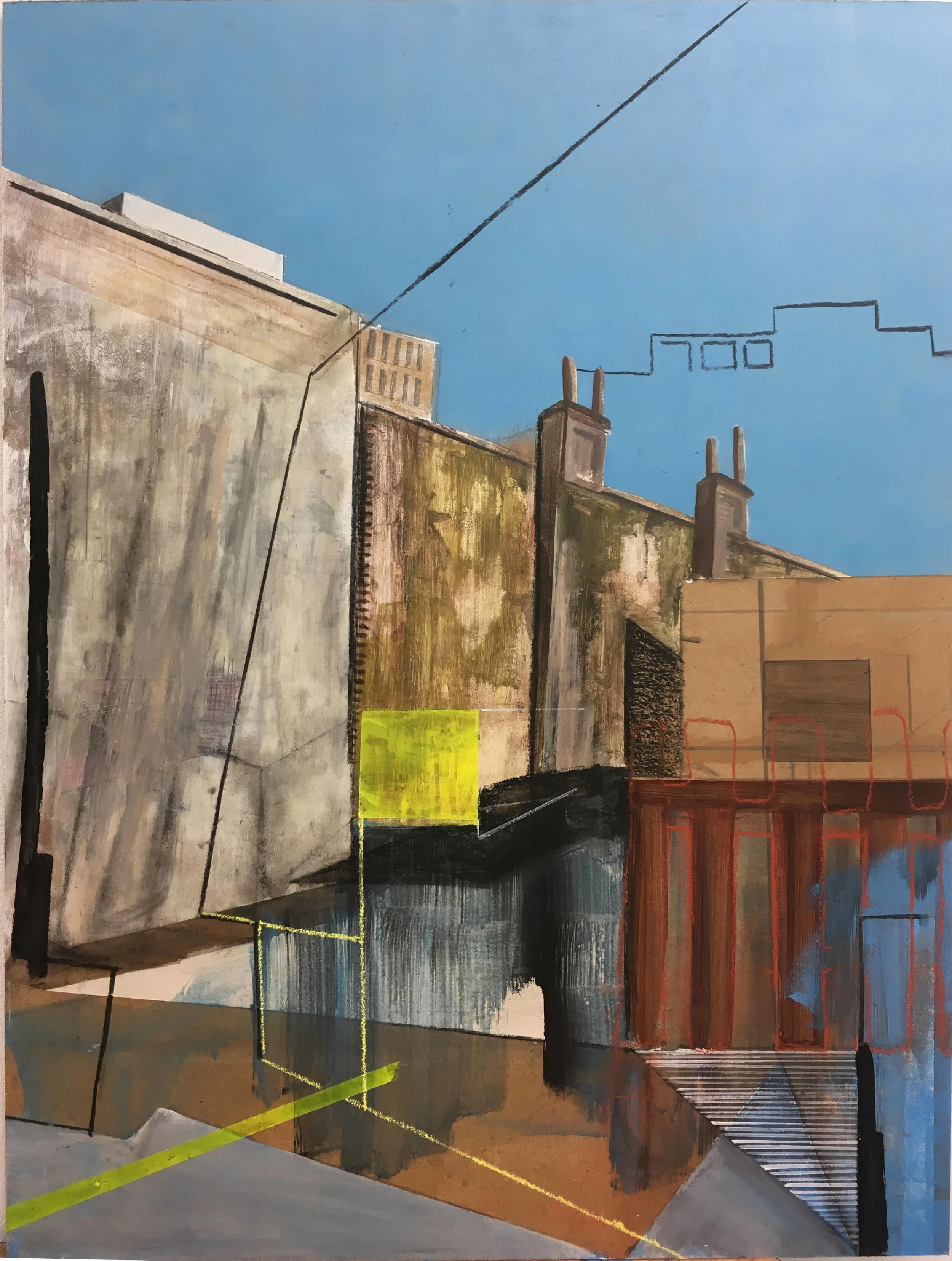
Use the bay’s angles as a quiet design cue. Geometric prints, architectural photography and abstract works with strong lines can reinforce the structure. If the room already has hard surfaces, contrast them with botanical studies, soft watercolours or expressive paintings that bring movement to the recess.
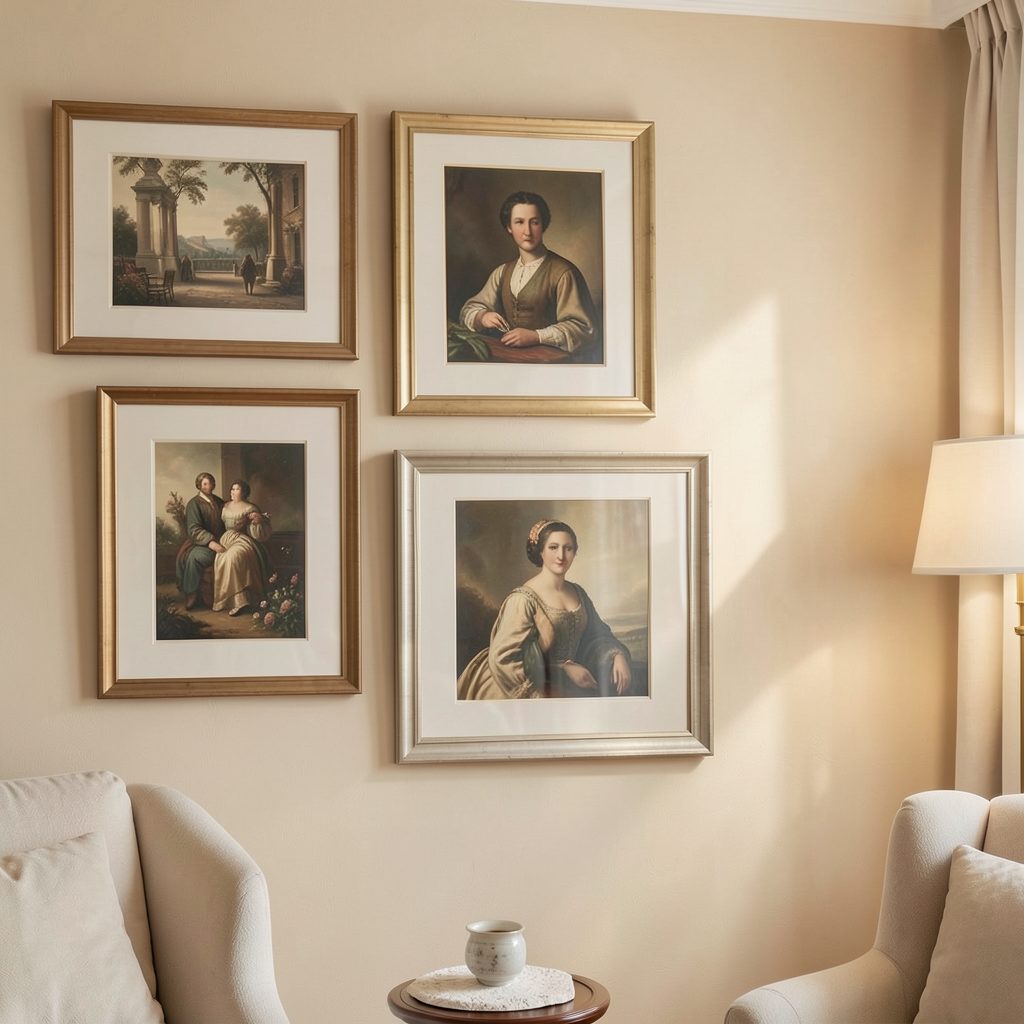
A single large piece can anchor the entire window zone, especially above a built-in seat or narrow console. For a more collected look, arrange three to five small works in a vertical rhythm on one side of the bay. The asymmetry keeps the display relaxed while allowing the architecture to remain visible.
Colour should connect the artwork to the wider room rather than match the window furnishings exactly. Pull a muted green from nearby foliage, a warm ochre from timber flooring or a blue-grey from the Australian sky. For a restrained gallery wall, this layered art approach can help you combine varied pieces without losing visual calm.
Build a frame scheme with restraint
Frames define how artwork relates to the window’s trim. White-painted timber works well with coastal interiors and pale walls, while black frames give a slim bay a sharper, more contemporary edge. Natural oak or walnut can warm up a space with polished concrete, limestone or cool white joinery.
Choose one dominant frame finish and one supporting finish. For example, use mostly oak frames with a few white mounts, or black frames with a single brass detail. Repeating the same frame at different sizes creates cohesion without making every piece look identical.
Pay attention to mounting depth and glazing. A deep frame can project into a narrow passage, and ordinary glass may create distracting reflections beside bright windows. Ask a local framer about low-reflective glazing and UV protection, especially if the room receives intense Sydney sun or the artwork has sentimental value.
Arrange the display around daily living
A bay window often becomes a reading nook, plant corner or informal seat, so art should work with how the space is used. Hang the lowest frame high enough to avoid shoulders and cushions, and leave clearance for curtains, shutters and opening casements. If the bay is beside a dining table, keep corners and projections away from the main traffic path.
A narrow picture ledge can be an effective solution for renters or anyone who likes to refresh their display. Lean two or three framed works against the wall, then add a small ceramic vessel or sculptural object. Use museum putty or discreet mounting strips where appropriate, especially in homes exposed to vibration, children or enthusiastic pets.
In a compact apartment, avoid filling every angled wall. One confident arrangement often looks more luxurious than a busy collection. The negative space around the artwork gives the window room to breathe and keeps the view as part of the composition.
Create a practical gallery-style corner
The area beneath the window can complete the display. A slim bench, upholstered stool or low cabinet gives the artwork a visual base without competing with it. In a Melbourne heritage home, a timber bench can echo original skirting boards; in a newer Perth apartment, a simple upholstered form may add softness to a more angular interior.
Keep plants selective. A trailing plant can bridge the transition between art and glass, but large leaves may obscure smaller pieces or cast changing shadows. Choose species suited to the actual light levels, and rotate them if the window becomes too hot. Terracotta, woven baskets and pale stone can introduce texture without overwhelming a minimalist scheme.
A bay window is also a natural place to experiment with a small, personal collection. If you are developing a broader display, the gallery-building guide offers useful direction on selecting works and thinking about a collection as a whole rather than as unrelated purchases.
Quick checks before you hang
Use these practical tests to refine the arrangement:
- View the display from the room entrance and from the seat beneath the window.
- Mark frame positions with removable painter’s tape before drilling.
- Check glare at different times, especially around midday and late afternoon.
- Leave space for curtains, shutters and window handles.
For a polished Australian home, keep these material choices in mind:
- Use UV-protective glazing for works exposed to strong daylight.
- Select moisture-resistant finishes in humid coastal areas.
- Prefer washable, durable frames in busy family rooms.
- Support local framers for custom sizes and unusual bay shapes.
The aim is a display that feels connected to the architecture, not pasted onto it. Let the window’s proportions determine the scale, let daylight influence the materials and allow the artwork to add personality without blocking the view. With a thoughtful frame scheme and a little breathing room, even a small bay can become the most memorable corner of the home.
Choose one wall, gather a few pieces that genuinely appeal to you and test the arrangement in natural light before committing. Subscribe to Focus LDN for more practical ideas on gallery walls, artwork display and stylish everyday interiors.