Museum glass or standard glass for framed art
The glazing inside a frame can change how artwork looks almost as much as the frame itself. Standard glass is familiar, affordable and easy to source, while museum glass is designed to reduce reflections and protect the image from damaging ultraviolet light. The difference becomes especially noticeable when a framed piece hangs near a window, lamp or busy room.
Choosing between them involves more than deciding how much to spend. The artwork’s value, the room’s lighting, the type of frame and the desired visual effect all matter. A simple print in a dim hallway may be perfectly suited to regular glazing, while a delicate original deserves a more considered form of protection.
For gallery walls and minimalist interiors, the right glazing can make artwork appear brighter, clearer and more integrated with the room. It can also prevent the distracting glare that makes framed pieces difficult to enjoy from certain angles.
What standard glass offers
Standard picture-frame glass is usually ordinary float glass with a smooth, transparent surface. It provides a rigid barrier against dust, fingerprints and accidental contact, and it is widely available in common frame sizes. Its low price makes it practical when decorating several walls at once or framing inexpensive posters and prints.
Its main weakness is reflection. In a bright room, standard glass can mirror windows, ceiling lights and furniture, obscuring the artwork beneath it. The surface may also create a slight green tint around the edges, particularly in thicker panes or when viewed against pale backgrounds.
Standard glazing offers limited ultraviolet protection unless it has been specially treated. Over time, exposure to UV rays can contribute to fading in paper, pigments, photographs and textiles. That does not mean every print will deteriorate quickly, but valuable or sentimental work benefits from stronger conservation measures.
Why museum glass looks different
Museum glass, sometimes called conservation or anti-reflective glass depending on its specification, uses specialised coatings to reduce visible reflections. Instead of seeing a bright glare across the pane, viewers can see more of the artwork’s colour, texture and fine detail. The effect is particularly powerful with dark paintings, subtle pencil work and works displayed opposite a window.
High-quality museum glazing also filters a significant amount of ultraviolet light. This slows the fading and yellowing associated with prolonged light exposure, helping preserve both the artwork and its paper mount. UV filtering does not make a frame invulnerable, however; direct sunlight should still be avoided where possible.
The best products combine low reflectance with high light transmission. Cheaper anti-glare options may soften the image or produce a hazy surface, while premium museum glass can appear almost invisible. Ask a framer for the precise UV rating, reflectance level and optical clarity rather than relying on the word “museum” alone.
How the two options compare
The visual difference is easiest to judge in the room where the art will hang. A sample held under a picture light or near a window reveals how much reflection each glazing type creates. Viewing the sample at an angle is useful because glare often appears only from particular positions.
| Feature | Standard glass | Museum glass |
|---|---|---|
| Reflection control | High reflection | Very low reflection |
| UV protection | Limited unless treated | Usually high, depending on specification |
| Colour and detail | Clear but may show glare or a green edge | Brighter, more legible and optically neutral |
| Cost | Budget-friendly | Considerably more expensive |
| Best suited to | Posters, casual prints and low-light rooms | Originals, photographs and valuable artwork |
| Handling | Rigid but can break | Rigid and still breakable; requires careful fitting |
The comparison is not a choice between good and bad materials. Standard glass can be entirely sensible for a rotating collection, a rental property or a gallery wall filled with affordable reproductions. Museum glass becomes worthwhile when uninterrupted viewing and long-term preservation are central priorities.
Consider the artwork and the room
Artwork on paper is especially vulnerable to light, so watercolours, limited-edition prints, archival photographs and drawings often justify conservation glazing. Oil and acrylic paintings may be less sensitive to UV through their paint layers, although their canvases, varnishes and surrounding materials can still age under strong light.
Room conditions should guide the decision too. A bathroom, kitchen or humid space calls for careful framing and ventilation, regardless of the glazing choice. In a bedroom with soft, indirect lighting, standard glass may perform well. In a bright sitting room, museum glass can prevent reflections from competing with the artwork.
The frame depth matters as well. A professional framer can create a small gap between the glazing and the artwork, helping prevent condensation or the glass sticking to the surface. This is particularly important for textured artwork, photographs and pieces mounted with conservation materials.
Cost, safety and practical framing choices
Museum glass can cost several times more than standard glazing, with the final price affected by size, thickness, coatings and the frame itself. For one important statement piece, that premium may be easy to justify. For a large salon wall, a mixed approach can be more realistic: reserve premium glazing for original or highly light-sensitive works and use standard glass elsewhere.
Glass is heavy and breakable, so larger frames need secure hanging hardware and strong wall fixings. Acrylic glazing is a separate alternative worth considering for oversized work, children’s rooms or high-traffic areas. It is lighter and safer if shattered, though it can scratch more easily and may attract static.
Anti-reflective acrylic can offer useful optical performance, but it should be cleaned according to the manufacturer’s instructions. Abrasive cloths and household sprays can damage specialist coatings. With either glass type, use a soft, lint-free cloth and keep cleaning fluid away from the frame joints.
A practical selection guide
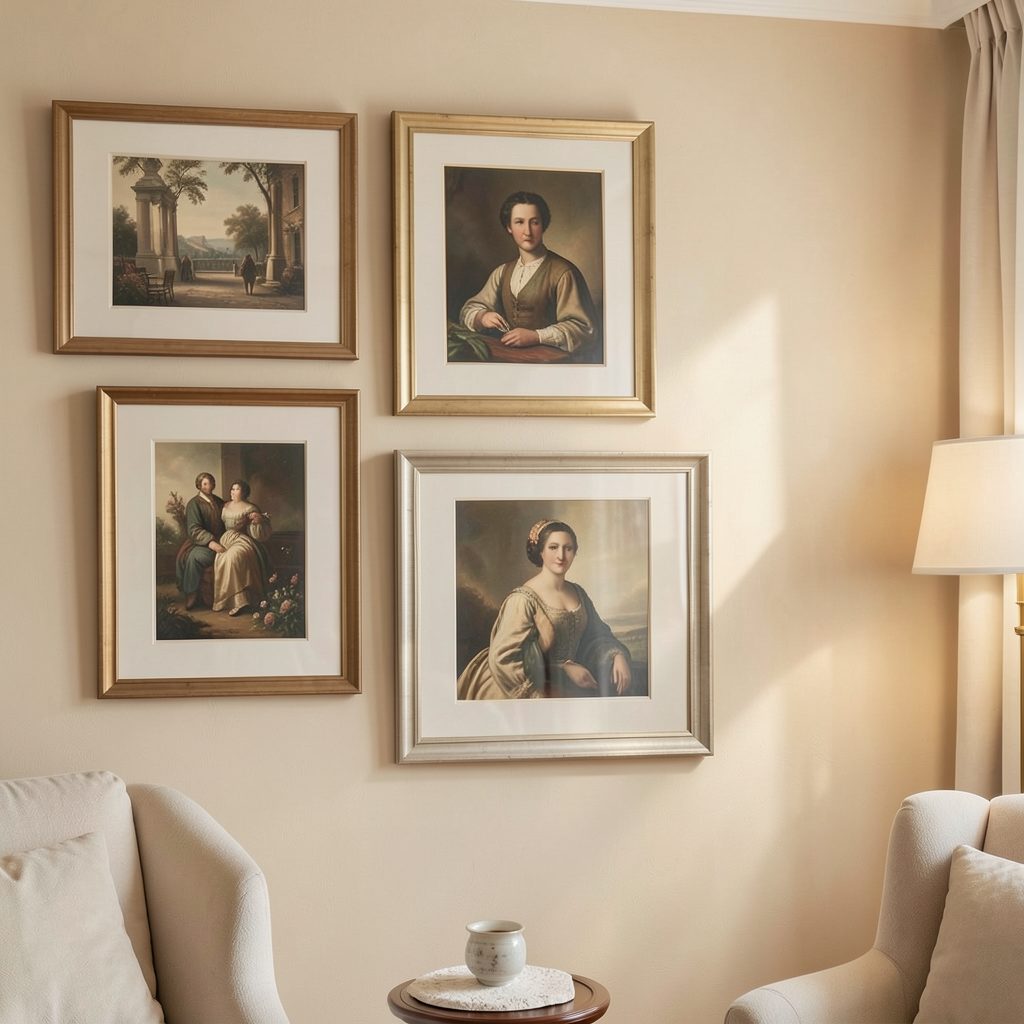
When planning a gallery wall, glazing should support the artwork rather than dominate the budget. The principles explored in this single statement piece guide also apply to clustered arrangements: give the most important work the clearest viewing experience and let surrounding pieces support it.
Use these recommendations when ordering a frame:
- Choose standard glass for inexpensive posters, temporary displays and rooms with subdued, indirect light.
- Select museum glass for originals, photographs, watercolours, heirlooms and artwork exposed to strong daylight.
- Request a UV protection rating and reflectance specification instead of accepting vague conservation claims.
- Test glazing samples in the intended room, viewing them from the main seating and walking positions.
- Consider anti-reflective acrylic for large, low-hanging or high-traffic frames where weight and breakage are concerns.
A cohesive interior does not require every frame to use identical glazing. Matching frame finishes and spacing can create unity, while different glazing specifications quietly protect each piece according to its needs. This approach works well for the calm, considered rooms featured by Focus LDN, where display decisions are practical as well as decorative.
Before committing to a large order, ask the framer to show both materials over a comparable print. The sample will reveal the real difference in glare, colour and sharpness more accurately than a catalogue description. Choose the glazing that keeps the artwork visible, protected and properly suited to its setting.