How to Hang Art Exhibition Posters Without Damaging Them
An exhibition poster can be a small piece of cultural history: a bold graphic from a gallery opening, a beautifully printed artist announcement, or a souvenir from a memorable show. The right hanging method keeps the paper flat, visible and easy to remove when your collection changes.
The best way to hang posters from art exhibitions is to avoid permanent adhesive and unnecessary pressure. A combination of archival backing, removable fixings and sensible placement will protect the print while giving your home the polished feel of a private gallery.
Choose A Damage-Free Hanging Method
For lightweight posters, removable poster strips or low-tack mounting corners are usually safer than ordinary sticky tape. Apply adhesive to the wall or to a protective backing sheet rather than directly to the printed paper. Always test the product on an inconspicuous section of plain paper first, since some adhesives can pull fibres from delicate stock.
Magnetic poster hangers are another practical option. They grip the top and bottom edges without piercing the print, and the poster can be changed without replacing the hardware. Look for smooth, lightly finished timber or slim metal rails that suit the artwork rather than competing with it.
Prepare The Poster And Wall
Before mounting anything, let a rolled poster rest flat under clean, light weights for a day or two. Do not use an iron, hairdryer or direct heat to remove waves. A sheet of acid-free tissue between the print and the weights helps prevent scuffing, especially when the ink has a matte or textured finish.
Clean the wall with a dry cloth and check for dust, flaking paint or moisture. In a rental apartment in Sydney or Melbourne, removable hooks can help preserve the bond, but they still need to be applied to a sound surface. Keep the packaging and removal instructions so you can take the display down without risking a paint chip or losing part of your bond.
Use Frames For Long-Term Display
If the poster has sentimental or financial value, framing is the most reliable protection. Choose acid-free backing and a mount or spacer that keeps the paper away from the glazing. Standard Australian sizes such as A3, A2 and A1 are widely available, making it easier to find a ready-made frame through local retailers or custom framers.
Acrylic glazing is lighter and less likely to shatter than glass, which can be useful above a desk, bed or narrow hallway. For a refined gallery appearance, select a frame with a neutral timber, black or white profile. The frame should support the exhibition artwork without making the room feel visually crowded.
Create A Secure Gallery Arrangement
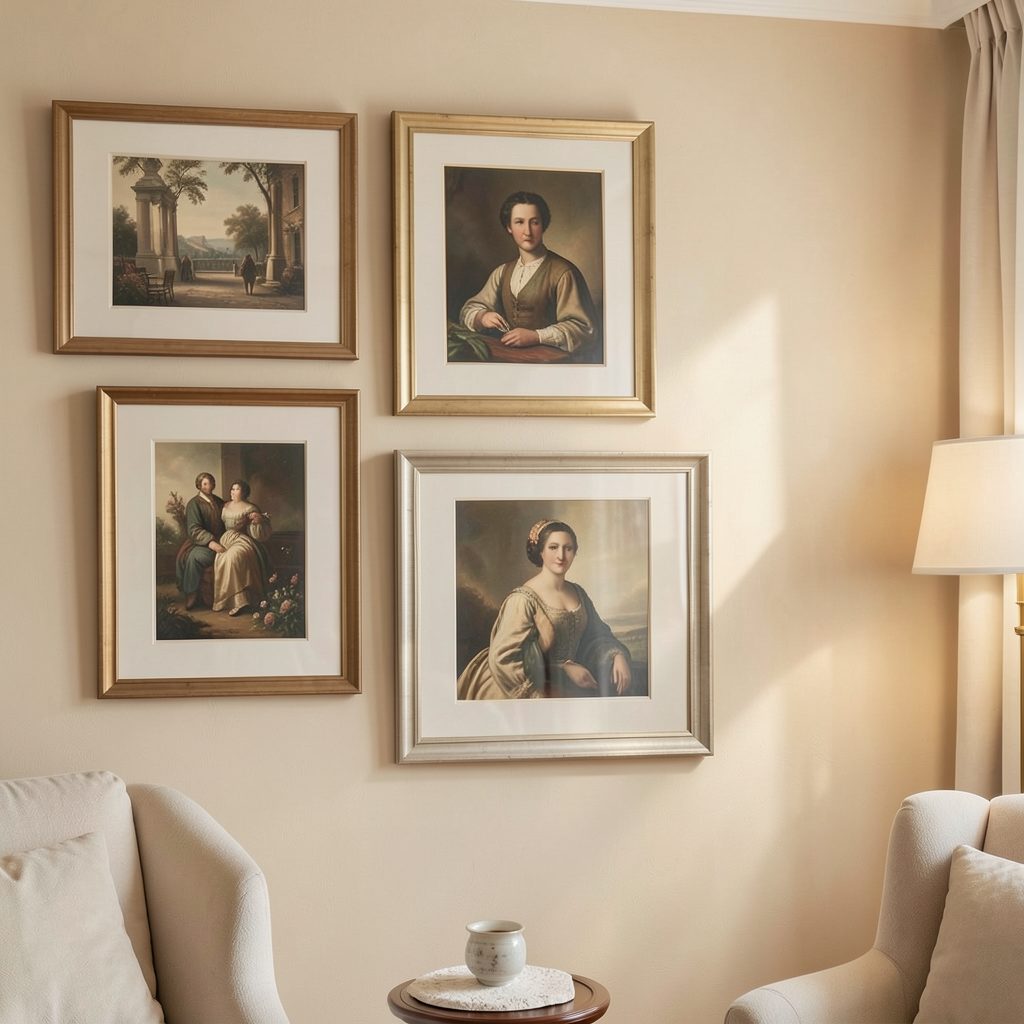
Several exhibition posters can form a cohesive wall display when their edges are aligned and the spacing is consistent. Lay the arrangement on the floor first, using paper templates to mark each frame or hanger. Leave roughly five to eight centimetres between pieces, then adjust according to the scale of the wall and the amount of surrounding furniture.
A simple grouping can include one large poster, two smaller prints and a modest object such as a ceramic vessel. For more ideas about balancing artwork, furniture and negative space, explore these gallery wall ideas before fixing anything in place. Keeping the lowest artwork near eye level usually makes the arrangement feel intentional rather than scattered.
Protect Paper From Australian Conditions
Sunlight is one of the biggest threats to a poster. Strong Australian UV can fade saturated reds, yellows and blues surprisingly quickly, particularly in north-facing rooms. Hang valuable prints away from direct sun, or use UV-filtering glazing when a bright position is unavoidable.
Humidity also matters. In Brisbane, coastal New South Wales and other damp areas, avoid placing paper directly against an exterior wall or near a bathroom. In dry inland homes, paper may become brittle over time. Allow a little air around framed pieces and keep posters away from kitchen steam, heaters and evaporative coolers.
Add Context Without Marking The Print
An exhibition poster becomes more engaging when it is displayed with information about the artist, venue and date. Instead of writing on the original, create a separate caption card using archival or acid-free paper. A small label beneath the frame can echo the calm presentation of a museum display.
You can borrow ideas from these gallery labels to make captions consistent across a collection. Include the artist’s name, exhibition title, gallery and year, then keep the typography restrained. This approach works especially well for posters collected from Melbourne art openings, Sydney dealer galleries or regional exhibition spaces.
Maintain A Flexible Display
A damage-free system should allow the collection to evolve. Keep spare removable strips, backing boards and protective sleeves in a flat storage box, and save any original packaging that came with limited-edition prints. Never store posters in a damp garage, hot car or attic, where temperature changes can cause curling and discolouration.
When rotating artwork, lift prints by their edges with clean, dry hands. Inspect corners and adhesive points before rehanging, and replace any strip that has become dusty or lost its grip. For further decorating ideas that connect art collecting with everyday interiors, browse Focus LDN for guidance on stylish home displays.
Practical Choices For A Lasting Display
- Use removable strips, poster corners or magnetic rails instead of household sticky tape.
- Place valuable or vintage posters behind UV-filtering acrylic or glass.
- Keep artwork away from direct sunlight, bathroom steam and kitchen grease.
- Choose acid-free backing and tissue for prints that will be stored or framed.
- Test every adhesive on scrap paper before applying it near the artwork.
- Use paper templates to plan spacing before making holes or attaching fixings.
- Record the artist, exhibition, venue and date on a separate caption card.
With careful preparation, an exhibition poster can look crisp and considered without sacrificing its condition. Start with one meaningful print, protect it from the strongest local light and build the arrangement gradually. A thoughtful display will preserve the memory of the exhibition while giving your Australian home a distinctive gallery character.