The Best Types of Glass for Framed Art
The glazing inside a frame does more than keep dust away from an artwork. It affects colour, contrast, visibility, weight, safety, and the way a piece interacts with light in the room. Choosing well can make a modest print look polished, while the wrong surface may create distracting reflections or allow gradual fading.
The right option depends on the artwork, its location, and your budget. A photograph placed opposite a window has different needs from an oil painting in a softly lit hallway. Bedroom art, bathroom prints, and gallery walls also benefit from different practical considerations.
Most framing glass falls into a few useful categories: standard clear glass, UV-filtering conservation glass, anti-reflective glass, and premium museum glass. Understanding the distinctions makes it easier to protect your collection without paying for features you will not notice.
Choosing Glazing For Artwork
Standard glazing is often called float glass or clear glass. It is affordable, widely available, and suitable for many decorative prints that can easily be replaced. It provides a crisp view in controlled lighting, but its reflective surface can become noticeable near windows, lamps, and glossy walls.
Glass also adds weight. A large framed work with conventional glazing may require stronger hanging hardware and a secure fixing point. For oversized pieces, the frame construction matters as much as the glass, particularly when the artwork will hang above furniture or in a busy passage.
Before selecting glazing, consider the artwork’s value and sensitivity. Original works on paper, limited-edition prints, watercolours, textiles, and family photographs deserve more protection than inexpensive posters. The amount of daylight is equally important, since long exposure to ultraviolet radiation can fade pigments and paper.
Clear Glass And UV Protection
Ordinary clear glass filters a portion of ultraviolet light, but it does not provide comprehensive protection. This makes it a reasonable choice for temporary displays or low-cost decorative art, though it is less suitable for pieces with sentimental, historic, or financial value.
Conservation glazing is designed to reduce UV transmission. Depending on the product, it can block a substantial proportion of damaging UV wavelengths while maintaining a familiar glass appearance. It does not make artwork completely immune to fading, because visible light, heat, humidity, and unsuitable materials can also cause deterioration.
UV-filtering glass is particularly valuable for a family photograph collection. When planning a personal gallery wall, the advice in family photo display can help you combine sentimental images with protective framing and balanced spacing. Keep even protected artwork away from direct sunlight wherever possible.
| Glazing type | Main benefit | Main limitation | Best suited to |
|---|---|---|---|
| Standard clear glass | Affordable and sharp | Strong reflections; limited UV filtering | Replaceable prints and low-light rooms |
| Conservation UV glass | Reduces ultraviolet exposure | Costs more and may still reflect | Photos, prints, watercolours, and valued works |
| Anti-reflective glass | Improves visibility under artificial or natural light | Coatings can increase price and require careful cleaning | Art opposite windows or lamps |
| Museum glass | Very low reflection with strong UV protection | Premium cost; can show marks if mishandled | Important originals and high-end displays |
| Laminated safety glass | Holds together if broken | Heavier and sometimes less optically clear | Public areas, nurseries, and large frames |
Anti-Reflective And Museum Glass
Anti-reflective glass uses a treated or etched surface to scatter or reduce reflected light. The result is easier viewing from different angles, especially in a room with several light sources. Etched varieties may have a slightly softer appearance, while coated low-reflective glass usually preserves greater clarity.
Museum glass sits at the premium end of the market. It commonly combines very low reflectivity with strong UV filtering, allowing colours and fine details to remain visible without a bright mirror-like sheen. This is useful for dark artwork, delicate line drawings, and pieces displayed opposite glazing.
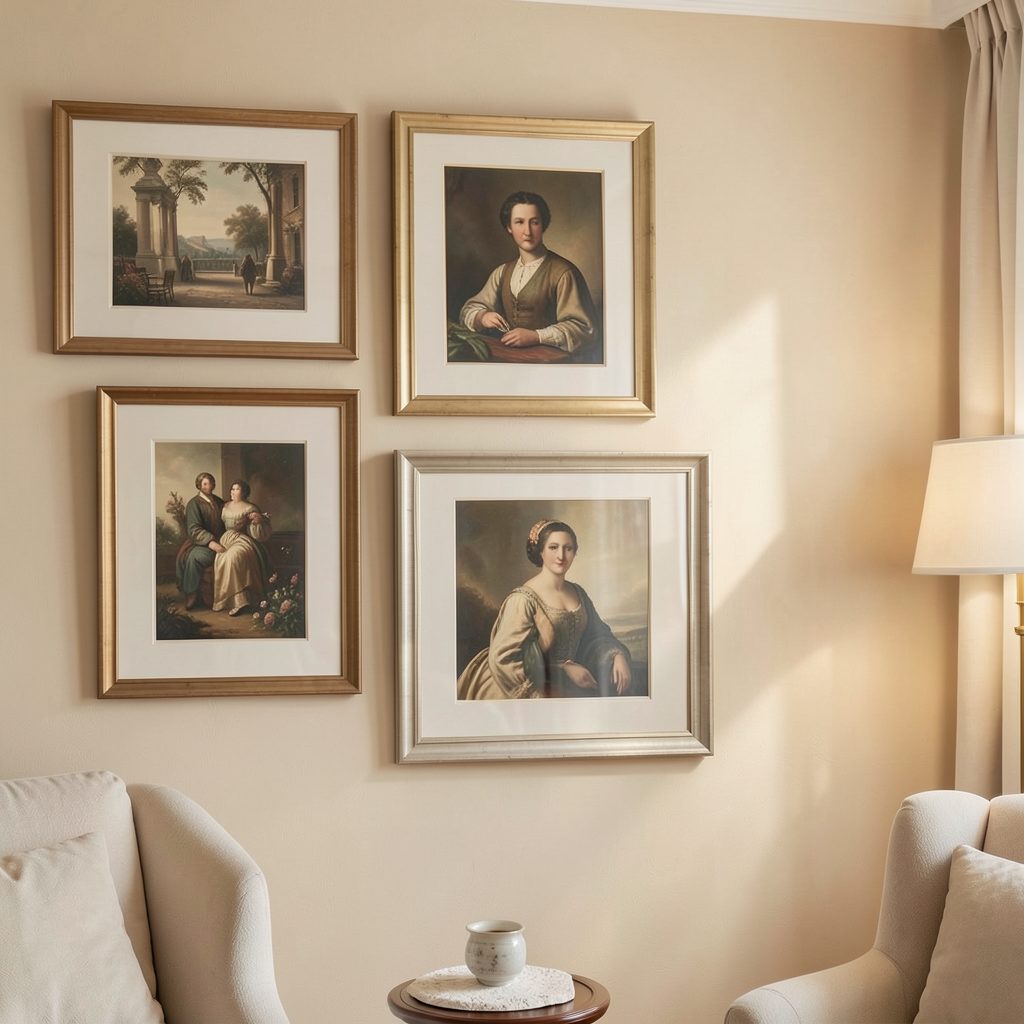
The room should guide the investment. In a dim hallway, standard or conservation glass may look perfectly clear. In a bright sitting room, anti-reflective glazing can transform the display. For a gallery wall, using the same type of glass across every frame creates a consistent visual finish, even when the frame styles vary.
Safety, Cleaning, And Frame Construction
Safety glass is worth considering for large artworks, children’s rooms, rental properties, and areas where a frame could be knocked. Laminated glass is made with an internal layer that helps hold fragments together if the surface breaks. Tempered glass is stronger than ordinary glass and breaks into smaller pieces, although availability varies between framers.
Glass should be cleaned carefully and never sprayed while it is inside the frame. Apply a small amount of glass cleaner to a lint-free cloth, avoiding the artwork, mat board, frame joints, and backing. Abrasive cloths can damage coatings, while excess moisture may travel into the mount.
The glazing should sit securely without pressing against the artwork. A proper spacer or deep mat creates a small air gap, protecting paper, paint, and photographs from condensation or contact marks. In humid bathrooms, keep framed art away from direct steam and choose sealed, stable materials wherever possible.
Matching Glass To Your Display
A minimalist bedroom often benefits from clear, low-reflection glazing because soft daylight can otherwise create a pale sheen across the artwork. In a bathroom or narrow corridor, safety and moisture management may matter more than museum-level optical clarity. A small print can usually use a lighter glazing solution than a large, valuable work.
Frame style also influences how the glass feels. Thin black frames, pale oak, and brushed metal can all look cohesive when the glazing is consistent. If you are combining finishes, these practical ideas for mixing frame styles help keep the overall arrangement intentional rather than visually busy.
A useful test is to hold a sample of the glass at the angle from which the artwork will normally be viewed. Check it in daylight and after the room lights are switched on. Ask the framer to show clear, UV-filtering, and anti-reflective samples side by side; the difference is often easier to judge in person than through a product description.
Practical Recommendations For Framing Glass
The most expensive glazing is not automatically the best choice for every picture. Prioritise UV protection for vulnerable or irreplaceable works, reflection control for bright rooms, and safety for large pieces or high-traffic areas.
- Choose standard clear glass for inexpensive prints in rooms with limited daylight.
- Upgrade to conservation UV glass for photographs, watercolours, original works on paper, and sentimental pieces.
- Select anti-reflective glazing when windows, spotlights, or lamps create distracting reflections.
- Consider museum glass for valuable artwork where clarity and long-term protection justify the cost.
- Use safety or laminated glass for oversized frames, family spaces, and public-facing displays.
Always ask about the glass’s UV rating, reflection level, thickness, and cleaning requirements before ordering. A professional framer can also advise whether the frame, wall fixings, and backing are strong enough for the chosen glazing.
Give Every Artwork A Clearer View
Thoughtful glazing preserves the details that make framed art worth living with, from the texture of a print to the expressions in a family photograph. Review the light, scale, location, and value of each piece before choosing a finish, then invest in the protection that will make the artwork easiest to enjoy.
Explore more Focus LDN guidance for gallery walls, frame combinations, and stylish home displays, and subscribe to the email updates for practical decorating ideas delivered to your inbox.