Frame profiles that bridge modern and traditional rooms
A frame profile does more than hold an artwork in place — it shapes how a piece speaks to a room. The cross-sectional shape of the moulding influences whether a wall feels crisp and current or layered and timeless, and the right choice can bridge modern and traditional interiors in a single sweep. In Australian homes, where renovated workers' cottages in Sydney sit alongside new apartments in Melbourne's Docklands, this kind of visual glue is often the difference between a curated look and a cluttered one.
Selecting the right frame profiles means balancing contrast and continuity. A sleek, shadow-box aluminium edge reads as contemporary even when it surrounds a nineteenth-century print, while a chunky gilded moulding can add gravitas to a casual living space. Understanding the anatomy of mouldings helps you make confident choices rather than relying solely on colour or price, and it makes the whole process feel less like guesswork and more like styling.
Slim aluminium and steel profiles for contemporary spaces
Thin metal profiles in matte black, brushed brass or anodised aluminium have become a staple in inner-city apartments from Surry Hills to South Yarra. Their straight, unornamented lines complement exposed brick walls, polished concrete floors and the open-plan layouts that have dominated Australian new builds for the past decade. They are particularly effective in monochrome interiors, where the frame becomes a graphic element rather than a decorative one.
When selecting aluminium or steel frames, pay attention to the depth of the rebate. A deeper profile creates a subtle shadow gap that gives floating art a contemporary feel, while a perfectly flat face suits minimalist compositions of small works. Many Australian framers offer custom cutting in standard sizing, which makes it easier to mix metals across a single wall without committing to one finish. For more on building a cohesive look across a collection, the Focus LDN website gathers practical styling notes in one place.
Classic timber mouldings with cleaner proportions
Traditional does not have to mean heavy or fussy. A timber moulding with a simple bevel or step profile can anchor a heritage home without overwhelming it. In Brisbane's Queenslander cottages or Adelaide's sandstone villas, where ceiling heights stretch past three metres, a slightly wider timber profile in a stained finish holds its own against generous wall expanses.
Look for profiles with softened edges rather than sharp right angles. Australian-made spotted gum, tasmanian oak or plantation-grown pine offer warm undertones that pair well with both white-painted joinery and exposed brick. Local joiners often recommend a low-sheen stain or hard wax oil to keep the timber grain visible, avoiding the plastic look of high-gloss polyurethane. A profile between 30 and 50 millimetres wide tends to feel substantial without tipping into ornate territory. When you wander into a local framing workshop on a Saturday arvo, most are happy to pull samples from the back room so you can hold them against your wall in natural light.
Ornate gold and gilded profiles for heritage interiors
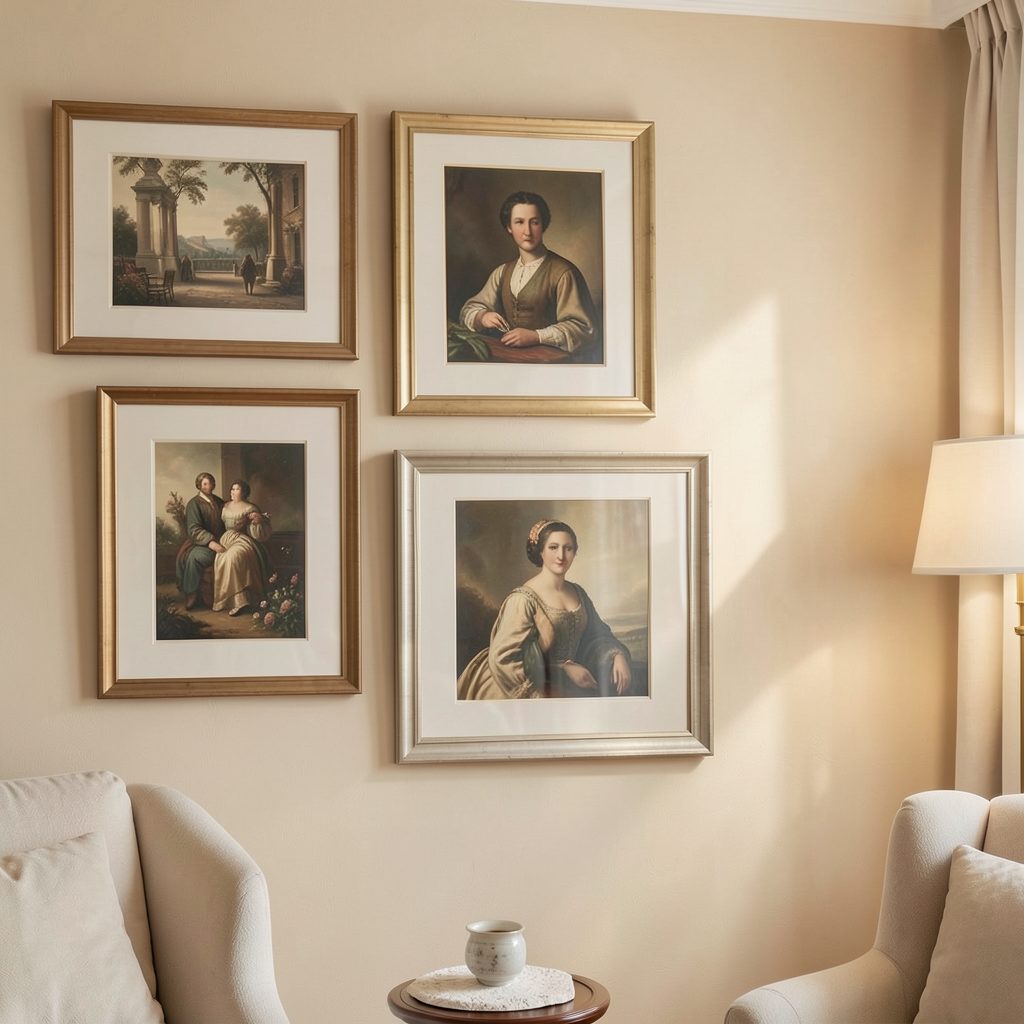
For Federation homes, Victorian terraces in Paddington or Fitzroy, or any interior where the architecture itself carries ornamentation, a gilded or heavily carved profile brings continuity. These mouldings echo cornice details, ceiling roses and skirting profiles, creating a layered sense of craftsmanship. The key is to choose finishes that feel authentic rather than theatrical: warm gold leaf, antique silver or a soft champagne tone.
Gilded frames work best when the artwork inside has presence. Oil paintings, vintage maps or botanical illustrations benefit from a profile with multiple steps and a sight edge that draws the eye inward. Australian conservation framers often recommend a sealed backing and UV-protective glazing for older pieces, particularly in homes with large west-facing windows that catch strong afternoon sun. The result is a frame that feels like it has always belonged to the wall, anchoring the room rather than competing with it.
Natural oak and walnut frames for warm minimalism
Coastal homes from Byron Bay to Fremantle have embraced warm timber tones, and the same palette translates beautifully into frame profiles. Solid oak and walnut, or high-quality veneers over engineered timber, offer a soft, organic feel that bridges Scandinavian simplicity and mid-century modern influence. These profiles tend to be flat-faced with gently rounded edges, around 20 to 40 millimetres wide.
The appeal lies in how the timber ages. A well-oiled oak frame deepens slightly over the first year, picking up the character of the room around it. In Australian climate zones, particularly humid coastal strips, it is worth asking a framer about stable substrate options to prevent warping. If you are curating your own collection and considering the business of displaying and selling art, exploring a guide to starting your own gallery can help frame the practical side of building a serious display at home.
Floating and frameless profiles for pure focus
For collectors who want nothing between the viewer and the artwork, a floating or frameless presentation removes distraction. A floating frame leaves a small gap between the canvas and the outer edge, casting a subtle shadow that emphasises the depth of the work. A frameless mount, on the other hand, uses a deep window mat and archival tape to hold the piece directly against a clean white background.
These approaches suit contemporary photography, minimalist prints and abstract works in apartments where the architecture already does the talking. In compact city studios, a frameless look prevents visual clutter and lets a single strong piece carry the wall. Keep in mind that frameless displays require precise mounting and often a French cleat or security hanger, which most local picture-hanging services can install in under an hour.
Choosing profiles by room and light
- Match the profile weight to the wall: bold mouldings suit larger walls, slim profiles work in narrow hallways
- Consider the light: matte finishes reduce glare in sun-drenched rooms, while satin finishes add gentle warmth
- Mind the scale: a frame that is too thick can overwhelm a small watercolour, while a too-slim profile can disappear around a large canvas
- Test on site: hold samples against the actual wall colour at different times of day before committing
Sourcing profiles in Australia
- Independent framers in Paddington, Fitzroy and Fortitude Valley offer custom profiles and on-site consultations
- Weekend markets such as The Rocks or Salamanca often host stalls with vintage and second-hand frames in interesting profiles
- Specialty timber suppliers can provide raw lengths of moulding for DIY finishing, though they require sharp mitre tools
- Online retailers carry standard aluminium and timber profiles, but visiting in person allows you to judge the finish and weight
Once you have settled on a few frame profiles that feel right for your space, the next step is to hang them with confidence. Start with one statement piece in a high-traffic area, live with it for a few weeks, and then build out from there. A well-chosen profile quietly supports the artwork while letting the room's character shine through, and it makes the whole collection feel intentional rather than accidental.