The Best Art Heights for a Dining Room with a Sideboard
Hanging artwork above a sideboard can make a dining room feel considered, balanced and complete. The right height connects the furniture to the wall without making the room feel crowded, while the wrong placement can leave the art floating too high or competing with plates, lamps and servingware.
Australian homes often have open-plan dining zones, generous natural light and furniture arranged around practical entertaining. Whether you live in a Sydney apartment, a Melbourne terrace or a Queensland home with a relaxed dining area, a few reliable measurements will help you create a polished display.
Measure From The Sideboard
The most useful starting point is the sideboard itself. Aim to leave approximately 15 to 25 centimetres between the top of the furniture and the bottom edge of the artwork. This gap creates a visual relationship between the two pieces without making them appear stuck together.
For a low sideboard, a larger artwork may sit comfortably with a slightly smaller gap. A tall buffet, meanwhile, usually needs a more generous breathing space so the wall display does not feel compressed. Stand back several metres and check the arrangement from the height at which people will view it while seated at the dining table.
Use The Artwork’s Centre Point
The centre of the artwork should generally sit around 145 to 155 centimetres above the floor. This is a useful gallery-style guideline, but a dining room requires some flexibility because people view the work from both standing and seated positions.
When the dining table is close to the sideboard, prioritise the relationship between the furniture and the picture rather than following a rigid museum measurement. A broad canvas may have its centre slightly lower, while a narrow vertical print can sit a little higher without losing visual connection.
Match Scale To The Furniture
The artwork should usually span around two-thirds to three-quarters of the sideboard’s width. For example, a 180-centimetre buffet could support a single work between 120 and 145 centimetres wide. This proportion feels anchored and avoids the impression that a small picture has been lost on a large wall.
A pair of prints can achieve the same effect when their combined width, including the central gap, relates to the furniture below. In an Australian open-plan home, where the dining area may be visible from the kitchen and living room, scale matters even more because the arrangement needs to read clearly from several angles.
Arrange A Gallery Wall Above The Buffet
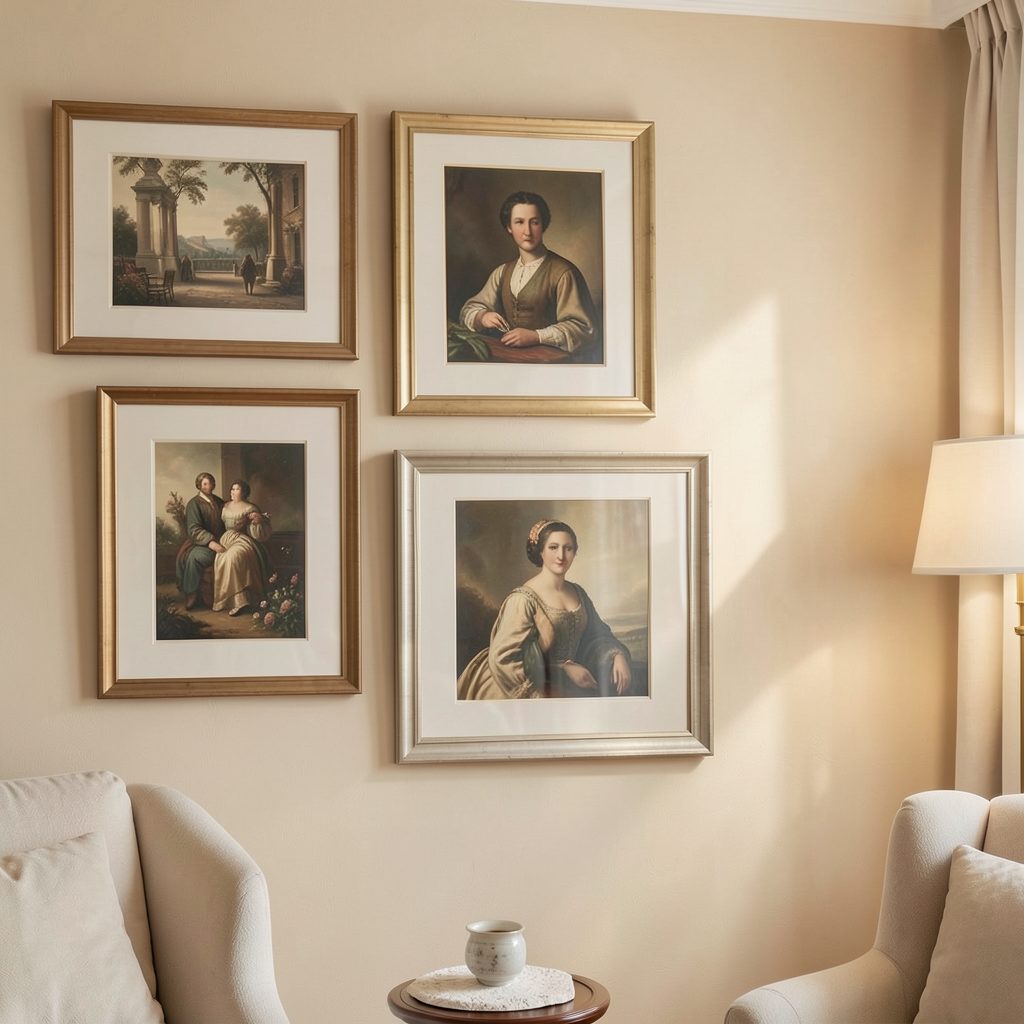
A gallery wall can work beautifully above a sideboard, provided its overall shape is treated as one composition. Measure the outermost edges of the entire arrangement and leave the same 15 to 25 centimetre relationship between the bottom row and the furniture.
Keep the lower frames relatively level, then build upwards with a mixture of portrait and landscape pieces. Before using hooks, lay the frames on the floor or cut paper templates to tape onto the wall. This approach is especially helpful in rental apartments, where unnecessary holes are best avoided. A practical gallery wall guide can also help you plan spacing and artwork combinations.
Consider Lighting And Dining Use
Dining rooms often have pendant lights, wall sconces or strong afternoon sun, all of which affect where art should go. Avoid positioning a frame so its surface catches direct glare from a pendant or a west-facing window. Artwork with glass may reflect light during dinner, while a matte finish can be easier to live with.
Leave enough room for people to move chairs, carry platters and clean the sideboard. In compact Brisbane or Sydney apartments, the furniture may double as a drinks station or storage unit, so the artwork should not hang so low that it becomes vulnerable to bumps. Keep valuable or delicate pieces away from areas where serving dishes are frequently handled.
Select Frames That Support The Room
Frame choice changes the perceived height and weight of a display. Slim timber frames suit Scandinavian, coastal and relaxed Australian interiors, while black frames create sharper definition against white walls. A deep frame can make a small print feel more substantial, but it may require a little extra space above the sideboard.
For a calm minimalist arrangement, repeat one frame finish throughout the display and vary the artwork instead. In a more collected room, combine timber, black and painted frames while repeating one colour or material to keep the arrangement coherent. Focus LDN’s styling ideas offer useful inspiration for mixing decorative objects with framed work without overloading the surface.
Adjust For Room Proportions
Ceiling height, wall width and furniture depth all influence the ideal hanging position. In a room with high ceilings, a vertical artwork or stacked arrangement can fill the wall effectively. In a low-ceilinged dining nook, a wide horizontal piece may make the space feel broader without drawing attention upward.
The sideboard should remain the visual base. If you are styling it with a lamp, vase or bowl, keep those objects below the artwork’s main focal area. Place taller accessories toward the ends rather than directly beneath the centre of the frame, where they can interrupt the composition.
A Practical Hanging Checklist
Use these simple checks before making the final holes in the wall:
- Leave roughly 15 to 25 centimetres between the sideboard and the artwork.
- Keep the art or gallery arrangement around two-thirds to three-quarters of the furniture’s width.
- Aim for a centre point near 145 to 155 centimetres from the floor, then adjust for the room.
- Check the display from both standing and seated positions.
- Test reflections, chair movement and access to the sideboard before fixing anything permanently.
Take a photograph of the proposed arrangement from the doorway and from the dining table. The camera often reveals spacing problems that are difficult to notice when standing directly in front of the wall. A level, measuring tape and removable painter’s tape are usually enough to achieve a clean result.
For Australian homes, it is also worth checking the wall type before choosing hardware. Plasterboard, brick and concrete each require different fixings, and products from local hardware retailers such as Bunnings vary according to the load they can support. Heavy mirrors and framed works may need secure anchors or professional installation.
The best art heights for a dining room with a sideboard come from balancing measurement with the way the room is actually used. Start with the furniture, consider the artwork’s scale, then fine-tune the height according to lighting, sightlines and everyday movement.
For more ideas on gallery walls, framed artwork and stylish home living, explore Focus LDN and use the guidance to create a dining display that feels personal, practical and beautifully resolved.