Ten Small Apartment Tricks That Make a Room Feel Bigger
A compact apartment does not need to feel cramped. The right arrangement can open sightlines, improve circulation, and give every decorative choice a clearer purpose. Even a narrow living room can feel calm when furniture, artwork, light, and storage work together.
The most effective changes are often small rather than expensive. Moving a sofa away from a doorway, reducing visual clutter, or choosing a frame with a generous mat can alter the room’s proportions without major renovation.
Think of the apartment as a composition. Each object occupies physical space, but it also creates visual weight. When those weights are balanced, the eye travels easily across the room, making the whole home appear more spacious.
Clear The Floor And Sightlines
Start by protecting the main walking routes. A clear path from the entrance to the living area, kitchen, or balcony creates an immediate sense of openness. Push occasional furniture against walls where possible, and avoid placing baskets, stools, or plant stands in the natural line of movement.
A low-profile sofa or bed can also reveal more wall and floor. Choose pieces with slim arms and restrained proportions instead of oversized upholstery. Furniture raised on visible legs lets light pass underneath, which makes the floor seem to continue beyond each object.
The same principle applies to entrances. Keep the first area you see from the door relatively edited, using one useful console or a wall-mounted hook rail instead of several freestanding pieces. A clean arrival point makes the entire apartment feel more considered.
Use Light To Stretch The Room
Natural light is one of the strongest tools for enlarging a small room. Hang curtains close to the ceiling and let them fall to the floor, extending beyond the window frame when possible. This makes the window appear wider and taller while keeping the glass unobstructed during the day.
Choose translucent fabrics for privacy without blocking brightness. Pale linen, cotton voile, or lightly textured sheers soften the room without adding a heavy visual boundary. If privacy allows, leave the window uncovered during daylight hours.
Reflective surfaces help distribute light, but moderation matters. A large mirror opposite or adjacent to a window can increase brightness and depth, while a small collection of glossy accessories may simply create distraction. One well-positioned mirror usually has more impact than many shiny objects.
Choose Furniture That Works Twice
Small apartments benefit from furniture with more than one role. An ottoman can provide seating, a coffee table, and hidden storage; a narrow console can function as a desk; and a bed with drawers can replace a bulky chest. Fewer items mean fewer visual interruptions.
Look for adaptable pieces with a compact footprint. A drop-leaf dining table can remain narrow on ordinary days, while nesting tables can separate when guests arrive. Keep the finish consistent with nearby furniture so multifunctional pieces blend into the room rather than announcing their utility.
Continuous materials also help. A rug that reaches beneath the front legs of the sofa and chairs can unite a seating area, while flooring that runs consistently from one zone to another avoids chopped-up visual sections. If separate areas are necessary, use subtle changes in texture rather than strong contrasts.
| Space issue | Space-expanding choice | Why it works |
|---|---|---|
| Crowded walkway | Wall-mounted or narrow furniture | Preserves circulation |
| Dark window | Sheer curtains and pale surfaces | Keeps daylight moving |
| Limited storage | Closed, dual-purpose pieces | Reduces visible clutter |
| Short walls | Vertical shelving or tall artwork | Draws the eye upward |
| Busy gallery wall | Consistent frames and spacing | Creates visual order |
Draw The Eye Upward
Vertical emphasis makes ceilings feel higher. Install shelves above doorways, use a tall bookcase in an unused corner, or display one large artwork rather than several small pieces scattered across a wall. The goal is to encourage the eye to travel upward before it settles on the room’s limited width.
Storage should follow the same direction. Tall cabinets with simple fronts use the wall efficiently and keep everyday items contained. Leave a little breathing room above the highest shelf; filling every inch can make the room feel compressed.
A vertical line can be subtle. Floor-to-ceiling curtains, a slim pendant light, a tall plant, or a narrow framed print can all create height without demanding much floor space. Repeat one or two of these gestures for a cohesive effect.
Make Artwork Add Depth
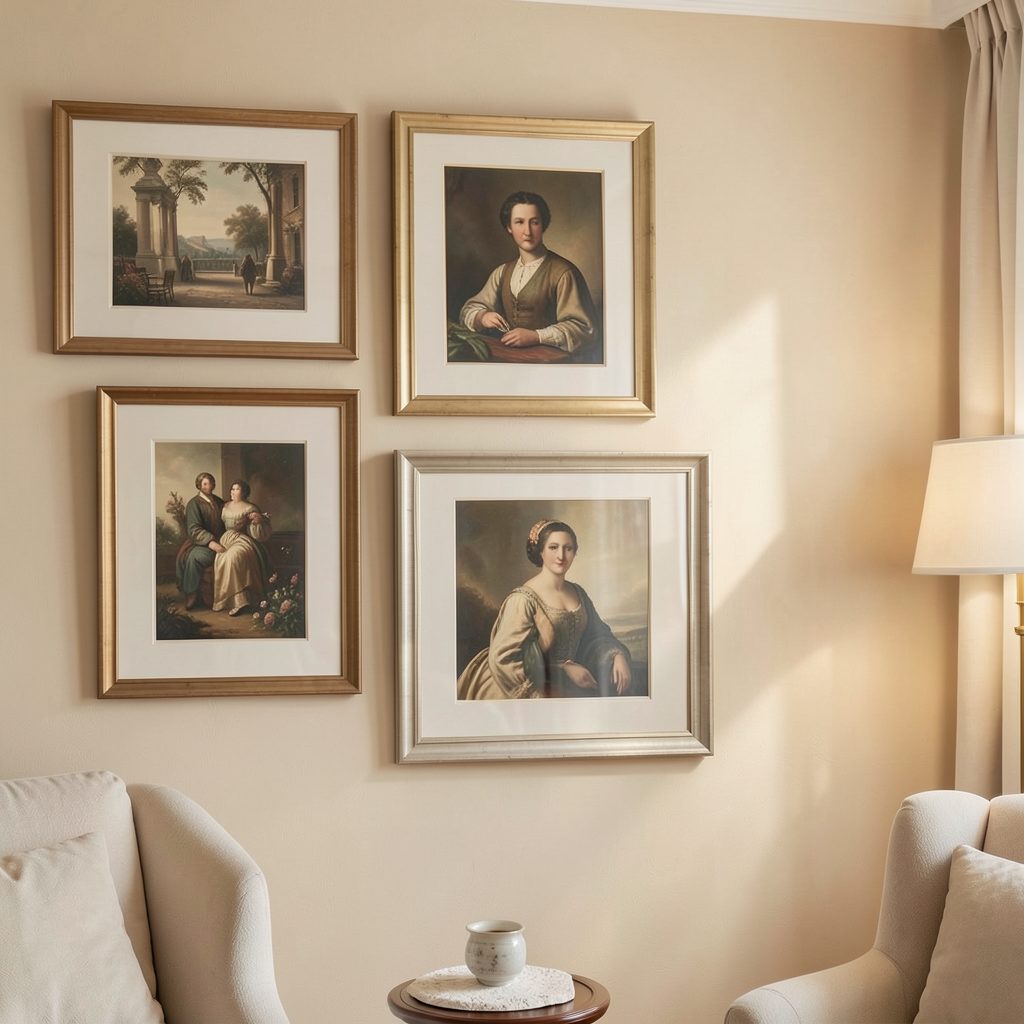
A gallery wall can make a small apartment feel more personal without making it feel crowded. Keep the arrangement disciplined by aligning outer edges, repeating frame finishes, or maintaining a consistent gap between pieces. A clear structure lets the artwork become a focal point rather than background noise.
Matting is especially useful when displaying smaller prints. A generous white or softly colored border gives each image breathing room and can make a modest piece feel more substantial. Before framing a collection, learn how to choose the right matting so the artwork gains presence without requiring oversized frames.
Avoid placing a dense arrangement on every available wall. One carefully edited display can establish depth and character, while surrounding walls remain quieter. In a narrow room, hang artwork slightly higher than usual, but keep its center near eye level so the arrangement still feels connected to the furniture.
Keep Bedrooms And Bathrooms Visually Calm
In a bedroom, reduce the number of visible categories. Matching bedside lamps, a restrained palette, and under-bed storage create a quieter field around the bed. Mounting reading lights on the wall can free both bedside surfaces and floor area.
Use the same approach in a small bathroom. A frameless mirror, wall-mounted basin, and pale grout lines can make the room appear broader. Store toiletries in one or two coordinated containers rather than displaying many colorful packages around the sink.
Soft texture prevents a light scheme from becoming flat. Add depth with a woven basket, a cotton shower curtain, or artwork in a moisture-safe frame. A single carefully chosen print can bring the gallery feeling into the bathroom without overwhelming a compact wall.
Edit With A Consistent Visual Language
A small room feels larger when its elements appear related. Repeat a frame color, timber tone, metal finish, or accent shade across several areas. This does not mean matching everything; it means limiting the number of competing visual signals.
Closed storage is useful for practical clutter, while open shelving should hold only objects that contribute to the room’s mood. Group books by color or height, leave gaps between decorative pieces, and remove anything that has no functional or emotional value.
Use this final editing routine before buying anything new:
- Protect the main walkway and remove anything that interrupts it.
- Replace one bulky item with a slimmer or dual-purpose alternative.
- Raise curtains, shelves, or artwork to strengthen vertical lines.
- Choose one reflective surface to extend light and depth.
- Edit decorative displays until each piece has clear breathing room.
A regular review keeps the apartment from slowly becoming crowded again. When new objects arrive, give them a defined place and remove something that no longer earns its space.
For an even more personal interior, consider sharing your own art or display project with the Focus LDN community through submit your artwork. With thoughtful editing, useful furniture, and artwork arranged for balance, a small apartment can feel open, expressive, and easy to live in.