Small balcony art styling for all-weather living
A small balcony can feel like an extra room when its walls, railings, and floor are treated as part of the design. Weather-resistant art displays add personality without taking up valuable seating space, making even a narrow outdoor area feel considered and complete.
The key is to balance visual interest with practical protection. Sun, rain, wind, humidity, and sudden temperature changes can damage materials that would be perfectly safe indoors. Choosing suitable artwork, frames, fixings, and placement methods allows the display to remain attractive through changing seasons.
Think of the balcony as a compact gallery with a relaxed, outdoor mood. A restrained palette, repeated frame finish, and a few botanical or architectural images can create a cohesive setting without making the space feel crowded.
Start with the balcony’s visual structure
Before choosing artwork, identify the strongest display surface. A solid side wall is usually the safest place for framed pieces because it offers more support than a glass balustrade or lightweight railing. If the balcony has a blank exterior wall, use it as a vertical focal point behind a bistro table or bench.
Measure the available area and leave breathing room around each piece. On a small balcony, one large print or a pair of medium-sized works often looks more polished than a collection of tiny images. Keep the lower edge high enough to avoid splashes from the floor, while positioning the centre of the display near seated eye level.
Consider existing lines as well. Align artwork with the top of a bench, the edge of a planter, or the height of a privacy screen. This creates order and helps the balcony decoration feel integrated rather than attached as an afterthought.
Choose materials made for outdoor conditions
Outdoor art should be printed on materials that tolerate moisture and sunlight. Aluminium composite panels, acrylic, sealed ceramic, powder-coated metal, and treated outdoor canvas are generally more reliable than untreated paper or conventional wooden frames. Look for UV-resistant inks and a finish designed for exterior use.
Acrylic-faced prints provide strong colour and a clean contemporary appearance, while aluminium panels suit minimalist balconies because they are slim and relatively light. Ceramic tiles or small metal plaques can introduce texture and work especially well alongside terracotta pots and natural wood furniture.
Traditional glass frames need extra care. Moisture can become trapped behind the glass, causing paper ripples, mould, or staining. If you prefer a framed appearance, choose sealed outdoor frames with synthetic glazing and a backing board that resists humidity.
Build a display that feels intentional
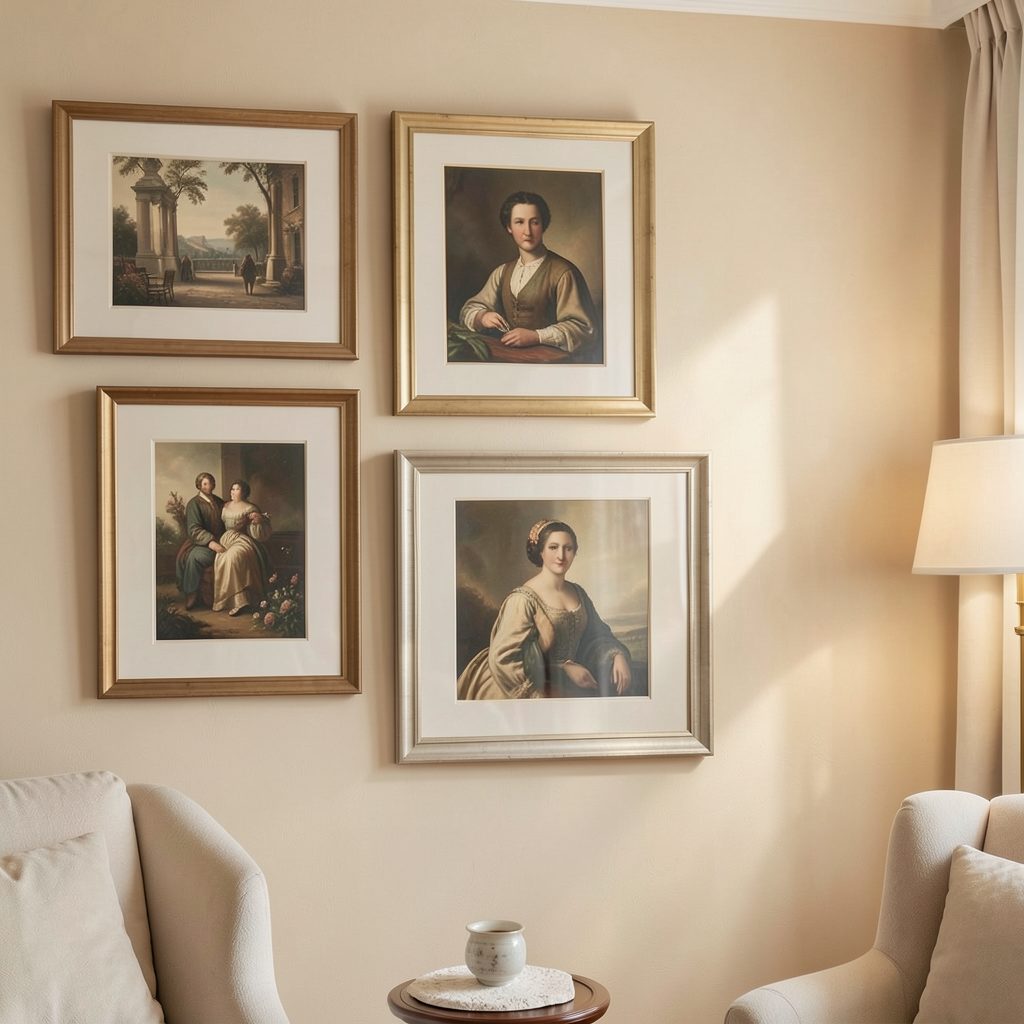
A balcony gallery wall does not need to copy an indoor arrangement. Use two or three related images, such as line drawings of leaves, muted coastal photographs, or abstract shapes in sand, charcoal, and olive. Repetition creates unity, while subtle variations in scale prevent the display from appearing rigid.
For design inspiration, explore gallery wall principles and adapt the spacing to your outdoor proportions. A narrow vertical arrangement can make a compact balcony appear taller, while a horizontal pair can visually widen a short wall.
Avoid placing artwork directly behind climbing plants or dense foliage unless the overlap is deliberate. Leaves can hold moisture against the surface and may scratch finishes in strong wind. Instead, use plants to frame the artwork at the sides, creating a layered composition with a clear centre.
| Display material | Best use | Main advantage | Watch out for |
|---|---|---|---|
| Aluminium composite | Minimalist prints and typography | Lightweight and weather tolerant | Can look stark without warm accessories |
| Outdoor canvas | Soft botanical or abstract images | Adds texture and a relaxed feel | Needs a sealed, mould-resistant finish |
| Acrylic panel | High-colour photography | Bright, crisp, contemporary surface | May show glare in direct sunlight |
| Ceramic tile | Small decorative groupings | Durable and tactile | Heavier fixing requirements |
| Powder-coated metal | Graphic signs and sculptural pieces | Strong against moisture and wind | May heat up in intense sun |
Secure every piece against wind and rain
A display that looks beautiful but shifts in the first gust is not practical. Use exterior-rated screws, wall plugs, stainless steel hardware, and anti-corrosion hooks. For masonry, select fixings designed for brick or concrete; for rendered walls, avoid relying on adhesive strips unless the manufacturer specifically approves outdoor use.
Wind is particularly important on upper-floor balconies. Choose shallow-profile artwork rather than pieces with projecting frames, and secure larger panels at two or more points. Safety wire or a secondary tether can prevent a display from falling if one fixing loosens.
Keep drainage and cleaning in mind. Do not seal artwork so tightly against a wall that moisture cannot escape, and leave enough space to wipe behind the piece. Inspect fixings at the start of spring and after severe weather, replacing any rusted or weakened hardware promptly.
Coordinate colour, furniture, and lighting
Outdoor artwork can establish the balcony’s palette. If the furniture is black or charcoal, prints in cream, rust, sage, or faded blue will soften the setting. Pale wood and woven furniture pair well with ink drawings, monochrome photography, and handmade ceramic pieces.
Keep the number of finishes under control. Two frame colours are usually enough, especially in a small area where planters, textiles, and flooring already add visual texture. A simple display can have the same calm quality as a carefully edited interior; this approach also complements the ideas in this minimalist furniture guide.
Lighting extends the display into the evening. Use warm, low-voltage outdoor wall lights or discreet rechargeable spotlights directed at the artwork. Avoid placing hot bulbs close to canvas or delicate finishes, and choose lighting with a suitable exterior rating for the balcony’s exposure.
Practical choices for compact spaces
When floor area is limited, use the walls creatively without filling every available surface. A single framed panel above a fold-down table can act as a focal point, while a slim rail can display interchangeable postcards or small metal prints. Vertical arrangements draw the eye upward and leave room for seating below.
If the balcony is rented, consider freestanding screens, tension-mounted trellis systems, or a narrow leaning display panel. These solutions avoid permanent drilling while providing a stable surface for outdoor art. Make sure freestanding pieces are weighted securely and cannot obstruct doors, drains, or escape routes.
A simple styling checklist
- Select UV-resistant artwork and finishes intended for exterior use.
- Match fixings to the balcony wall rather than relying on indoor hanging hardware.
- Keep frames and colours restrained so the display does not overwhelm the space.
- Leave clearance around artwork for airflow, cleaning, and rain runoff.
- Recheck panels, hooks, and backing materials whenever the season changes.
A small balcony becomes far more inviting when every detail serves both beauty and function. Choose one strong visual idea, protect it with reliable materials, and allow furniture and plants to support rather than compete with the display. Subscribe to Focus LDN for more considered ideas for gallery walls, artwork placement, and stylish home living.