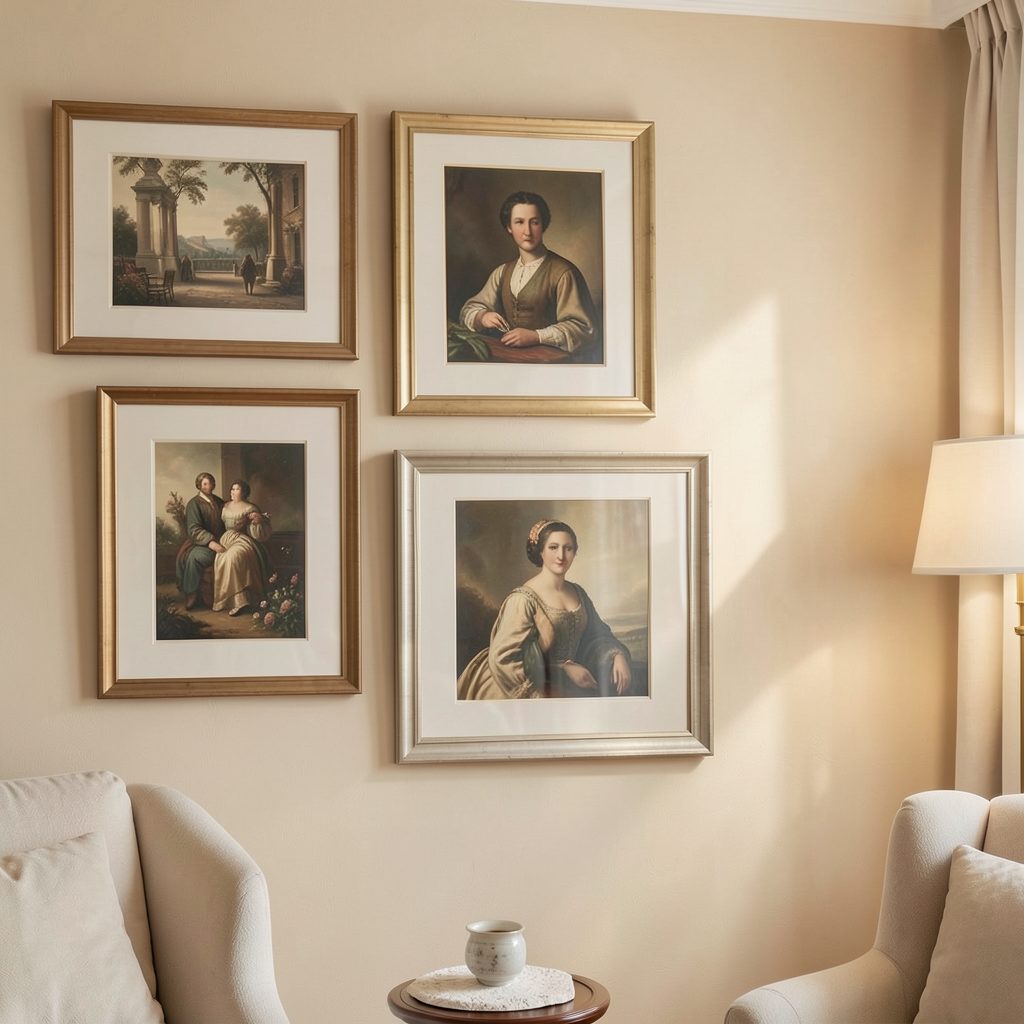
Styling a minimalist bedside table with one piece of art
A bedside table can feel finished without becoming crowded. One carefully chosen artwork creates a focal point, adds personality, and gives the bedroom a considered gallery-style quality while preserving the calm associated with minimalist interiors.
The key is restraint. Rather than layering books, candles, ceramics, and several decorative objects, allow one artwork to carry the visual interest. The lamp, table, wall, and surrounding negative space should support it rather than compete for attention.
This approach works in a compact bedroom, a pared-back guest room, or a larger space that needs a quiet finishing detail. With attention to proportion, colour, framing, and placement, a single print or original can make the whole bedside arrangement feel intentional.
Choose the visual anchor
Start by deciding what you want the artwork to contribute. A black-and-white photograph can reinforce a monochrome bedroom, while a soft abstract painting may introduce warmth without disrupting a neutral scheme. Line drawings, small typographic works, and restrained botanical studies are also effective choices for a restful sleeping space.
Consider the mood at different times of day. Highly detailed or intensely colourful art may feel energetic beside a bed, whereas muted tones and simple compositions tend to support relaxation. This does not mean the work must be bland; a small burst of rust, ochre, or deep blue can give a quiet room the right amount of character.
If the room is narrow, think about reflected light and visual openness before choosing a frame. These small-room mirror ideas can help you understand how reflective surfaces influence scale, brightness, and the perceived space around a bedside display.
Match the artwork to the table
Proportion is the detail that makes a one-piece arrangement look polished. Artwork that is too small can disappear beside a substantial lamp, while an oversized piece may make a narrow bedside table feel visually unstable. As a starting point, choose a framed work that is roughly one-half to two-thirds the width of the table, then adjust according to the lamp and wall space.
A low table often benefits from artwork hung slightly higher, creating a vertical line that balances the furniture. With a tall lamp, a smaller artwork may work better placed on the wall beside it rather than directly behind it. The goal is to create a relationship between the objects without making them appear tightly packed.
| Bedside setting | Artwork approach | Best visual effect |
|---|---|---|
| Narrow floating shelf | Small vertical print | Light and uncluttered |
| Wide wooden table | Medium abstract or photograph | Balanced and grounded |
| Tall lamp beside the bed | Compact horizontal work | Prevents visual heaviness |
| Dark table in a neutral room | Pale artwork with a slim frame | Adds contrast and airiness |
| Light table with colourful bedding | Restrained monochrome piece | Keeps the scheme composed |
Use framing to create cohesion
The frame should connect the artwork to the bedroom rather than announce itself as a separate feature. Natural oak brings warmth to white walls and linen bedding, black creates a sharper gallery feel, and brushed metal can echo hardware on the table or lighting. If the room already has several finishes, select the frame that repeats the most subtle one.
Matting is particularly useful when the artwork is small. A generous white or warm ivory border gives the piece breathing room and makes it feel more substantial without increasing the visual intensity. For guidance on proportion, colour, and the space between image and frame, explore this advice on the right matting for artwork.
Avoid choosing a frame solely because it matches the bedside table. A perfectly coordinated wood frame can make the display look overly rehearsed. Slight contrast often feels more collected, especially when the rest of the room uses simple materials.
Keep the surface deliberately edited
One artwork does not require an empty table, but every additional object should have a clear purpose. A warm bedside lamp, a small water glass, or one ceramic dish can provide function without weakening the focal point. Leave part of the surface visible so the arrangement retains a sense of calm.
Vary height carefully. If the lamp is tall, keep accessories low and compact. If the lamp is small, a slim vase or stacked book can create a gentle rise toward the art. Avoid placing an object directly in front of the frame, since it interrupts the image and makes the display appear accidental.
Texture can add depth without clutter. Linen lampshades, woven baskets, matte ceramics, and natural wood all work well with minimalist artwork because they create interest through touch and finish rather than excessive pattern.
Hang it with bedroom comfort in mind
Artwork beside a bed should be easy to see from a seated position, but it should not feel as though it is hovering over the sleeper. When hanging a piece behind or beside the table, leave enough space above the lamp and furniture for the composition to breathe. Secure the frame properly, particularly if the bed is close to the wall or the artwork has glass.
The viewing angle matters as well. A piece positioned directly opposite a strong light source may create distracting reflections at night. Matte paper, anti-reflective glazing, or a slightly offset position can improve visibility. Test the placement during daylight and after the bedside lamp is switched on.
For a more relaxed display, lean a small framed work against the wall on a wide table. This suits informal bedrooms and rental spaces, though the frame should have a stable base and remain clear of anything that might knock it forward.
Preserve a gallery-like sense of restraint
Minimalist styling depends on editing rather than emptiness. Repeat one colour from the artwork in the bedding, rug, or curtain, but do not match every element exactly. A quiet visual echo is enough to make the room feel connected.
The surrounding wall space is part of the composition. Resist the urge to fill it with multiple prints simply because the first piece looks attractive. One artwork can feel more valuable when it has room around it, much like a work displayed in a small gallery. Even the choice of outfit for an art event can benefit from this same principle of considered simplicity, as shown in this guide to gallery opening attire.
Recommendations for a polished bedside display
- Choose artwork that supports the bedroom’s mood rather than competing with it.
- Keep the frame proportional to the table, lamp, and available wall space.
- Use a generous mount when a small image needs more visual presence.
- Limit bedside accessories to useful or genuinely meaningful pieces.
- Check the arrangement in both natural light and evening lamplight.
The strongest bedside compositions often look effortless because each decision has been reduced to its essentials. Select one work you would be happy to see every morning, give it enough space to breathe, and let the surrounding materials provide the quiet texture.
For more ideas on arranging artwork, refining gallery-inspired rooms, and creating stylish spaces with intention, explore Focus LDN’s home and art journals or subscribe to the email updates for fresh decorating guidance.