Styling a Bedroom With Black and White Photography Prints
Black and white photography brings a quiet, graphic quality to a bedroom. Without competing colour, the eye notices shape, light, texture, and emotion, making monochrome images especially effective in spaces designed for rest. A carefully chosen print can anchor a bedside wall, add character above a headboard, or create a collected gallery arrangement.
The strongest schemes are rarely built from identical images. Architectural studies, intimate portraits, landscapes, and abstract shadows can sit together when they share a visual language. Repeated tones, compatible frames, and considered spacing help the display feel deliberate rather than assembled at random.
Before buying artwork, consider the room’s existing materials. Pale linen, timber, plaster, boucle, and brushed metal each affect how a photograph will look. The goal is to create contrast without making the bedroom feel stark or overly formal.
Choose Images With A Shared Mood
Start with the atmosphere you want to create. Soft-focus landscapes and photographs with generous areas of white space suit a calm, airy bedroom. High-contrast street scenes or dramatic architectural images create a bolder, more editorial effect. Both approaches work, but mixing them carelessly can make the wall feel visually unsettled.
Look for connections between prints rather than exact matches. Similar lighting, recurring shapes, or a consistent level of contrast can unite different subjects. A monochrome image with warm grey shadows may sit more comfortably beside another print with gentle tonal transitions than beside a harsh black-and-white photograph.
Scale is equally important. One large photograph can provide a strong focal point, while smaller prints are useful for building a layered gallery wall. If the bedroom already contains patterned bedding or a distinctive rug, choose quieter images so the artwork supports the room instead of competing with it.
Plan The Wall Before Hanging
Measure the available wall and mark the furniture below it. Artwork above a headboard usually looks balanced when the overall arrangement is slightly narrower than the bed, though a wide panoramic print can extend beyond those boundaries for a more expansive look. Leave enough breathing room around the display so it does not appear crowded.
Create paper templates for each frame and attach them to the wall with removable tape. This allows you to test the arrangement from the doorway, the bed, and the room’s main circulation path. A layout that looks balanced close up may seem too low or too compressed from across the room.
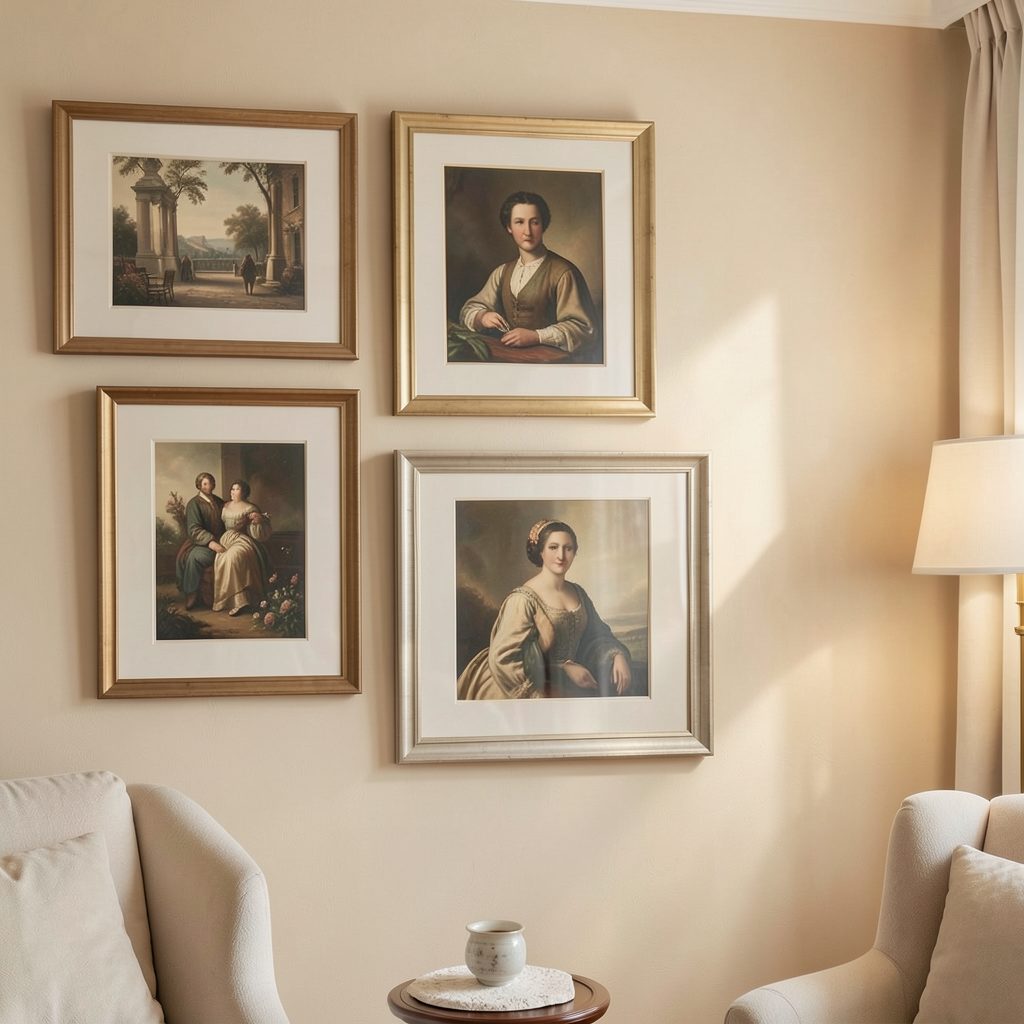
For a relaxed arrangement, keep the gaps between frames consistent even when the frame sizes differ. A structured grid feels more contemporary, while an organic salon arrangement adds a collected, gallery-inspired character. If you are drawn to exhibition-style presentation, explore this gallery display guide for further ideas about composing artwork at home.
Use Contrast To Add Depth
A black and white print does not have to be framed in black. White, pale oak, walnut, brushed brass, and slim silver frames can each shift the mood of the room. Black frames create definition and pair well with modern furniture; natural wood softens the contrast and works particularly well with linen and warm neutral walls.
Consider the mount as part of the composition. A generous white mount gives a small photograph more presence and creates a quiet border between image and frame. A close-mounted print feels denser and more graphic. For bedrooms with limited wall space, several close-mounted pieces can form a strong, compact arrangement.
| Bedroom Style | Print Character | Frame Direction | Best Placement |
|---|---|---|---|
| Soft and natural | Landscapes, shadows, gentle portraits | Light wood or warm white | Above a linen headboard |
| Modern and graphic | Architecture, geometry, strong contrast | Slim black or metal | On a clean feature wall |
| Eclectic and collected | Mixed subjects with related tones | Varied frames with one repeated detail | Beside a dresser or reading chair |
| Minimal and serene | Simple compositions with open space | White, pale oak, or frameless | Opposite the bed or above a console |
Lighting will change how those contrasts appear throughout the day. Direct sunlight can fade photographic prints and create glare behind glass, so avoid placing valuable work in intense sun. Museum-grade acrylic or UV-filtering glazing is a practical choice when the wall receives strong natural light.
Layer Photography With Bedroom Textures
A monochrome gallery wall becomes more inviting when its hard lines are balanced by tactile materials. Add a knitted throw, rumpled bedding, woven baskets, or a fabric headboard to prevent the scheme from feeling flat. These textures introduce warmth while preserving the restrained palette.
You can also echo details from the photographs elsewhere in the room. A black-and-white architectural print might relate to a linear bedside lamp, while a portrait with soft shadows could sit near rounded ceramics or a curved chair. Repetition makes the decor feel connected without requiring every item to match.
Keep surrounding accessories selective. A few sculptural objects, a dark vase, or a stack of art books will reinforce the gallery atmosphere. Too many small decorations near the frames can weaken the visual impact and make the sleeping area feel busy.
Build A Gallery Wall That Feels Personal
A bedroom display should reflect more than a colour scheme. Include photographs connected to places, people, or moments that matter to you, alongside purchased fine-art prints. Personal meaning gives a carefully styled room a sense of depth that a purely decorative arrangement may lack.
Vary the visual rhythm with one or two unexpected pieces. A contact sheet, vintage travel photograph, handwritten line, or small abstract work can interrupt a sequence of similar rectangles. Keep the palette controlled so the variation feels intentional rather than distracting.
If you create photography or artwork yourself, Focus LDN also provides a way to submit your artwork for consideration. Discovering emerging work can bring originality to a bedroom gallery while supporting artists beyond the familiar high-street print selection.
Refine The Arrangement Over Time
Live with the display for a few days before deciding whether it is finished. You may notice that one image feels too dark beside the bed or that a frame sits awkwardly in relation to a lamp. Small adjustments to height, spacing, or order can significantly improve the composition.
Keep spare prints and frames stored safely so the arrangement can evolve with the room. Seasonal bedding, a new paint colour, or a change in furniture may call for a lighter or more dramatic selection. Artwork does not need to remain fixed simply because it has been hung.
Use the final details to make the space feel restful: warm bulbs, concealed cables, soft curtains, and a clear surface beneath the artwork. When the photographs, frames, furniture, and lighting work together, monochrome art adds personality without disturbing the bedroom’s calm.
Choose two or three images that immediately suit the mood of your room, then build the display around them. Test the layout with paper templates, compare frame finishes in natural light, and leave enough space for the images to breathe. Start your bedroom gallery with intention, and let the collection grow as you find photographs that feel worth living with.