A Single Canvas That Transforms the Bathroom
A large canvas over the tub can give a bathroom the presence of a small private gallery. Rather than filling every wall with prints or accessories, one carefully chosen artwork creates a strong focal point and lets the room feel intentional, calm, and spacious.
The key is to balance visual impact with the practical demands of a bathroom. Steam, splashes, limited wall space, and reflective surfaces all affect how artwork will look and perform. With the right scale, frame, and placement, a single piece can become the defining detail of the room.
This approach suits many interiors, from pared-back Scandinavian bathrooms to richly coloured period spaces. The artwork does not need to match every tile or towel; it should establish a mood that the rest of the room supports.
Let the wall lead the room
The wall above the tub is naturally prominent, especially when the bath sits beneath a window, pendant light, or architectural recess. Treat it as the main gallery wall rather than an empty area waiting for several smaller decorations. A generous canvas usually feels more composed than a cluster of undersized pictures competing with taps, shelving, and mirrors.
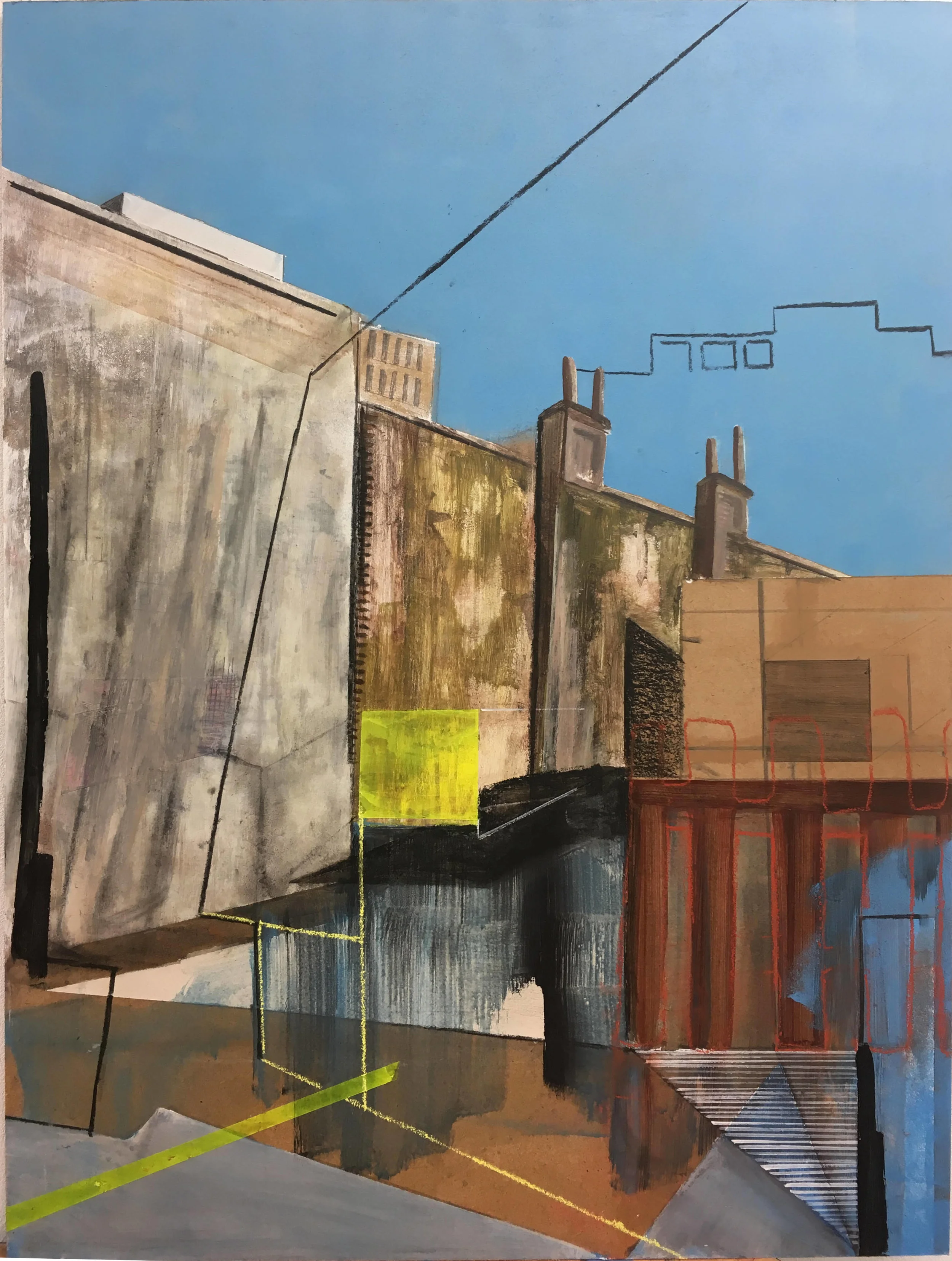
Look for artwork with enough tonal variation to hold attention from across the room. An abstract landscape, gestural painting, botanical study, or softly coloured still life can all work well. Consider how the image will appear through a veil of steam and under both daylight and warm evening lighting.
A canvas with a quiet centre is often easier to live with than one packed with tiny details. Broad shapes and restrained colour fields create a sophisticated backdrop, while a more expressive painting can bring energy to an otherwise minimal bathroom.
Choose art that can handle a wet room
A traditional unprotected canvas may be vulnerable in a bathroom. Frequent condensation can loosen fibres, distort stretcher bars, and affect certain paints or finishes. The safest location is away from direct spray, with reliable ventilation and enough distance from the bath edge to reduce accidental splashing.
For more specific guidance on choosing resilient materials, explore art for humid bathrooms before committing to a valuable original. A sealed canvas, archival print behind acrylic, or artwork finished with a suitable protective coating may offer a better balance of style and longevity.
Ventilation is part of the artwork plan. Use the extractor during and after bathing, keep the room aired, and avoid placing the canvas where water repeatedly strikes it. If the bathroom is exceptionally steamy, a framed print behind acrylic can provide a gallery-style appearance with less risk than an exposed textile surface.
Get the proportions and position right
Measure the usable wall rather than the full wall. Account for the tub rim, tap assembly, ceiling line, adjoining tiles, and any wall lights. As a general guide, the canvas should occupy roughly two-thirds to three-quarters of the visual width above the bath, while leaving comfortable breathing room on either side.
The lower edge should sit high enough to avoid splashback but low enough to feel connected to the tub. In many bathrooms, positioning the artwork around 20 to 35 centimetres above the rim creates a balanced relationship. Let the room’s proportions decide rather than following a rigid hanging rule.
A landscape-format canvas often echoes the horizontal line of a freestanding bath, while a portrait-format piece can emphasise a tall, narrow wall. If the tub is centred, centre the artwork carefully too. For an offset bath, align the canvas with the bath’s usable visual zone rather than automatically with the entire wall.
Compare formats before you buy
The shape and construction of the artwork influence how the bathroom feels. Use painter’s tape to outline possible dimensions on the wall, then view the mock-up from the doorway, the bath, and the vanity. This simple step reveals whether the piece will feel commanding or crowded.
| Artwork format | Visual effect | Suitable setting | Main consideration |
|---|---|---|---|
| Wide landscape canvas | Extends the room horizontally | Freestanding or built-in tub | Needs enough wall width |
| Tall portrait canvas | Adds height and drama | Narrow wall or high ceiling | Can feel imposing above a low bath |
| Square canvas | Creates a centred, graphic focus | Symmetrical bathroom layout | Requires careful spacing around fixtures |
| Framed print behind acrylic | Clean, polished, and practical | High-humidity or splash-prone rooms | Reflection may increase near lighting |
| Diptych treated as one image | Adds width with a tailored rhythm | Large feature wall | Gaps must remain consistent |
A deep frame can make an artwork feel architectural, but it may project too far above a narrow tub. Slim profiles tend to suit minimalist bathrooms, while a substantial wood frame can soften glossy tile and introduce warmth. Always check that the hanging hardware is secure and suitable for the wall surface.
Build a frame and colour relationship
The frame should connect the canvas to the bathroom without making the scheme look overly coordinated. Black works well with dark taps, window frames, or graphic grout lines. Natural oak, ash, or walnut can bring warmth to white tile and echo timber stools or woven baskets.
If the room already contains strong materials, choose an artwork with a quieter palette. A stone bathroom may benefit from dusty blue, muted green, or warm clay tones, while a monochrome scheme can support a vivid accent colour. Repeating one shade in a towel, vase, or soap dispenser is enough; the room does not need a matching set.
A canvas over the tub also needs visual breathing room. Resist the urge to add a shelf directly beneath it or surround it with small objects. The open area allows the artwork to read as a deliberate statement, much like a well-edited gallery display.
Keep the surrounding styling quiet
Once the canvas is installed, edit the area around it. Choose one or two supporting details, such as a sculptural bath caddy, a simple ceramic vessel, or a low stool in a natural material. Avoid tall accessories that interrupt the lower edge of the artwork or create a cluttered silhouette.
Lighting matters as much as placement. A wall washer, discreet picture light, or adjustable ceiling fixture can reveal texture without creating harsh glare. If the bathroom includes a television or another functional focal point elsewhere, the principles in decorating around a television can help you keep the canvas visually important without making the whole room feel staged.
Think of the tub wall as one composition. The canvas, bath, fittings, lighting, and negative space should support one another. When the surrounding elements are restrained, the artwork can provide the colour, movement, and personality the room needs.
Practical decisions before hanging
A little preparation protects both the artwork and the finish of the bathroom. Confirm the wall type, use appropriate anchors, and avoid drilling through hidden pipes or electrical runs. For heavier framed pieces, ask a professional installer to assess the fixing points, particularly on tiled or plasterboard walls.
Use these checks before making the final installation:
- Measure the bath, wall, ceiling, and nearby fixtures together.
- Test the artwork’s proportions with paper or painter’s tape.
- Select moisture-resistant materials and a suitable protective finish.
- Keep the piece away from direct spray and improve ventilation.
- Check the view from the doorway, vanity, and bathing position.
After hanging, leave the wall undisturbed for a few days before adding anything else. The room may already feel complete. For further visual references, browse gallery art to see how scale, framing, and negative space can shape a cohesive display.
A single large canvas over the tub works best when it feels purposeful rather than precious. Choose a piece that changes the atmosphere of the room, install it with care, and let its scale provide the drama. Explore more art-led decorating ideas from Focus LDN and subscribe to the email updates for considered guidance on gallery walls, artwork display, and stylish home living.