Drama in the Bathroom: Styling with Black-and-White Photography
A monochrome print carries a gravity that colour rarely achieves. Place a black-and-white photograph above a vanity or beside a freestanding bath and the room takes on a cinematic hush, the kind you'd expect in a Soho loft or a quiet laneway gallery in Melbourne's Fitzroy. Bathrooms are reflective spaces, and high-contrast imagery leans into that mood rather than fighting it.
For Australian homes, where bathrooms often open onto sun-drenched courtyards and feature vanities reclaimed from old Queenslanders, monochrome art offers a calm counterpoint. It bridges cool stone, warm brass and natural light without competing with them. The result feels considered rather than decorated — closer to a private gallery than a standard wet area.
Why monochrome imagery suits wet rooms
Bathrooms are sensory spaces dominated by steam, splashes and shifting light. A glossy colour print can feel overstimulating here, while a black-and-white photograph absorbs the mood. The tonal range of monochrome holds beautifully against the soft, diffused light that filters through frosted glass or a north-facing skylight in a Sydney terrace.
There's also a practical dimension. Monochrome photography carries emotional weight without relying on dominant hues, so it won't clash with towels, plants or the green vein of a marble benchtop. The eye reads it as composition — shape, shadow, gesture — which is why it remains a staple of editorial bathrooms from Belle to Dwell.
Choosing photographs that earn the wall
Not every black-and-white image belongs in a bathroom. The strongest choices share a few qualities: clear subject matter, generous negative space and a mood that matches the ritual. A close-up of hands under running water, an architectural facade or a portrait lit like a Caravaggio canvas will all hold their own against reflective tiles.
Australians sourcing imagery should look beyond generic stock libraries. Local photographers like Petrina Hicks, Lee Grant and David Laity each bring a distinctly Antipodean sensibility. For broader archives, estate sales and galleries in Paddington and Collingwood frequently feature prints well suited to domestic interiors.
Placement, scale and the rule of the eye line
In a bathroom, viewing height matters more than in a living room, because most people stand or sit upright rather than recline. The centre of a framed print should sit roughly at seated eye level — around 145 centimetres from the floor — so it reads naturally from the vanity or the edge of the bath.
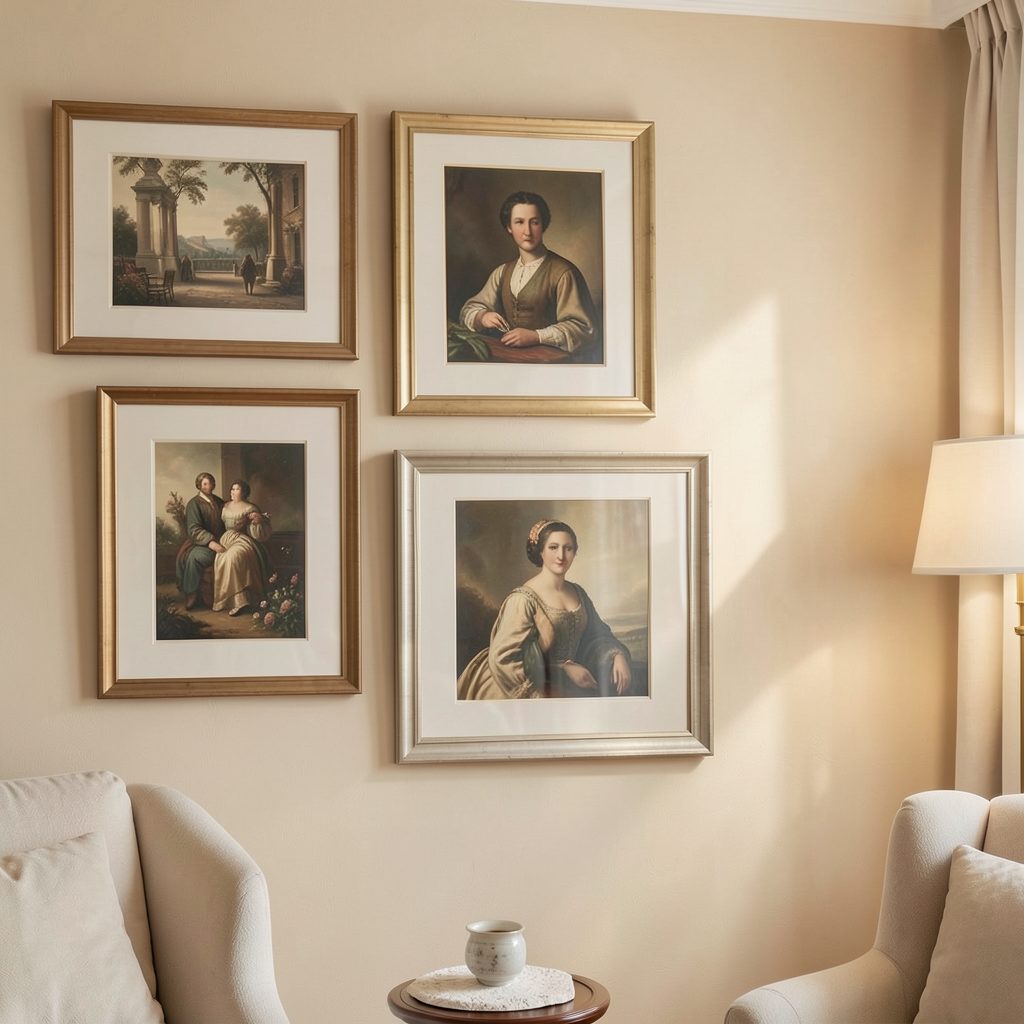
A single oversized piece often delivers more drama than a cluster. A 70 by 100 centimetre print, hung about 15 centimetres above a shaving mirror or beside a tall linen cupboard, creates an instant focal point. For salon-style arrangements, two or three smaller images in matching frames can work above a wide vanity, provided the spacing stays generous and the subject matter feels unified.
Framing for humidity and Australian conditions
Brisbane's subtropical summers and Sydney's coastal humidity are kind to nothing porous. Standard MDF or untreated timber frames will warp and mildew within a season, so it pays to invest in sealed hardwood, anodised aluminium or powder-coated steel. Many framers in Brisbane's Albion and Sydney's Surry Hills now offer marine-grade options developed for boats, which handle steam far better than domestic equivalents.
Glass choice matters too. Non-reflective museum glazing reduces glare from overhead downlights and is far more forgiving in a steamy room than standard glass. Acrylic glazing, though pricier, won't shatter if a towel swing goes wrong. Focus LDN publishes regular guidance on framing choices for tricky interiors, and their archive is worth bookmarking before committing.
Pairing photography with the room
Black-and-white imagery reads differently depending on what surrounds it. Against crisp white subway tiles and chrome tapware, it leans minimalist and almost Scandinavian. Against veined marble, unlacquered brass and fluted glass, it shifts towards Parisian elegance. Against timber panelling and stone basins — a combination popular in Adelaide's restored bungalows and Byron's beach houses — it becomes earthy and grounded.
The trick is to let one element lead. If the photograph is graphic and high-contrast, keep the surrounding palette quiet. If the image is softer, you can introduce warmer metallics, textured linen or a planter of eucalyptus. Lighting is the final piece: a picture light or warm LED strip above the frame pulls the eye and prevents the print from disappearing into shadow.
Mistakes that undermine the look
A few predictable errors flatten what should be a striking moment. Hanging a print where direct water can hit it shortens its life considerably. Choosing imagery that's too small for the wall makes the photograph feel like an afterthought. Mixing too many frame finishes dilutes the sense of intention.
It also helps to resist the temptation to decorate around the photograph. A heavily patterned wallpaper, a busy floor and a gallery wall of colour prints all compete for attention. The drama of monochrome photography comes from restraint, so the rest of the room should whisper.
Comparing common frame and glass options
| Option | Moisture Resistance | Visual Finish | Typical Price (AUD) | Best For |
|---|---|---|---|---|
| Anodised aluminium frame with acrylic glazing | Excellent | Clean, modern, low-glare | 180–320 per print | Coastal and humid bathrooms |
| Sealed spotted gum frame with museum glass | Very good | Warm, architectural, slight sheen | 260–450 per print | Heritage homes and federation bathrooms |
| Powder-coated steel with non-reflective glass | Excellent | Crisp, gallery-style | 200–360 per print | Minimalist and contemporary bathrooms |
| Untreated pine with standard glass | Poor | Soft, rustic | 80–150 per print | Powder rooms with strong ventilation only |
Subjects that photograph well in a bathroom setting
- Architectural studies, including staircases, doorways and bare interiors
- Portraits shot with strong directional light and quiet backgrounds
- Botanical studies, especially ferns and eucalyptus rendered in shadow
- Movement studies, including water, smoke and hands
Details that lift the final composition
- A picture light positioned 10–15 centimetres above the frame
- Generous white space around the print, at least 10 centimetres of breathing room
- A small ledge or stool beneath, holding a candle or rolled towel
- Repeating the black or white tone in tapware, grout or a soap dispenser
Step into your bathroom tonight, look at the empty wall you've been ignoring, and commit to a single black-and-white print by the weekend. Order the frame, hang it at the right height and let the rest of the room settle around it. Subscribe to the Focus LDN newsletter for more ideas on turning everyday rooms into spaces with genuine presence.