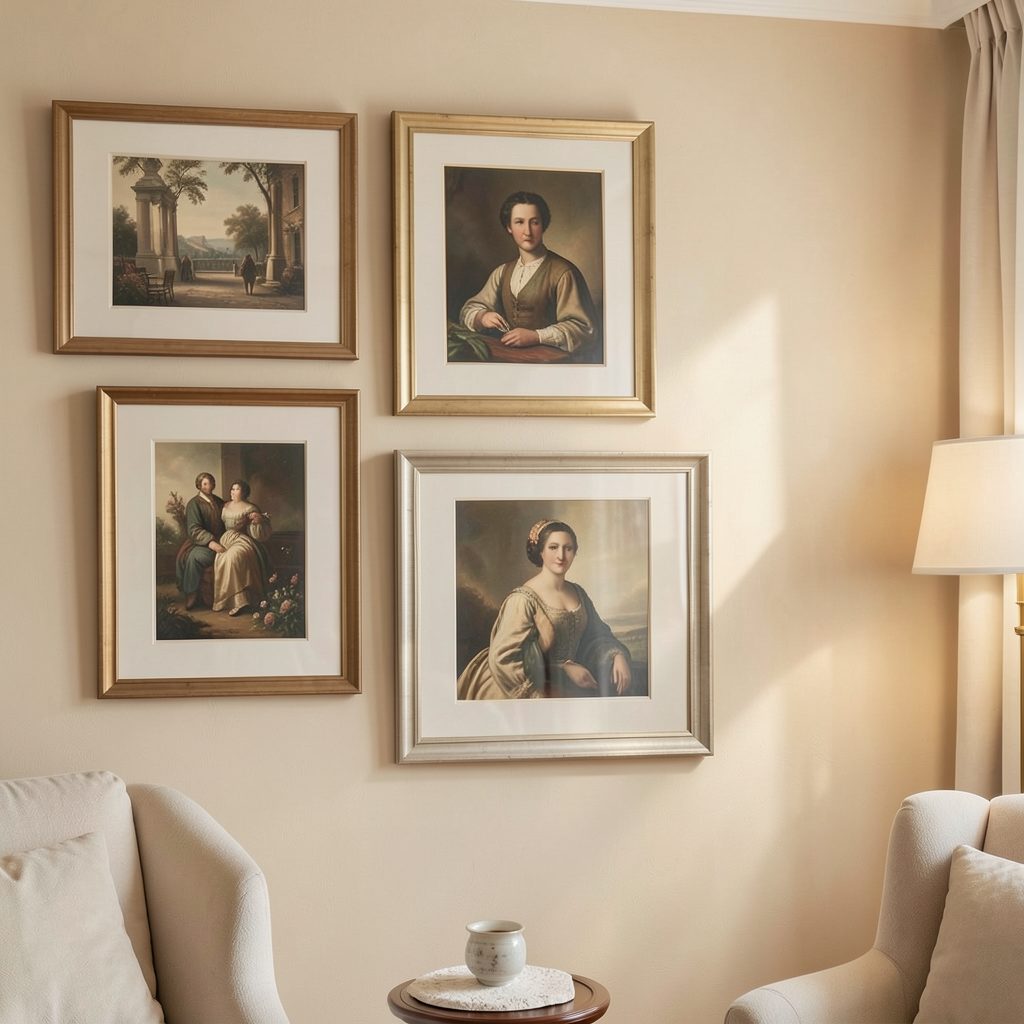
Frames for bold abstract art in minimalist living rooms
Bold abstract art gives a minimalist living room a focal point without requiring a room full of objects. Selecting frames for bold abstract art in a minimalist living room is therefore about control: defining the edge, protecting the artwork and keeping the surrounding scheme calm.
A broad, ornate moulding can compete with a gestural canvas, while an undersized frame may make substantial artwork feel temporary. The most effective choice reflects the work’s scale, its colours and the amount of wall visible around it.
Australian apartments often place artwork in open-plan rooms shared with kitchens, studies and entertainment areas. Sydney and Melbourne homes may offer narrow walls, rendered surfaces or exposed brick, all of which affect profiles, fixings and the visual weight of a frame.
The right frame should also perform well in everyday conditions. Consider daylight, humidity, dust, handling and cleaning before focusing on a finish that merely coordinates with the furniture.
Choose scale before profile
Begin with the artwork’s exact dimensions, including any projecting stretcher bars or deep gallery frame. Measure the available wall too, particularly where cabinets, doorways and ceiling heights restrict placement. A slim frame generally suits a large canvas, while a delicate work may need enough width to appear intentional.
| frame profile | effect in the room | strongest match | practical consideration |
|---|---|---|---|
| slim black metal | crisp contrast and a graphic finish | black-and-white or intensely coloured work | matte finishes reduce fingerprints and glare |
| natural oak | warmth without visual heaviness | earthy palettes and softer shapes | timber variation should complement, not copy, the artwork |
| painted white | a quiet edge that blends into the wall | pale, tonal or minimalist compositions | use UV-stable paint and a clean, even coating |
| deep timber box | dimension and museum-like presence | large canvases with substantial depth | check projection, weight and available wall space |
Before ordering, place masking tape on the wall and mark the frame’s outer dimensions. View the outline from different positions in the room and allow for the negative space that will remain around the artwork.
Colour, timber and Australian light
Colour should support the composition rather than introduce a competing accent. A black frame can sharpen a vivid abstract, but it may intensify an already high-contrast work. Pale timber softens primary colours, while a white or off-white frame gives an energetic composition room to breathe.
Australian daylight deserves careful testing. West-facing windows in Perth or Sydney can produce intense afternoon light, and reflections may make glossy glazing obscure sections of the artwork. Compare frame samples and finish swatches under the room’s actual lighting at both midday and evening.
Glazing that protects without dulling colour
Glazing is an important frame component rather than a minor accessory. UV-filtering acrylic is lighter and less hazardous than glass, making it practical for busy family rooms and rental apartments. It can scratch, however, so a soft microfibre cloth and careful hanging location matter.
Glass usually provides strong scratch resistance and optical clarity but adds weight and can break. In Brisbane’s humid seasons, ask the framer about suitable backing, spacers and moisture-resistant adhesives. Avoid assuming that every product described as archival or conservation-grade has the same specifications.
Keep the frame quiet and artwork loud
Minimalism works best when the frame establishes a boundary without becoming the main event. Mat proportions, frame depth and surrounding negative space should all reinforce the artwork. Focus LDN’s guide to compose with negative space offers useful context for making that breathing space feel deliberate.
Let the frame’s finish follow its visual role. Matte black creates definition, natural timber introduces warmth, and painted mouldings can recede into a pale wall. For a canvas designed to run to its edges, avoid a mat that changes how the original composition meets the frame.
Plan the wall as carefully as the frame
In an apartment, the best wall may be limited, but it should not feel crowded. Consider how the frame relates to furniture height, nearby architectural lines and the main viewing route through the room. Keep door mechanisms, cabinet doors and overhead lighting clear of the finished frame.
For a grouped scheme, spacing and alignment become as important as frame matching. The advice to arrange a gallery wall can help when several bold pieces share one wall. Mixing frame widths may be engaging, while keeping the surrounding gaps controlled prevents the arrangement from looking accidental.
Make local selection and hanging decisions
Custom framers in Sydney, Melbourne, Brisbane and Perth regularly handle oversized canvases, unusual formats and colour-matching requests. Give each supplier the artwork’s dimensions, medium and weight, then request an itemised quote covering frame, mat, glazing, backing, delivery and installation.
At the framers
- Confirm the exact artwork and frame dimensions.
- Review timber, paint and finish samples in place.
- Ask for glazing specifications and UV-filtering information.
- Check delivery, installation and damage policies.
Installation deserves the same attention as selection. Test the chosen hook or fixing method on an inconspicuous area, particularly on rendered walls or brick, and ensure the hanging hardware suits both the frame weight and wall material.
Before installation
- Check the frame’s weight and required fixings.
- Position furniture before marking the final height.
- Keep nearby doors, cabinets and traffic routes clear.
Check the lease and obtain written landlord consent before drilling or using adhesive fixings in a rental property. Interior walls in strata buildings may fall within a lot owner’s control, but balconies, entryways and common property can be governed by owners’ corporation by-laws. In NSW, the Strata Schemes Management Act 2015 is particularly relevant. Consumer guarantees under the Australian Consumer Law also remain relevant when a supplier makes claims about materials or workmanship.
Finish with a room that feels cohesive
Bring the frame, artwork and furniture into one visual conversation. Stand several metres away to check balance, then move closer to inspect colour, joins, glazing and hanging hardware. That second viewing often reveals small alignment issues before they become difficult to correct.
Preview a bold frame for at least a full day before settling on it. If possible, test custom framing before committing to an original work seen at a gallery opening. Subscribe to Focus LDN for considered decorating guidance, fresh display ideas and practical framing advice delivered to your inbox.