Open shelving in the kitchen: displaying art and objects
Open shelving can make a kitchen feel lighter, more personal, and visually connected to the rest of the home. Instead of hiding every useful item behind cabinet doors, open shelves create a curated backdrop for ceramics, framed prints, cookbooks, glassware, and small sculptural pieces.
The challenge is keeping the arrangement intentional. A shelf filled with attractive objects can still look crowded if everything has the same height, color, or visual weight. The most successful displays combine practical kitchenware with artwork and leave enough breathing room for each piece to register.
Think of the shelves as a small home gallery rather than extra storage. This approach helps you choose fewer, better objects and gives everyday items a stronger decorative role.
Start with the shelf as a composition
Before placing anything, look at the full wall and identify the visual center. A pair of shelves may need one strong grouping in the middle, while a long single shelf can support several smaller arrangements. Treat the wall, shelves, and countertop as one composition rather than decorating each surface independently.
Begin with the largest items: a leaning artwork, a serving platter, a tall vase, or a stack of cookbooks. These establish the structure. Add medium-sized ceramics and vessels around them, then finish with small details such as candleholders, framed photographs, or a pinch pot.
Vary the height and depth of each object. A shallow frame placed behind a rounded bowl creates layered interest, while a tall vase can balance a horizontal stack of books. Avoid arranging everything in a straight line, since slight overlaps and staggered heights make the display feel more collected.
Choose artwork that can live in a kitchen
Kitchen art should suit the atmosphere of the room and withstand its conditions. Graphic prints, botanical studies, still lifes, line drawings, and small paintings tend to work well because they bring color and character without competing with the activity of the space.
Place framed artwork away from the most active cooking zone when possible. Steam, grease, and splashes can damage paper and soften unprotected finishes. Artwork on shelves near a hob should sit behind a removable glass or acrylic layer, and valuable pieces are better displayed on a less exposed wall.
Leaning art offers flexibility and a relaxed gallery feel. Use a substantial frame at the back of a shelf, then layer a smaller print or object in front. If the kitchen already has patterned tiles or colorful cabinetry, choose quieter artwork with a restrained palette. In a neutral room, a bold print can become the focal point.
Build a useful mix of objects
The strongest open-shelf displays combine beauty with everyday function. Handmade mugs, white serving bowls, wooden boards, linen-covered cookbooks, and clear glassware can all contribute texture while remaining easy to use. Keep frequently handled items on lower shelves and reserve higher levels for decorative pieces.
Material contrast keeps a neutral arrangement from looking flat. Pair glazed ceramics with raw wood, brushed metal, woven baskets, or ribbed glass. A few natural elements, such as dried branches or a small potted herb, can soften the harder surfaces commonly found in kitchens.
| Object type | Best visual role | Practical placement |
|---|---|---|
| Framed print | Adds color, pattern, or a focal point | At the back of a shelf, away from splashes |
| Ceramic vessel | Provides height and sculptural form | Near an end or beside lower objects |
| Cookbooks | Creates horizontal lines and color blocks | Stacked or stood upright in small groups |
| Everyday mugs | Brings rhythm and useful repetition | On a lower shelf within easy reach |
| Wooden board | Adds warmth and natural texture | Leaned vertically against the wall |
| Small plant or herbs | Introduces softness and movement | In a simple pot with good drainage |
Use repetition to create cohesion. Three related bowls, several mugs in one color family, or a sequence of similarly toned books can make varied pieces feel connected. The aim is not perfect matching; it is a visual relationship between objects.
For a calmer home-wide style, the principles in this minimalist bedroom guide also apply in the kitchen: reduce visual noise, protect negative space, and let a few considered pieces carry the design.
Work with color and negative space
Color is one of the quickest ways to unify open shelving. Choose a base of two or three tones already present in the room, such as cream, terracotta, charcoal, or pale wood. A small accent color can then appear in artwork, ceramics, or book spines without making the shelves feel overdesigned.
Negative space is equally important. Leave gaps between clusters and avoid filling every visible section. Empty areas give the eye a place to rest and make the displayed objects appear more valuable. A shelf that is 70 to 80 percent styled often looks more finished than one packed from end to end.
Try grouping objects in uneven numbers, but use that rule as a starting point rather than a formula. A tall vase, a small bowl, and a framed print may form one group; two stacked books and a mug may form another. Step back regularly to check whether the arrangement feels balanced from across the room.
Make open shelving easy to maintain
A beautiful shelf must still work in a real kitchen. Keep fragile artwork and porous materials away from steam, and place washable objects closer to areas where dust or cooking residue collects. Glass, glazed ceramic, metal, and sealed wood are usually easier to clean than unsealed paper or fabric.
Avoid placing valuable objects where they can be knocked by cupboard doors, appliances, or busy preparation areas. Museum putty or discreet shelf grips can stabilize lightweight ceramics, especially in homes with pets or young children. Check that each shelf is properly fixed and rated for the combined weight of books, pottery, and cookware.
A simple maintenance routine prevents the display from becoming a burden. Dust shelves before wiping objects, wash frequently used pieces as part of the normal kitchen cycle, and rotate artwork or decorative items every few months. Seasonal changes can refresh the room without requiring a full redesign.
Create a gallery-style kitchen wall
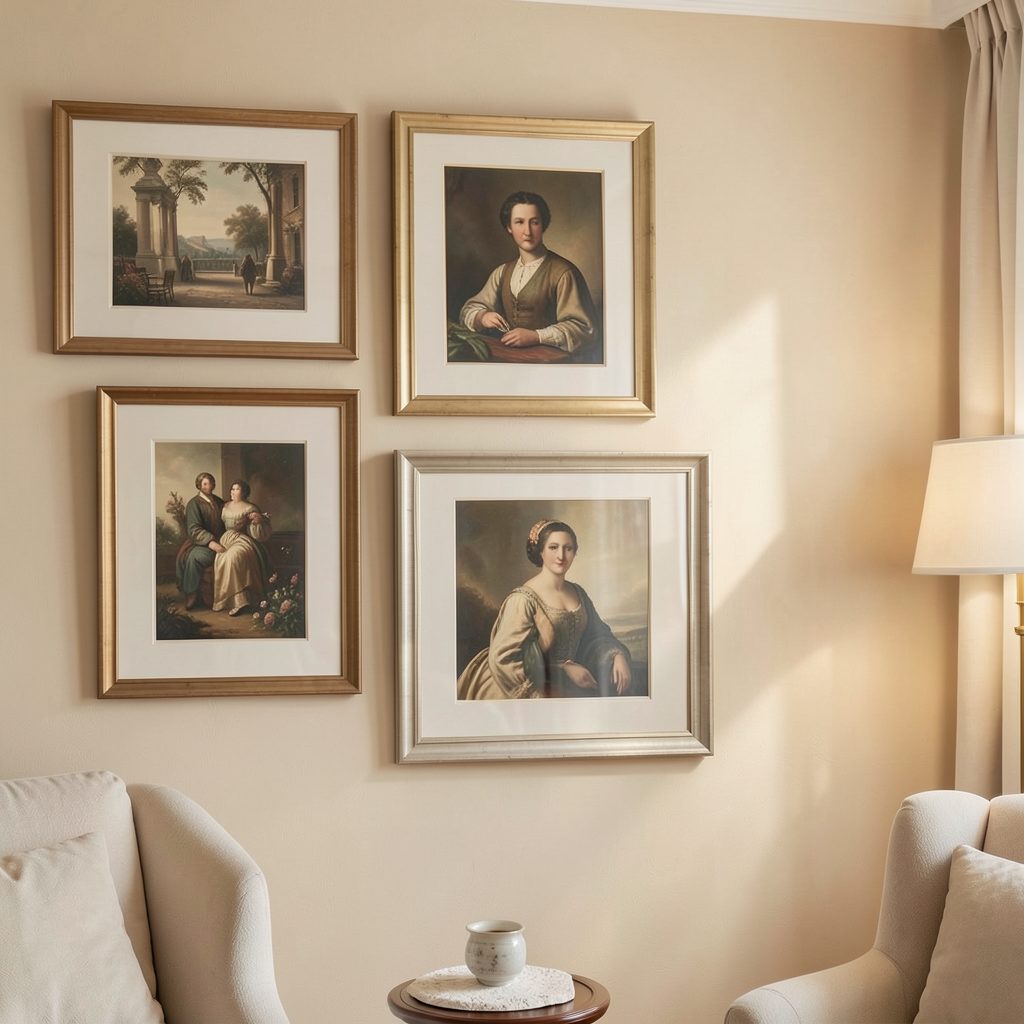
If the shelves sit beside a blank wall, extend the display upward with a small arrangement of framed art. Keep frames related through color, material, or proportion, then allow the shelving to act as the lower edge of the composition. This creates a more integrated gallery wall instead of two unrelated decorative zones.
Lighting can define the display after dark. Picture lights, discreet under-shelf strips, or a directional wall fitting will highlight artwork and bring out the texture of ceramics. Choose warm light where possible, since cool bulbs can make cream walls and natural wood look harsh.
For more ideas on arranging artwork and creating a polished home atmosphere, browse Focus LDN for gallery wall styling, frame selection, and room-by-room decorating inspiration.
Keep the arrangement personal
The most appealing kitchen shelves reveal something about the people who use the room. Include a bowl bought on holiday, a favorite artist’s print, a well-loved recipe book, or a handmade cup with an imperfect glaze. Personal objects prevent the display from feeling like a showroom.
Edit with confidence as your collection changes. Remove anything that no longer serves the room, group similar pieces together, and let new finds earn their place gradually.
- Keep daily-use items on the easiest-to-reach shelf.
- Place artwork behind objects only when the frame remains clearly visible.
- Repeat one or two colors across ceramics, books, and prints.
- Leave open space between groups to preserve a calm, gallery-like feel.
Open shelving becomes most successful when decoration and function support each other. Start with one shelf, create a balanced arrangement, and allow the display to evolve through everyday use. Explore Focus LDN for more considered ways to bring art, texture, and personality into your home.