Minimalist Bedroom Furniture: What to Keep and What to Skip
A minimalist bedroom is not an empty room stripped of personality. It is a carefully edited space where every piece earns its place through usefulness, proportion, comfort, or beauty. The aim is to create visual quiet without making the room feel cold or unfinished.
Furniture has the greatest influence on that balance. A bed, wardrobe, bedside table, and occasional chair can define the entire atmosphere, while unnecessary storage, oversized pieces, and decorative clutter quickly overwhelm a restrained scheme.
The most successful approach is to begin with the essentials, assess how the room is used, and then introduce a few considered details. This creates a bedroom that feels spacious and calm while still reflecting the people who live in it.
Start With The Room’s Essential Functions
Before choosing furniture, identify the activities the bedroom needs to support. Sleeping may be its primary purpose, but dressing, reading, working, storing clothes, and displaying personal items can all affect the layout. Furniture should respond to those needs rather than fill available floor space.
A bed is usually the visual anchor, so its size should suit both the room and the people using it. A king-size frame may feel luxurious, but if it leaves only narrow walkways, the result will be less relaxing. In a smaller bedroom, a simple double bed with integrated drawers may offer better functionality than a larger design with a bulky headboard.
Keep clear routes around the bed, wardrobe, and entrance. Open floor area is one of the most effective forms of decoration in a minimalist interior because it allows light to travel and makes the room easier to maintain.
Keep Furniture That Works Hard
The strongest pieces in a pared-back bedroom usually perform more than one role. A bedside cabinet can hold books, a lamp, and nighttime essentials. An upholstered bench can provide a place to sit while offering concealed storage. A slim chest of drawers may replace several small storage units that would otherwise create visual noise.
Choose a wardrobe according to the amount of clothing you genuinely own, not an imagined future collection. Built-in cabinetry in a wall-matching shade can recede into the background, while a freestanding oak or walnut wardrobe can become a warm focal point if the room benefits from more texture.
A practical bed frame, one or two bedside tables, and well-planned clothing storage are often enough. If the room has a separate dressing area, there may be no reason to add a chest of drawers simply because bedrooms traditionally include one.
Skip Pieces That Create Visual Noise
Furniture is worth reconsidering when it duplicates another function, blocks natural light, or requires constant rearranging. A decorative ladder, multiple occasional tables, and a large freestanding mirror can each look appealing in isolation but may make a compact bedroom feel crowded.
Avoid buying storage before measuring what needs to be stored. Open shelving tends to encourage displays of folded clothes, spare bedding, and small objects that need frequent styling. Closed doors generally produce a calmer appearance, especially when their handles and profiles are simple.
Overly ornate bed frames, heavily carved bedside tables, and mismatched furniture sets can also weaken a minimalist scheme. This does not mean every surface must match. It means each contrast should feel deliberate, with a limited palette of forms and finishes tying the room together.
Match Scale, Materials, And Movement
Scale matters as much as style. A low platform bed paired with a tall, narrow wardrobe creates a different impression from a high upholstered bed beside wide, chunky cabinets. Consider the ceiling height, window position, and visual weight of each object before committing to a purchase.
Natural materials help minimalist rooms feel tactile rather than stark. Timber, linen, wool, rattan, and brushed metal can add depth without introducing excessive pattern. Two or three complementary materials are usually enough; using too many finishes can make a simple room appear busy.
Leave enough space for doors and drawers to open comfortably. Measure the clearance around wardrobes, account for skirting boards, and mark proposed furniture footprints on the floor with painter’s tape. This small planning step often reveals when a beautiful piece is simply too large.
| Furniture item | Worth keeping when | Better to skip when |
|---|---|---|
| Bed frame | It provides comfort, good proportions, or useful storage | Its headboard dominates the room |
| Bedside table | It holds essentials without crowding the bed | It becomes a landing place for clutter |
| Wardrobe | It stores clothing efficiently and suits the wall layout | It is much larger than the actual need |
| Chest of drawers | It solves a genuine storage problem | It duplicates wardrobe capacity |
| Bedroom chair | It is used for reading, dressing, or relaxing | It mainly collects clothes |
| Full-length mirror | It improves dressing and reflects light well | It makes the room feel visually fragmented |
| Bench | It adds seating or concealed storage | It narrows the main walking route |
Make Practical Details Visually Quiet
Small functional decisions can preserve the calm character of a bedroom. Select bedside lighting with a compact footprint, conceal cables where possible, and use trays or drawers for the objects that tend to gather beside the bed. The fewer loose items on surfaces, the more intentional the furniture arrangement will appear.
Wall-mounted lighting can free up bedside space, while floating shelves can work well when they are limited to a few carefully selected objects. If you plan to hang artwork above a bed or chest, choose dependable picture hanging hardware suited to the wall type and frame weight.
Window treatments deserve the same restraint as furniture. Full-length curtains in a quiet neutral can soften hard edges, while simple blinds may be preferable where space is tight. Avoid allowing curtain poles, radiators, and furniture to compete for attention in the same area.
Add Personality Through Selected Art
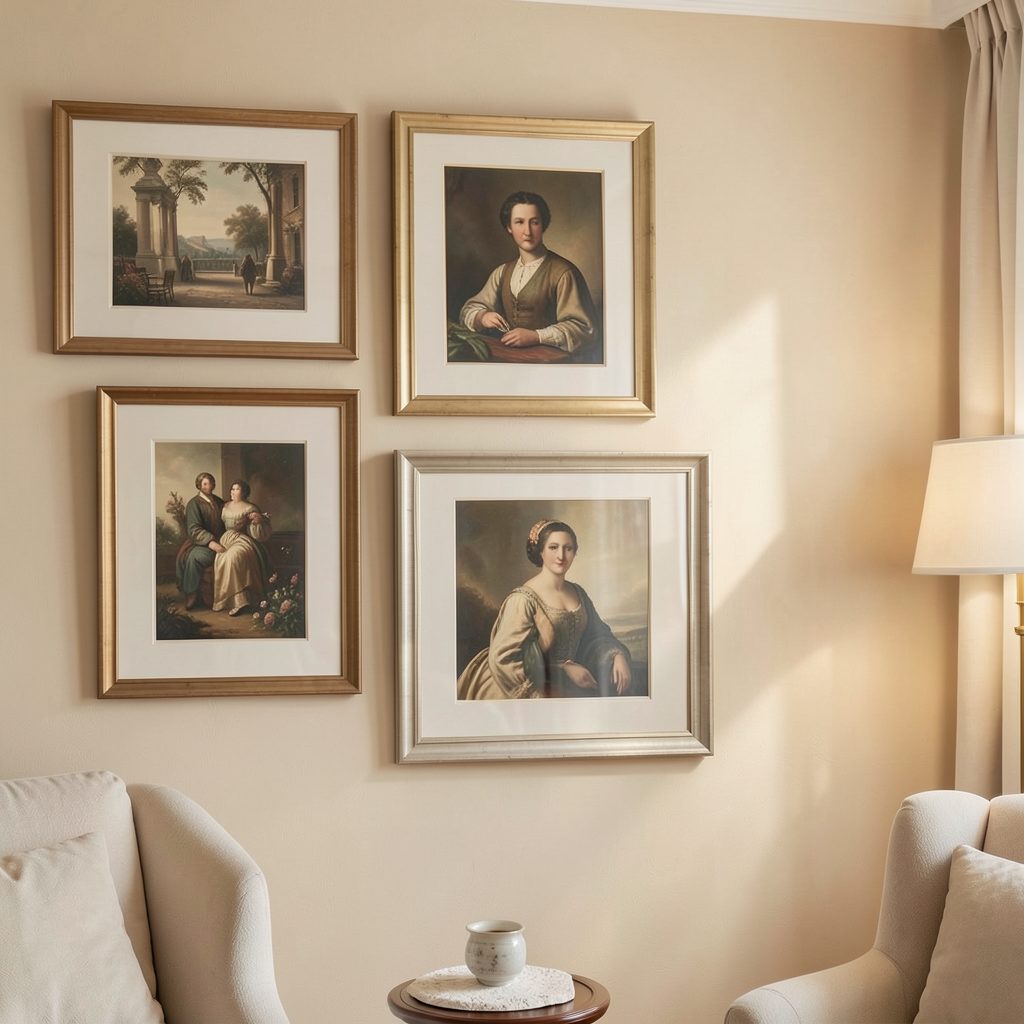
Minimalism works best when it leaves room for meaningful objects. One oversized print, a small pair of drawings, or a restrained gallery wall can give the bedroom character without undermining its simplicity. Select artwork with a shared colour relationship rather than choosing pieces solely because they fill empty walls.
Personal details can be subtle. A framed photograph, a tactile object from a journey, or engraved brick artwork can bring a sense of story to a neutral room. The key is to display these items with intention, allowing negative space around them so they feel collected rather than scattered.
Consider the sightlines from the bed and doorway. Artwork placed where it is naturally visible has greater impact than several small pieces distributed randomly. For further inspiration on arranging personal work at home, explore gallery wall ideas that balance spacing, frame styles, and scale.
A Simple Editing Routine For Bedrooms
Furniture choices become easier when the room is reviewed in stages. Remove anything that is broken, duplicated, rarely used, or difficult to maintain. Then assess what remains from the bed: can you move freely, reach essentials, and see enough calm surfaces to make the room feel restful?
Use this short edit as a guide:
- Keep the bed, storage, and seating that genuinely support daily routines.
- Remove furniture that blocks windows, doors, drawers, or walking paths.
- Choose one dominant finish and two supporting materials for visual consistency.
- Replace several small storage pieces with one efficient, well-proportioned unit.
- Display personal artwork selectively, with generous space around each piece.
The final test is practical as well as visual. A minimalist bedroom should be easy to tidy, comfortable to move through, and pleasant at the end of a long day. If a piece creates more maintenance than value, it probably does not belong.
Begin with one clear surface and one unnecessary item, then work through the room gradually. Keep what supports rest, storage, and personal expression; skip what merely occupies space. With a disciplined furniture edit and a few well-placed artworks, even a modest bedroom can feel spacious, composed, and distinctly yours.