Use a gallery wall to lead the eye to a window with a view
A gallery wall can do more than fill an awkward wall: it creates a visual path that makes the window the final stop. In a compact apartment, learning how to use a gallery wall to lead the eye to a window with a view turns artwork into a quiet architectural guide rather than a separate focal point.
Treat the view as part of the composition. Whether it looks over Sydney Harbour, a Melbourne laneway, Brisbane parkland or Perth rooftops, its brightness, colour and movement will influence where the eye settles first. The wall should support that outlook, not compete with it.
Australian apartments often sit close to the glazing, so proportion matters. Large frames can crowd a narrow living room, while a tiny arrangement may disappear beside full-height curtains. Start with the room's sightlines and existing furniture rather than a generic picture-hanging formula.
Walk through the space and notice where you naturally pause. Sit on the sofa, pour coffee at the kitchen bench and look toward the window from each position. These everyday habits reveal the strongest route for the artwork and stop a beautiful display from becoming visual clutter.
Begin with the view beyond the glass
Decide which part of the outlook deserves the final glance. A balcony, a tree canopy or a distant skyline can become the destination, while the gallery wall acts as the lead-in. Leave breathing room near the brightest area so the eye can cross from frame to frame without meeting a crowded edge.
The daylight around the window also determines how visible your art will be. West-facing rooms in Perth and western Sydney can deliver intense afternoon sun, and Brisbane homes may need strong UV protection. Side-lit artwork can look washed out; backlit pieces become silhouettes.
Choose a spot with the strongest view and work backward. Stand at the proposed gallery wall, turn toward the window and check that the arrangement naturally draws your gaze across the room. If it pulls you toward a doorway or blank corner instead, adjust the visual direction.
Measure the route your eye will take
Mark the window's centreline and the main entry or seating position on the floor with tape. Measure both, then sketch the wall to scale, including the window reveal, curtains and furniture. Record the largest frame and its intended hanging height before choosing smaller pieces.
Aim for the centre of the arrangement around eye level, roughly 145 to 155 centimetres from the floor, then vary it to suit the route. The lowest frame can be slightly lower when the wall is viewed from a sofa. Keep the bottom edge clear of skirting boards, power outlets and radiators.
Once the route is clear, compare gallery wall layouts to see how grids, salon walls and stepped arrangements change the direction of travel. Choose one geometry and test it in the room; mixing several styles usually weakens the lead toward the window.
Shape a layout that points toward the glass
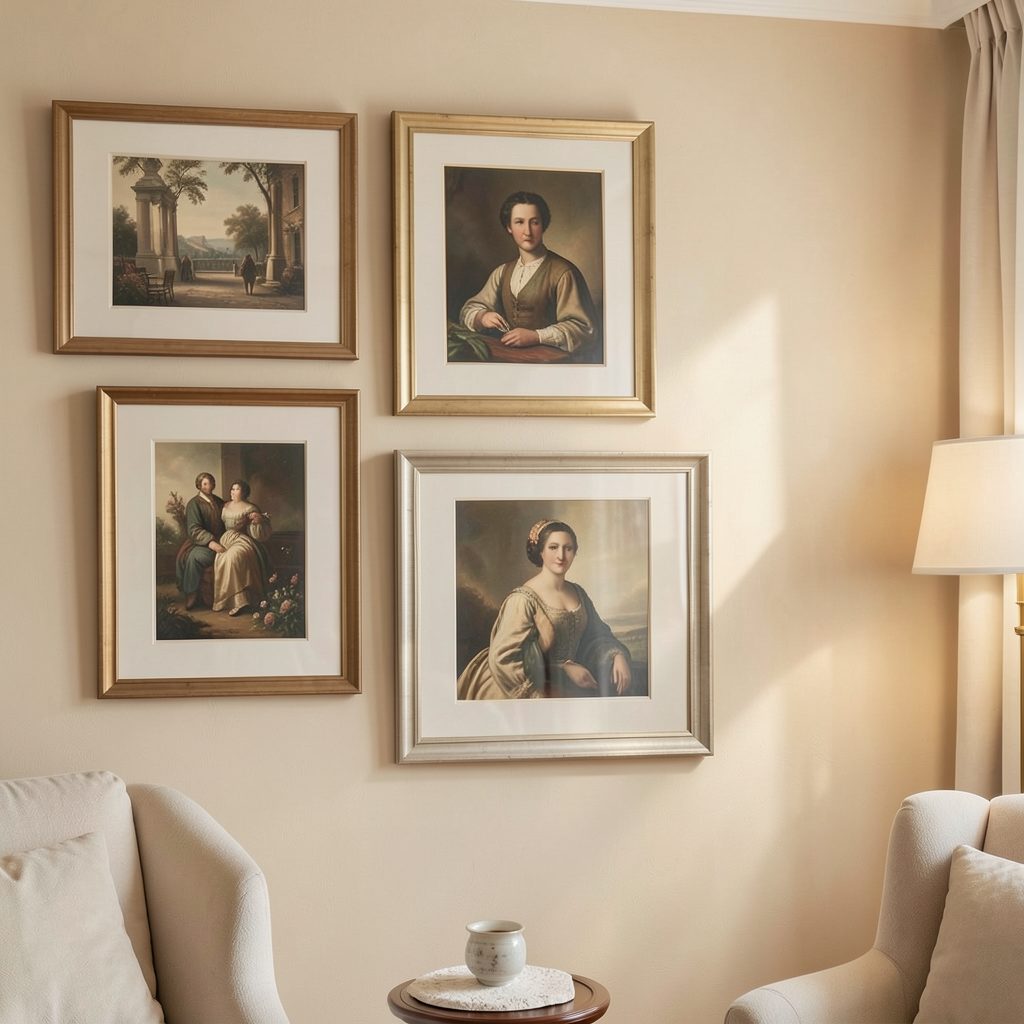
A diagonal or staircase arrangement is especially useful here. Let the frames rise gradually as they approach the window, or use a narrow linear group that ends on the side of the room with the best outlook. The increase in scale should feel natural, not like every frame is trying to reach the glass.
For a restrained starting point, follow this three-piece arrangement guide, then add one small work only if the wall has enough visual space. An odd-numbered grouping feels informal and can carry the eye from one object to the next. Even a large central piece can work, provided the remaining elements form an unmistakable arrow.
Repeat one colour, material or motif across the group to make the path coherent. If the view is green, echo a muted botanical tone; if it is brick or concrete, use warm neutrals. Keep the closest frame to the window quieter so daylight remains the final emphasis.
Coordinate art, frames and daylight
Match frame colours to the room rather than to every object in it. Matte black, timber, white and brushed metal cover most Australian interiors, but the finish should connect with nearby furniture or hardware. Mixed frame widths are acceptable when line weight and matting are consistent.
Use anti-glare glazing or UV-filtering acrylic for bright windows. Standard glass can create a second, competing image of the room and make artwork difficult to read from the sofa. Test each piece at different times of day before committing to the final position.
The local market offers prints and small originals from Australian artists and makers, often at accessible prices in Australian dollars. Australian A-series frame sizes can also simplify standardising the outer dimensions. Visit a gallery or reputable dealer, inspect the print quality and ask about artist rights before buying.
Install it safely in an Australian home
Use the right fixings for the wall. Concrete or brick veneer in many Australian homes needs suitable masonry anchors, while plasterboard needs a different spread-load plug. A stud finder helps in timber-framed houses, but always verify the fixing method with the building type.
Renters should check the lease and obtain written landlord approval before drilling. In a strata apartment, the body corporate may also have rules about alterations, particularly in common corridors and near services. State and territory strata laws and scheme by-laws differ, so confirm permission with the owner or managing agent and photograph the wall beforehand.
Keep the arrangement clear of window openings, emergency escape routes and heaters, and use a cord cleat or blind mechanism that children cannot easily pull. If you want the reveal to feel seamless, repeat the window's curtain colour in the matting or one frame rather than covering the glazing with art.
Use this reliable placement plan
Work in a simple sequence: identify the view, mark the route, choose a layout, check it in daylight, then install. This prevents the common mistake of buying frames before understanding the wall, the light or the room's proportions.
Use these checks as you refine the display:
- Keep the most visually prominent frame nearest the sofa, allowing the quieter pieces to lead toward the window.
- Maintain consistent gaps between frames so the arrangement reads as one visual gesture.
- Leave at least 20 centimetres beside the window reveal when curtains open fully.
- Check the complete display from the entry, then from your usual seat, before adding another piece.
The result should feel discovered rather than directed. A gradual change in scale, a repeated colour or a simple line across the wall can carry the eye toward the outlook and make the room feel larger. Subscribe to Focus LDN's email list for more practical decorating ideas, fresh gallery coverage and artwork display inspiration for Australian homes.