How to use art to define a workspace in a shared living room
Carving out a workspace inside a shared living room often feels like a styling puzzle. In Australian inner-city rentals and apartments, square metres come at a premium, and dedicating one wall to a desk can quickly eat into the room's sense of ease. Art offers a softer solution than a folding screen or a bulky bookshelf, because it pulls double duty as decoration and visual boundary at the same time.
A well-placed painting, framed print or arranged cluster of photographs signals to everyone in the household that the area behind it has a different purpose. The brain reads colour shifts, framing edges and subject matter long before it registers furniture placement. Designers in Melbourne and Sydney lean into this when they style apartments under fifty square metres, where every centimetre of wall has to earn its place.
The trick is to treat artwork as architecture. Instead of a single decorative piece, you arrange it with the same intention as a half-wall or open shelving unit, choosing scale, palette and sight lines that gently close off the workstation. Visitors see a curated space when they come over, rather than a corner cluttered with cables and notebooks.
Renting in Surry Hills, Brunswick or West End brings its own conditions. Many leases include no-photos-on-walls clauses, which limit how permanent the divider can feel. Removable hooks and freestanding easels solve this. The goal is to create a visual anchor that separates the practical from the rest of the room without drawing attention to the divide.
Choosing art that anchors a work zone
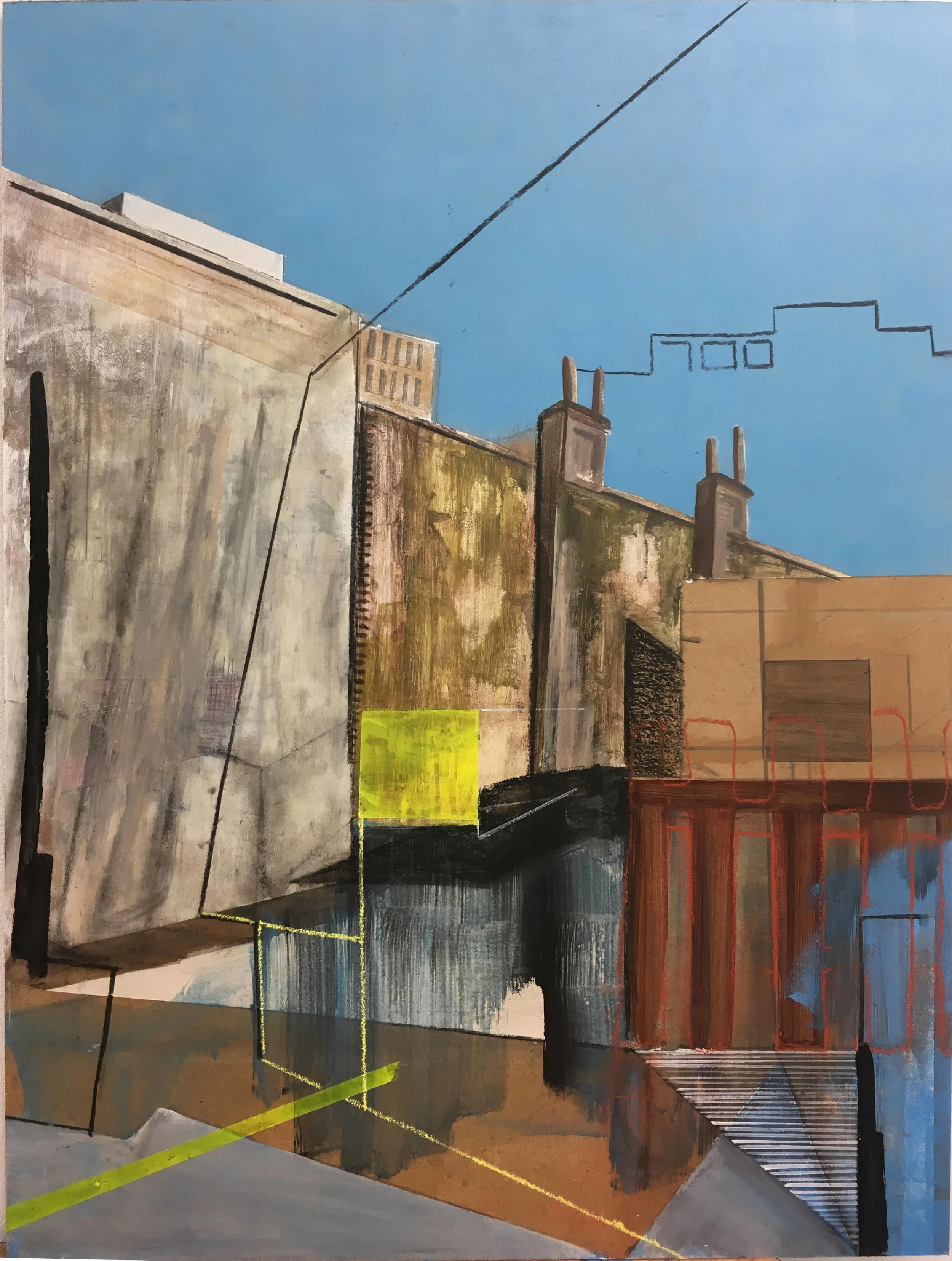
The first decision is subject matter. Calming, low-motion imagery supports focus, which is why botanicals, soft abstracts and monochrome photography work behind a desk. Busy scenes with strong narrative pull, such as street photography, can distract from spreadsheets and video calls. A single oversized piece reads as a wall in itself.
Framed prints from local makers sell at Sydney's Paddy's Markets and Brisbane's Jan Powers Farmers Markets. They are affordable, easy to swap out and light enough to hang with removable strips. If you prefer investing in one significant piece, studios in Collingwood and Newtown often open their doors to the public, letting you see work in natural light before committing.
Creating visual separation without building a wall
Artwork can replace a folding screen while keeping the room open. A tall canvas on a narrow console table behind the desk acts as both surface and backdrop, hiding cables and a small printer. The piece sits at seated eye-line during video calls, so what callers see is composed.
Layering two artworks at different depths also works. Place a smaller piece on a shelf in front of a larger framed piece on the wall. The overlap creates a low boundary that reads from the lounge side. This technique suits renters because the arrangement can be moved when the lease ends.
Frame choices that strengthen the divide
Frame style carries as much weight as the art itself. Thick oak frames in warm timber tones read as architectural elements, particularly with mid-century furniture. Slim black metal frames are quieter for apartments with dark joinery. White gallery frames recede almost entirely, suiting renters who want the artwork to lead.
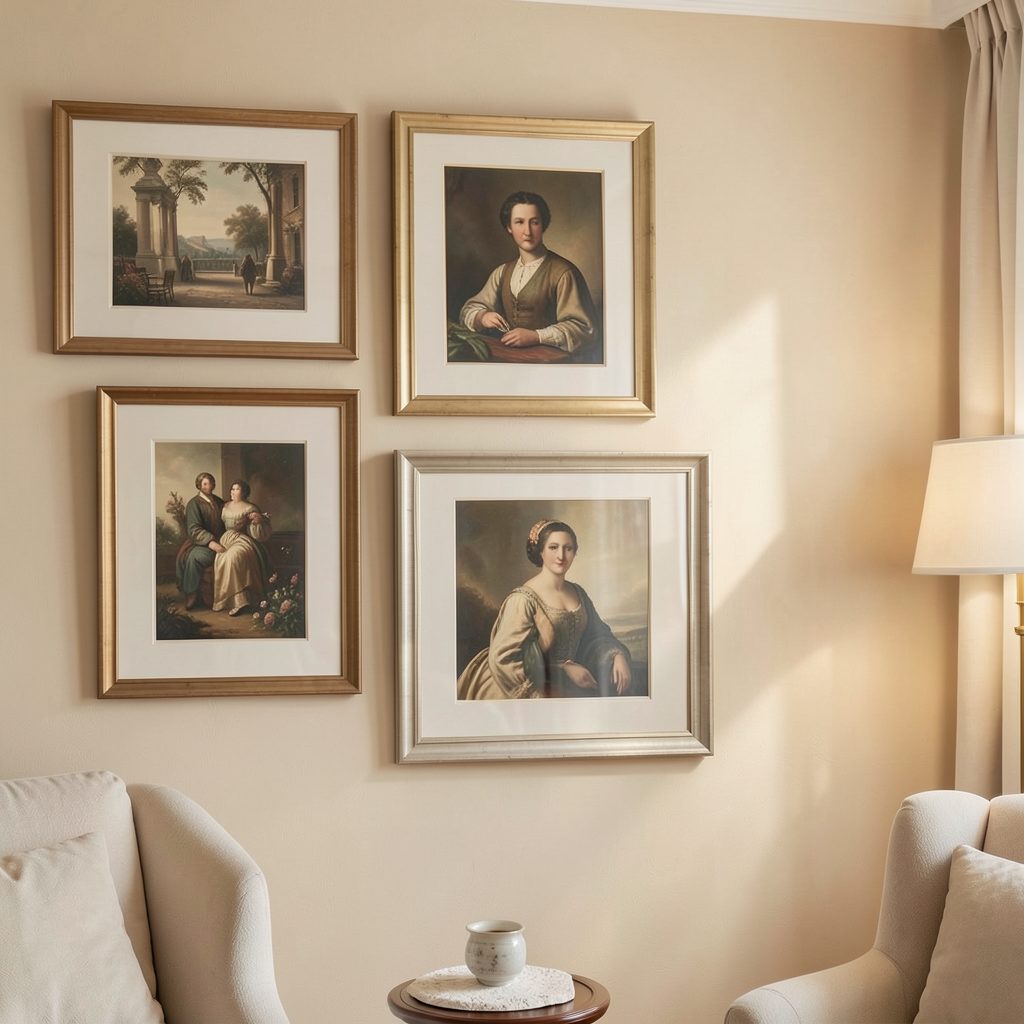
Repeating the same frame finish across multiple pieces turns a collection into one visual statement. A row of three identical frames above a slim desk reads as one long divider rather than three separate pictures. Rhythm matters more than the subject, and the eye picks up on it immediately.
Colour and palette shifts
Colour is the cheapest way to signal a different zone in an open-plan layout. If the lounge is in warm whites and clay tones, the art behind the desk could shift to cooler blues or muted greys. The contrast does not need to be dramatic; a few degrees of difference is enough.
Resist mirroring the lounge palette exactly. When artwork at the workstation shares the same tones as the sofa cushions, the boundary dissolves. Aim for tonal harmony rather than matching. Pieces that share one accent colour with the rest of the room will still feel considered, even when the underlying mood is different.
Sight lines and zoning from the sofa
Stand where you usually relax. The view from the couch decides where the divider-style artwork sits. If you can see the desk screen from the lounge, hang a piece above eye-line behind the desk so the eye lands on the frame first. This keeps the workspace feeling tucked away without a curtain.
Think about what guests see when they enter. A well-arranged small gallery wall at room entry, with the desk hidden past it, makes the apartment feel layered rather than exposed. Interior stylists use this layout principle when staging inner-city apartments for sale in Adelaide and Perth.
Storage-friendly art solutions
Floating shelves above a desk are common in compact Australian apartments and double as a divider when styled with art. Lean framed prints against the back wall and mix in a small sculpture, hiding a notepad and router behind. The artwork does the visual work while the shelves do the practical.
Pegboards painted to match the wall can host a display of postcards and small works. They suit creative professionals and cost less than shelves from Officeworks. Swap the prints and rewrite the boundary.
Common mistakes when dividing with art
Hanging a piece too low is the most common misstep. The centre of the artwork should sit above seated head height, roughly 1600mm from the floor in a standard apartment. Lower placements look like decoration; higher placements read as architecture.
Choosing pieces that are too small also weakens the effect. A 30x40cm print floating above a desk looks stranded. Aim for something at least twice the width of the monitor so the silhouette reads as a wall. Avoid mixing too many styles in the cluster.
| Divider option | Best for | Visual weight | Rental-friendly | Typical cost (AUD) |
|---|---|---|---|---|
| Single oversized canvas | Reading and writing tasks | High | Yes, removable strips | $150-$800 |
| Cluster of matching frames | Video call backgrounds | Medium-high | Yes | $200-$600 |
| Floating shelf with leaning art | Heavy desk storage | Medium | Yes | $80-$400 |
| Tall canvas on console table | Hiding cables and clutter | High | Yes | $250-$900 |
| Pegboard with rotating prints | Creative workflows | Low-medium | Yes | $40-$150 |
Most renters and homeowners in Australia underestimate how much artwork can do the structural heavy lifting in a small home. A shared living room can host a lounge, a workspace and a curated gallery without feeling crowded. For practical styling tips, explore the journal on Focus LDN and treat your walls as your most flexible tool.