How to protect art from direct sunlight in bright rooms
Bright rooms bring energy, spaciousness, and a beautiful sense of openness to an apartment. They can also expose paintings, prints, photographs, and textiles to ultraviolet radiation that gradually changes their colour and weakens their materials.
The damage is often subtle at first. A deep blue may become muted, paper can yellow, and an unprotected photograph may lose contrast. By the time fading is obvious, the original surface may be impossible to restore completely. Protecting artwork from sunlight is therefore a matter of thoughtful placement and suitable materials rather than keeping every curtain closed.
A successful approach combines UV-filtering glazing, careful frame construction, window treatments, and occasional changes to the display. These measures allow art to remain part of a bright interior without treating it as a disposable accessory.
Understand how sunlight affects artwork
Direct sun contains ultraviolet rays, visible light, and heat. UV exposure is especially damaging because it breaks down dyes, pigments, paper fibres, photographs, and some varnishes. Visible light can also cause fading over time, while heat may encourage materials to expand, contract, or dry out unevenly.
The risk depends on the artwork itself. Watercolours, works on paper, textiles, vintage posters, and photographs generally need more protection than stable oil paintings. Dark, saturated colours can be particularly vulnerable, although even pale artwork may develop uneven tones when part of its surface is covered by a mat or frame.
A picture does not need to sit in a sharp beam to be affected. Reflected daylight from white walls, glass, or polished floors contributes to cumulative exposure. The safest mindset is to treat strong ambient light as a long-term conservation concern rather than focusing only on visible patches of sun.
Assess the brightest areas in the room
Watch how daylight moves through the space during morning, afternoon, and late summer evenings. A wall that seems shaded at midday may receive several hours of direct exposure earlier or later in the day. Note reflections from nearby windows and whether seasonal changes alter the angle of the light.
Artwork placed opposite a large window is often at greater risk than a piece on a side wall. Skylights, south-facing windows, and rooms with little exterior shade deserve particular attention. If a work feels warm to the touch, shows glare, or receives a bright rectangle of light, relocate it or add a stronger barrier.
Keep valuable pieces away from radiators, fireplaces, damp bathroom walls, and areas with frequent temperature changes as well. Light protection works best when combined with stable environmental conditions, since heat and humidity can accelerate the deterioration caused by UV exposure.
Select glazing that filters UV rays
The glass or acrylic in a frame is one of the most effective protective layers. Standard picture glass reduces some UV but does not provide comprehensive protection. Conservation glazing or UV-filtering acrylic is designed to block a much higher percentage, making it a worthwhile investment for original works, limited editions, and fragile paper art.
Acrylic is lighter and more resistant to shattering, which can be useful for large gallery walls or homes with children. It may scratch more easily than glass and can create static, so it should be selected and cleaned carefully. Anti-reflective conservation glass offers a clearer view in bright rooms, although its cost is usually higher.
Glazing helps, but it does not make artwork permanently fade-proof. Ask a framer about UV performance, colour neutrality, reflection, and the suitability of the material for the specific piece. For a cohesive display, consider how the protective glazing will interact with the rest of the frame; this frame comparison can help clarify the visual and practical differences between popular options.
| Artwork or material | Main concern | Useful protection |
|---|---|---|
| Watercolour or drawing | Pigment and paper fading | UV-filtering glazing, archival mat |
| Photograph | Colour shift and loss of contrast | Conservation glazing, acid-free backing |
| Oil painting | Varnish and pigment degradation | Reduced direct light, UV glazing where suitable |
| Textile or woven art | Fibre weakening and uneven fading | Window filtering, rotation, low ambient light |
| Limited-edition print | Paper discolouration and ink fading | Archival framing, UV-filtering acrylic or glass |
Use frames, mats, and backing wisely
A frame should create a stable enclosure rather than simply hold the artwork against the wall. Acid-free mats and backing boards help prevent paper from becoming brittle or stained. A small gap between the artwork and glazing, created by a proper mat or spacer, also reduces the risk of condensation and physical contact.
Choose archival materials for pieces with financial or sentimental value. Cheap cardboard backing can release acids that discolour paper from behind, while unsuitable adhesives may cause permanent marks. A professional framer can recommend reversible mounting methods and help ensure that the work can be removed without damage.
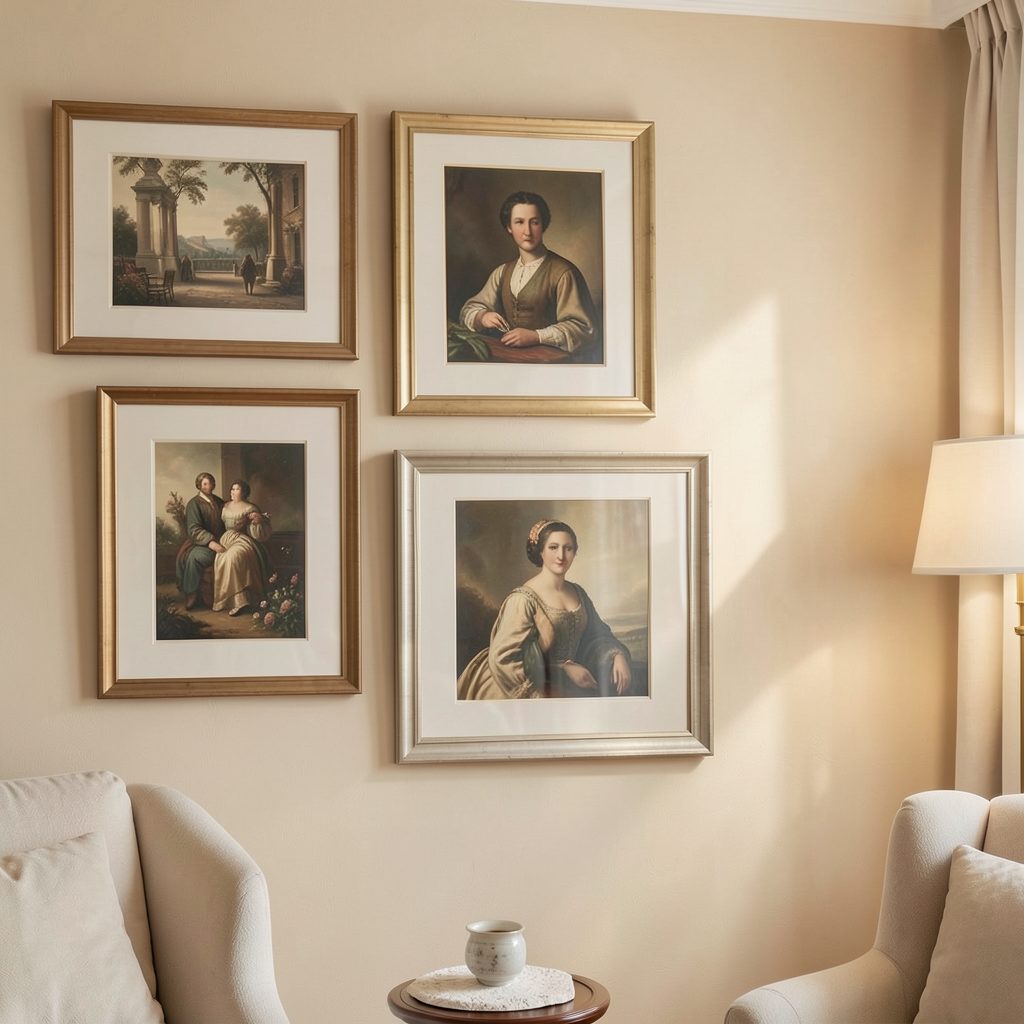
Frame colour and profile still matter in a bright room. Pale wood, slim metal, and quiet black frames can keep the display visually light while making room for protective glazing. If you use labels for a salon-style arrangement, these gallery labels can add useful context without requiring viewers to handle or move the artwork.
Filter daylight without darkening the room
Window treatments reduce the amount of light reaching art while preserving the room’s atmosphere. UV-filtering window film is a discreet option for rental-friendly or minimalist interiors, and solar-control film can also reduce heat and glare. Check that the product is suitable for the type of glass and that installation will not affect a rental agreement.
Sheer curtains diffuse daylight and soften harsh shadows, while lined roller blinds provide stronger control during the brightest hours. Layering a translucent blind with curtains gives you flexibility: the room can remain luminous in the morning, then become more protected when sunlight reaches the artwork.
Place furniture or architectural features between windows and particularly sensitive pieces where possible. A tall plant can interrupt glare, but it should not be treated as a reliable UV barrier. The goal is to reduce intensity and duration while maintaining enough natural light for the room to feel welcoming.
Rotate and monitor the collection
Seasonal rotation is a practical way to limit cumulative exposure, especially in a rented apartment where window changes may be restricted. Move vulnerable works to less exposed walls for part of the year, and display more light-stable pieces in the brightest locations. This also refreshes the room without requiring new purchases.
Before rotating, photograph each work in even lighting and record its position, frame, and condition. Look for fading at the edges, paper yellowing, lifting paint, warped supports, or changes in the surface sheen. A seasonal rotation guide can make the process easier to organise across bedrooms, living spaces, and hallways.
Avoid hanging art immediately after moving it from a cold or humid storage area. Allow materials to acclimatise, and store works flat or upright according to their construction, with protective interleaving where appropriate. For high-value or historic pieces, consult a conservator before making changes to the frame or display conditions.
Build a simple protection routine
A bright interior does not require a compromise between good design and responsible art care. Start with the most exposed or irreplaceable works, then improve the surrounding conditions gradually. Even modest reductions in direct light can make a meaningful difference over years.
- Identify walls that receive direct or reflected sunlight at different times of day.
- Use UV-filtering glazing for original, fragile, or high-value artwork.
- Add sheer curtains, blinds, or solar film where window light is intense.
- Choose acid-free mats and backing with a small space between art and glazing.
- Photograph and rotate sensitive pieces while checking their condition regularly.
Thoughtful protection can become part of the visual language of the room. Slim frames, soft curtains, controlled reflections, and carefully spaced artwork create a gallery-like setting that feels intentional rather than overly cautious. Subscribe to Focus LDN for more practical ideas on arranging, framing, and living stylishly with art.