How to Prevent Art from Fading in a Sunny Room with UV Film
Australia's love affair with bright, breezy interiors often means wall-to-wall sunlight streaming through generous windows. From a north-facing sitting area in Melbourne to a sun-drenched Queenslander verandah in Brisbane, that natural glow makes artwork glow too. The catch is that the same light quietly destroys pigments, paper and canvas over months and years. Protecting a collection is less about sacrificing brightness and more about filtering the right ones. UV window film offers a surprisingly invisible fix that suits heritage terraces, beachside apartments and modern builds alike.
Most fading happens slowly enough that owners only notice when a favourite piece has gone chalky, yellowed or brittle. Watercolours fade first, followed by photographs, inkjet prints and oil on canvas. The damage is cumulative and irreversible, making prevention the only real strategy. A carefully chosen window film can buy decades of life for the things hung on the wall.
How Sunlight Breaks Down Pigments and Paper
Ultraviolet radiation is the main offender, with visible light and humidity playing supporting roles in the slow decay of artwork. When UV photons hit organic pigments, the molecules vibrate until their chemical bonds break, producing paler, duller versions of the original colour. Paper becomes brittle as lignin oxidises, and photographs lose density in the shadows before the highlights follow.
Australia sits under a thinner protective atmosphere than much of the world, pushing the UV index far higher than equivalent latitudes in the northern hemisphere. ARPANSA regularly records summer UV indexes above 12 in Sydney, Perth and Adelaide, with values around 8 or 9 even in winter. A piece of art hanging in direct Australian sun can receive more UV in an afternoon than a similar piece in London absorbs in a week. Local framers and conservators now treat UV protection as standard practice.
What UV Window Film Actually Does
UV window film is a thin, optically clear polyester layer applied directly to glass. Most quality films block between 95 and 99.9 percent of UV transmission while letting visible light pass almost completely undisturbed. The best films are virtually invisible once cured, which suits the Australian preference for unobstructed harbour views and garden outlooks. Heat-rejecting versions reflect a portion of infrared, useful for west-facing windows that roast in the late afternoon.
Modern multi-layer constructions stack several polyester layers with UV-absorbing adhesives between them, achieving high rejection without darkening the room. The Australian market offers plenty of options through specialist glazing suppliers, large hardware chains and direct-to-consumer brands, with prices ranging widely depending on film grade and window size.
Choosing a Film That Suits Local Conditions
Look beyond marketing claims and check the published specifications. A reputable film lists its UV rejection as a percentage, its visible light transmission as a percentage, and often a separate solar heat reduction figure. Films blocking at least 99 percent of UV are widely available in Australia and represent the practical minimum for protecting valuable pieces. Anything below 95 percent is rarely worth installing purely for art protection.
Bushfire-prone regions such as parts of the Blue Mountains, the Adelaide Hills and outer Melbourne impose stricter requirements on glazing. Some films carry a BAL (Bushfire Attack Level) rating, doubling their value for rural and semi-rural properties. In heritage-listed terraces across Paddington, Fitzroy and Fremantle, exterior modifications may require council approval, so internal films tend to be the path of least resistance.
Measuring, Cutting, and Applying the Film
Accurate measurement is the foundation of a clean install. Each pane should be measured individually, even in identical-looking window banks, because older timber frames shift slightly over decades. Cutting should leave a 1 to 2 millimetre gap on every edge for thermal movement of the glass. A sharp blade, a lint-free cloth, a spray bottle with soapy water and a hard squeegee are the basic toolkit. The film is misted, applied, then worked flat from the centre outwards to push out solution and trapped air.
DIY installation is genuinely achievable on small, accessible panes. Larger panes, skylights and shaped glass are usually better left to a professional installer who can wrap edges cleanly and guarantee the result. Many Australian glaziers offer in-house tinting and film application, with warranties ranging from five years to lifetime depending on the product.
Maintaining the Film and Rotating the Collection
UV film is largely maintenance-free but benefits from gentle cleaning every few months. A soft microfibre cloth and a non-ammonia glass cleaner is plenty. Abrasive pads and solvent-based products will scratch the polyester surface and reduce clarity. Edges should be checked annually for lifting, particularly around sash windows that flex repeatedly when opened. A small lift caught early can be re-bonded with a dab of the original installation solution.
Film alone is not reason enough to hang originals in punishing light forever. Rotation is still the most underrated conservation tool available. Moving a print from the sunniest wall to a shaded hallway for a season, then back again a year later, halves the cumulative exposure of any single piece. Where rotation is impractical, the most vulnerable works deserve the dimmest corners. For collectors building a more deliberate display, well-designed gallery labels encourage conversation while reminding visitors that the work is precious.
Mistakes That Undermine the Protection
The biggest mistake is assuming that double glazing or tinted glass is enough. Many older Australian homes still rely on clear float glass, which blocks almost no UV. Even modern low-E glazing typically blocks only 40 to 70 percent. Without a dedicated UV film, art in a sunroom ages far faster than the homeowner realises.
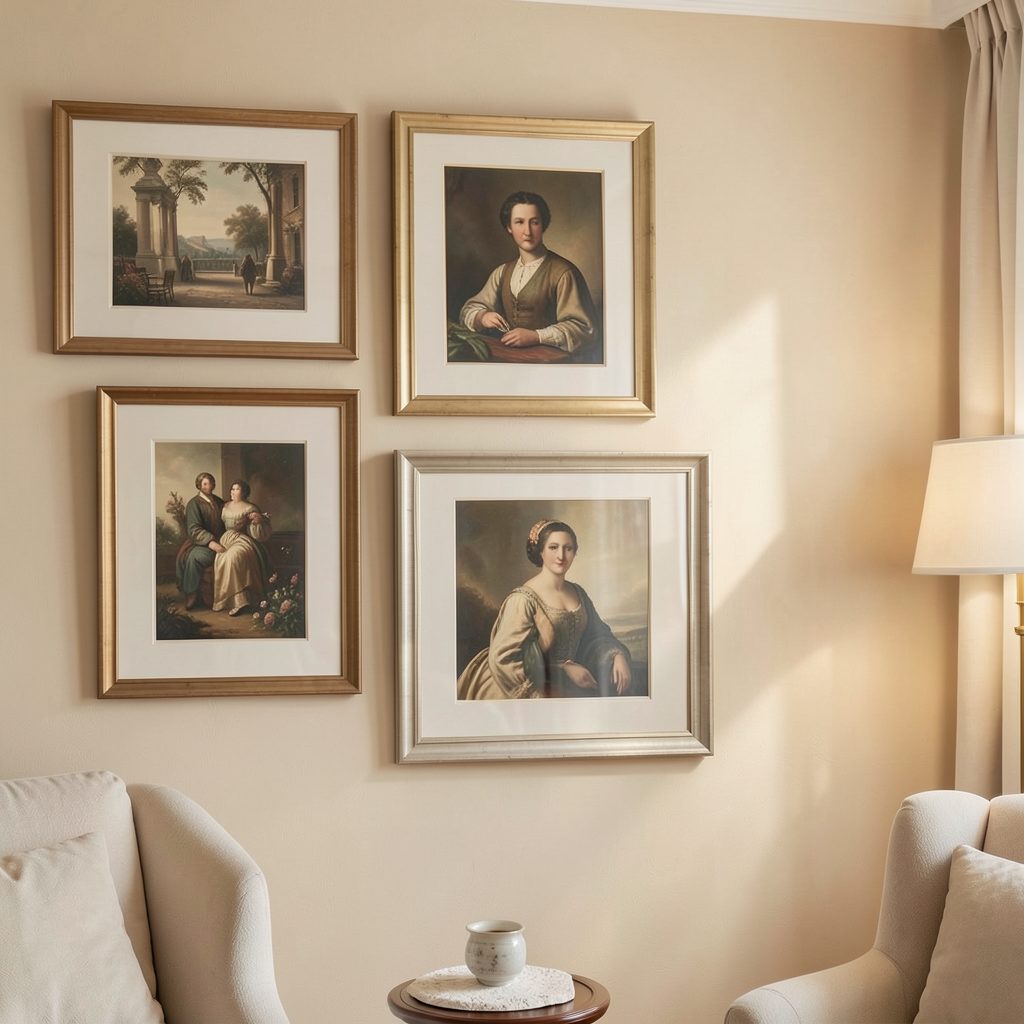
The second common error is placing a frame flush against the window. Trapped heat builds up between the glass and the backing board, cooking the work from behind. Spacers, stand-offs and a small air gap behind the frame let heat escape and reduce the risk of mould, cockling and cracking. Finally, the assumption that a north-facing room is safe is a costly one. In the southern hemisphere, north-facing windows receive the strongest, most direct light year-round.
Styling a Bright Room Without Losing the Light
Sun protection is not a reason to retreat into a dim interior. Layered sheers with a UV-rated backing allow filtered light to flood a room while shielding floors, furniture and artwork. Pale walls bounce light deeper into a space, while textured rugs, linen drapery and matte ceramics soften glare. The aim is to curate a room that feels open and airy while quietly protecting the things hung on its surfaces.
Well-positioned art still anchors the room. A single hero piece in a softly filtered window can do more than a crowded salon wall fighting direct sun. Spreading smaller works along shaded hallways, around corners and above sideboards distributes visual interest without concentrating damage in one place. The result feels considered rather than cautious.
Treat the glass first, then bring the art home. A modest investment in window film, paired with thoughtful placement and a habit of rotating favourites, separates a piece that becomes a quiet heirloom from one that fades into wallpaper. For more on creating a comfortable interior, explore this guide on shaping a space that feels as good as it looks.