How to Incorporate Personal Letters Into a Gallery Wall
A gallery wall becomes far more meaningful when it includes pieces that carry a personal history. A handwritten letter, postcard, recipe card, certificate, or vintage document can add warmth and narrative to an arrangement of prints, photographs, and paintings. These paper keepsakes bring an intimate layer that mass-produced artwork cannot replicate.
The key is to display sentimental documents with the same care given to framed art. Consider their colour, size, condition, and visual weight before placing them on the wall. A thoughtful arrangement should feel collected rather than cluttered, allowing each item to contribute to the overall story.
For broader ideas about stylish interiors, artwork display, and considered decorating, explore Focus LDN. Its gallery wall inspiration can help you balance personal objects with a clean, editorial look.
Start With Meaning
Begin by choosing documents that say something about your life, family, travels, or interests. A letter from a grandparent, an old theatre ticket, a handwritten shopping list, or a faded envelope can all work well when the object has emotional or historical value. You do not need to display every keepsake; select pieces with a shared mood or a story worth preserving.
Think about the atmosphere you want the wall to create. Romantic correspondence suits a bedroom or reading corner, while architectural plans, maps, and academic documents may feel more appropriate in a study. Grouping items by memory, era, or place creates a stronger visual connection than arranging unrelated papers simply because they fit the available space.
Choose Materials and Scale
Paper is usually smaller and visually quieter than framed artwork, so it benefits from a deliberate presentation. A wide mount can give a tiny letter enough presence, while a narrow document may work well in a slim frame beside a larger photograph. Avoid allowing small pieces to disappear between oversized prints.
Frame materials also shape the mood. Pale oak and natural wood create a soft, relaxed effect, while black, brass, or dark-stained frames feel more formal. For a minimalist gallery wall, repeat one frame finish throughout and let the documents provide the variation through handwriting, texture, and age.
When the paper is fragile, use acid-free mounts and archival backing. A float mount can make a torn edge or deckled border part of the design, while a generous white border gives delicate documents a crisp, contemporary finish. Avoid laminating original paper, since the adhesive and heat can cause long-term damage.
Build A Cohesive Visual Language
Personal documents often contain uneven edges, faded ink, or warm paper tones. Use surrounding artwork to make these qualities feel intentional. Black-and-white photography can echo old ink, muted botanical prints can complement cream paper, and a small touch of colour can connect a document to a modern illustration.
Before making holes in the wall, place the frames on the floor or create paper templates in their exact sizes. Include the mount and frame dimensions, then move the pieces around until the arrangement feels balanced. A consistent gap of around five to eight centimetres usually keeps the display connected without making it feel crowded.
| Personal item | Helpful frame style | Best visual partner |
|---|---|---|
| Handwritten letter | Deep-set frame with a wide mount | Family photograph or soft abstract |
| Postcard collection | Grid of matching slim frames | Travel print or map |
| Recipe card | Simple wood frame | Kitchen still life or botanical |
| Certificate or diploma | Larger frame with a quiet mount | Architectural drawing |
| Ticket, label, or receipt | Small frame grouped in a cluster | Graphic print or typography |
A story-led display can include different periods and formats, provided one element ties them together. For a more narrative approach, this guide to a story-led gallery wall offers useful direction on sequencing images and personal objects.
Arrange The Wall With Intention
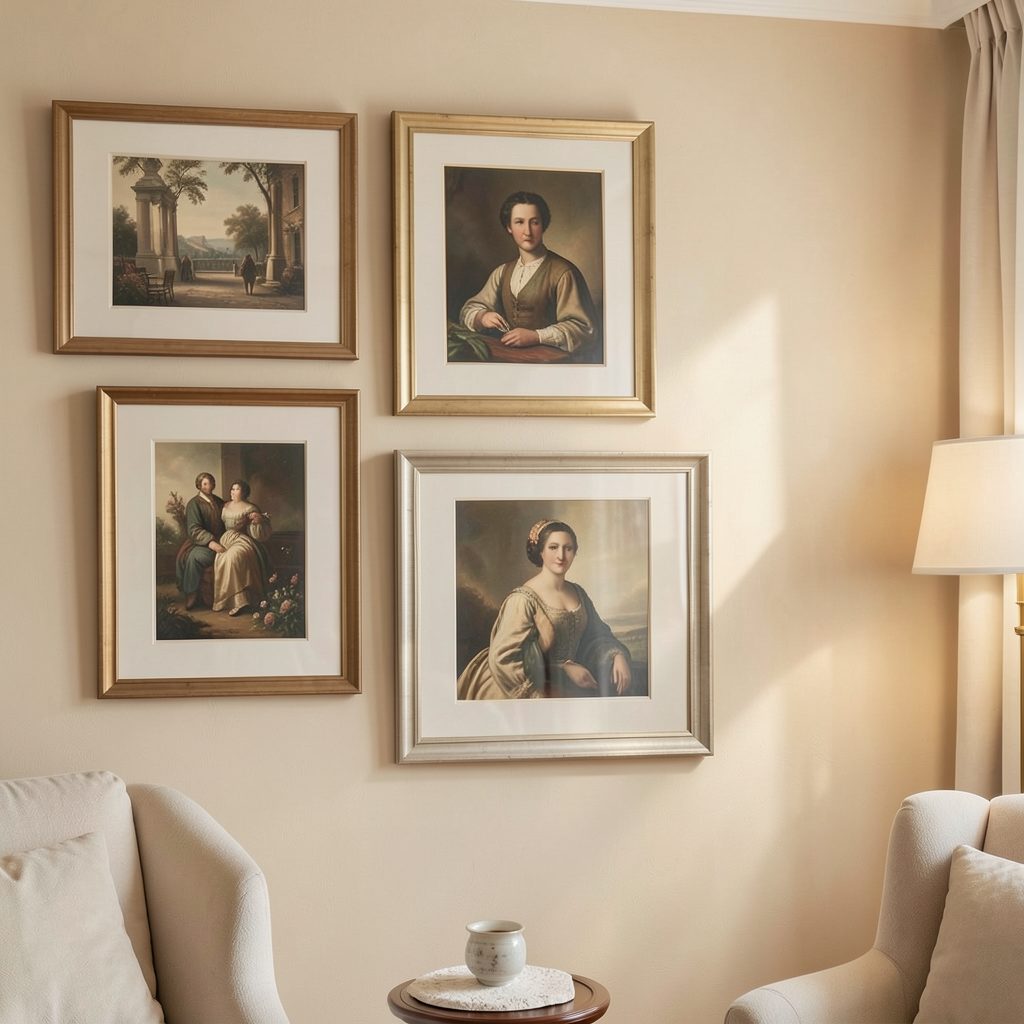
There are several successful layouts for combining documents with artwork. A symmetrical grid works well when the frames are similar in size and finish. A salon-style arrangement offers more freedom, allowing a small letter to sit beside a large painting or an informal cluster of photographs.
Use the largest or most visually dominant piece as an anchor. Place personal documents close enough to relate to it, but leave breathing room around especially delicate items. If every frame is the same size, the wall may look flat; varying the dimensions creates rhythm and helps the eye move through the display.
Keep the centre of the arrangement roughly at eye level, particularly in hallways and living rooms. Above furniture, leave enough space for the gallery wall to feel connected to the surface below without appearing squeezed. In a bedroom, a quieter composition with fewer pieces can feel more restful than a densely packed display.
Protect Privacy And Paper
Some documents are meaningful because they are private. Before framing a letter, consider whether names, addresses, phone numbers, or sensitive family details should remain visible. You can display an envelope, a blank reverse side, or a carefully selected excerpt while keeping the rest of the document stored safely.
Sunlight is another concern. Direct ultraviolet exposure can fade ink and weaken paper, especially when the document is already aged. Hang valuable pieces away from strong windows, use UV-filtering glazing where possible, and avoid damp rooms unless the frame is properly sealed. Bathrooms may be attractive locations for art, but humidity is rarely suitable for irreplaceable paper.
For extremely fragile or historically important material, display a high-quality reproduction and preserve the original in archival storage. This allows you to enjoy the design and memory without exposing the source document to unnecessary wear.
Practical Choices For A Personal Display
A polished wall depends on small decisions made before installation. Check the condition of each item, photograph the arrangement as you test it, and keep a record of where original documents are stored. These simple habits make the project easier to maintain over time.
- Choose three to five documents with a clear emotional, geographical, or visual connection.
- Use archival mounts, backing, and UV-filtering glazing for valuable paper.
- Repeat one frame finish to unite objects from different periods.
- Test the entire composition on the floor before fixing anything to the wall.
- Leave enough negative space for handwritten details and unusual edges to remain visible.
A personal gallery wall should feel lived-in, not overly perfected. Slight differences in paper tone, handwriting, and frame depth can give the display character, while a restrained colour palette keeps it elegant.
Let The Wall Tell Its Story
Personal letters and documents can transform a gallery wall from a decorative arrangement into a visual record of the people, places, and moments that matter. With considered framing, careful spacing, and protection from light and moisture, even fragile paper can become part of a lasting interior.
Gather a few meaningful pieces, pair them with artwork that supports their character, and test the composition before committing to the wall. The result will be a display with genuine texture and memory—one that becomes more distinctive every time you look at it.