How to Hang Art Without Nails Using Adhesive Strips Safely
Renting a unit in Sydney, Melbourne or Brisbane often means navigating strict bond conditions where even a small nail hole can trigger a re-paint fee. For many Australians living in share houses, apartments or strata-titled buildings, adhesive strips have become the default way to display art without risking the landlord's paintwork. The trick is matching the strip to the artwork, the wall surface and the room's conditions, then removing it cleanly when it's time to move.
This guide walks through the safe way to hang framed prints, canvases and lightweight wall décor using adhesive hooks and picture hangers, with practical tips for humid coastal climates and the realities of Australian rental living.
Why Adhesive Strips Work for Australian Renters
Roughly one in three Australians rent their home, and in cities like Sydney and Melbourne the median bond sits well above $2,000. Drilling into gyprock or rendered brick is rarely worth the risk when moving out, especially since most property managers in NSW and Victoria now use detailed ingoing and outgoing inspection reports. Adhesive strips let you personalise your space while keeping walls essentially untouched, provided you choose products rated for the weight and follow the application steps carefully.
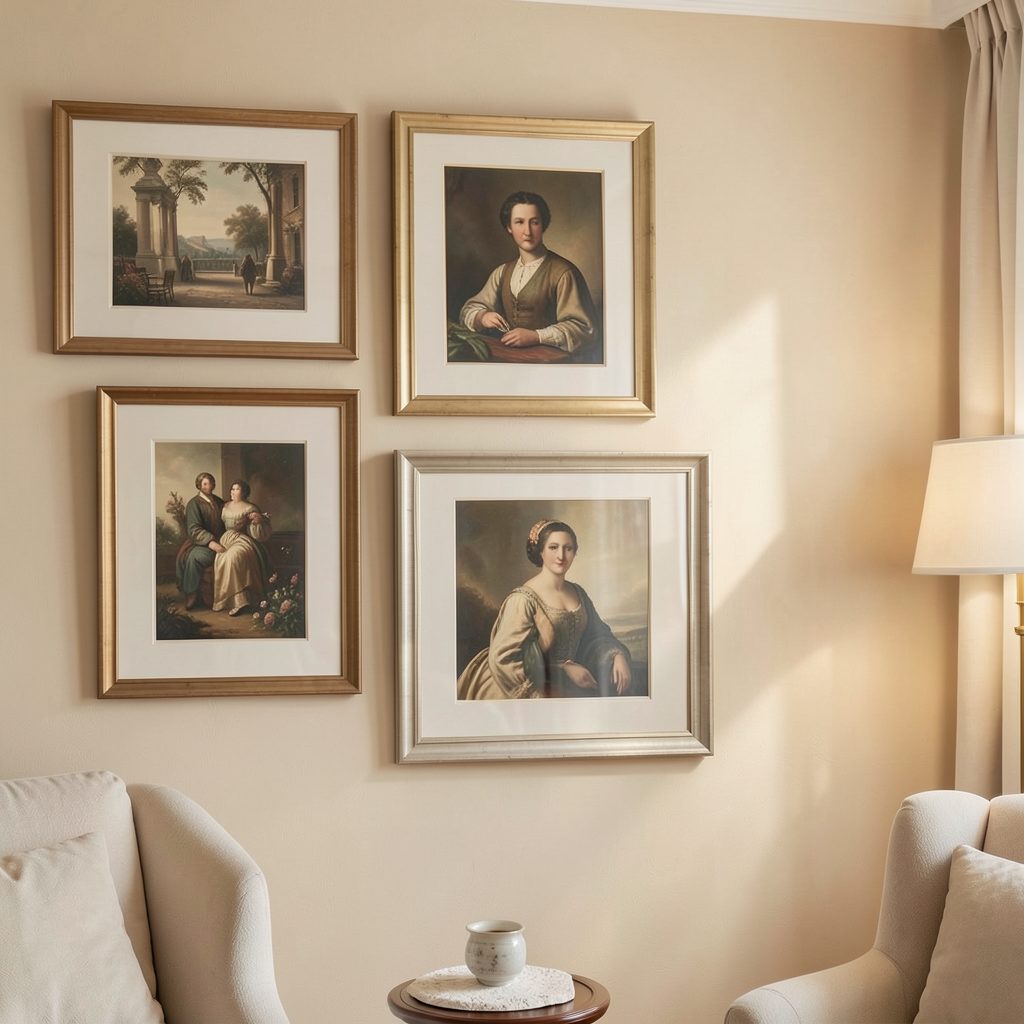
If you're curating a feature wall in a rental, a thoughtful home gallery layout using adhesive products lets you rearrange as often as your taste evolves. The flexibility is ideal for anyone testing a colour story or layering prints above a sofa or bed without committing to permanent fixings.
Picking the Right Strip for Your Artwork
Not all strips are made equal. Standard picture hangers are designed for flat-backed frames, while smaller hooks suit postcards and small prints. Larger interlocking strips hold up to several kilograms and are better for stretched canvases, mirrors or chunky timber frames. Reading the fine print on the packaging matters more than the brand name, as the stated load assumes a clean, flat, indoor surface.
Heavier pieces around four kilograms usually need two pairs of strips rather than one, with the load split across the back of the frame. Lightweight unstretched prints and posters under 500 grams are well within the range of small utility strips, which are widely available at Officeworks and Bunnings. Always round down when estimating weight, and account for the frame itself rather than just the artwork inside.
Prepping Walls in Humid and Coastal Climates
Adhesive products perform best on smooth, sealed surfaces, so a quick wall audit pays off. In Brisbane, Darwin and coastal NSW, summer humidity can soften certain adhesives, particularly on freshly painted or porous walls. Air-conditioning and ceiling fans help, but so does wiping the wall with isopropyl alcohol and letting it dry fully before application. Skip the dust, skip the failure.
Salt-laden air in beachside suburbs from Bondi to Coogee can leave a fine residue on interior walls if windows are left open. A clean surface helps the strip bond properly and reduces the chance of paint peeling later. If your walls are brick, concrete or rendered, check that the strip is rated for that texture, as rough surfaces dramatically reduce holding power.
| Strip type | Best for | Max load (per pair) | Surface compatibility | Climate notes |
|---|---|---|---|---|
| Small utility strips | Postcards and small prints | 500 g | Smooth painted walls, glass, tiles | Best in climate-controlled rooms |
| Medium picture hangers | Standard frames up to 30×40 cm | 1.5 kg | Painted gyprock, sealed plaster | Avoid high-humidity bathrooms |
| Large interlocking strips | Stretched canvases, chunky frames | 4 kg | Flat painted walls, smooth timber | Pair with air-conditioning in humid zones |
| Heavy-duty hooks | Mirrors and framed posters up to 60×90 cm | 7 kg | Solid flat walls, not textured | Check after first 24 hours in any climate |
Mapping Your Layout Before You Stick
Patience at the planning stage saves both wall and artwork. Lay frames on the floor first to test spacing, then mark positions with removable painter's tape. A laser level is handy but a spirit level and a pencil mark tucked behind the frame will do the job in most Sydney terraces and Melbourne apartments with character-rich walls.
A useful trick is to cut paper templates the size of each frame and blu-tack them to the wall. This lets you stand back, photograph the arrangement and fine-tune before any adhesive goes near the paint. If you're styling a bedroom above the headboard, the same approach helps you visualise height and balance without committing, and our bedroom wall styling journal covers the rest.
Applying Strips Without Damaging Paintwork
Always apply strips at room temperature, ideally between 18 and 24 degrees Celsius, and press firmly along the full strip for at least 30 seconds. Most quality products need a further wait time, often an hour, before any weight is loaded onto them. Skipping this curing window is the most common reason hooks slide down walls within days.
Attach the matching strip to the back of the frame first, then press it onto the wall-mounted strip until you hear or feel a click. For delicate artwork or sentimental pieces, double-check the weight rating and consider adding a small safety hook underneath as backup. If you're rotating prints seasonally, this staging matters even more.
Removing and Re-Hanging Safely
Slow, vertical pulls are the rule. Stretch the strip straight down, parallel to the wall, never at an angle or outwards. The elastic release stretches the adhesive away from the paint without shearing the surface. If a strip snaps, warm the leftover residue with a hair dryer on low and roll it off gently with a fingertip.
Strips are single-use by design, so budget for new ones each time you rehang. Keep a small stash in a drawer so you're not caught out mid-rearrangement. In Queensland and Western Australia, where summer heat can push indoor temperatures up, store spare strips in a cool, dry cupboard rather than the garage to maintain their grip.
Common Mistakes and How to Fix Them
The biggest error is using one strip where two are needed, especially on the top edge of a heavier frame. Another frequent issue is mounting on freshly painted walls before the paint has fully cured, which Australian acrylic paints often need 2-4 weeks to harden. Falling frames can also result from dust or chalk on the wall, or from mounting over textured wallpaper that the strip cannot grip evenly.
If a piece does come down, check both the wall and the frame for dust before reapplying. For surfaces that consistently fail, consider relocating the artwork to a flat, painted section of wall rather than over door frames, architraves or tiled splashbacks. A little repositioning often solves what looks like a product problem.
Curating a personal display should feel like editing a small exhibition, and the right approach to hanging makes it effortless. Browse fresh ideas for arranging artwork, exploring themes and finding your own visual voice across the journal, then take the next step when you're ready.
When you're ready to share your pieces with a wider community, you can submit your artwork for editorial features and reader spotlights.