How to Find Gallery Openings in Your City for Inspiration
Gallery openings offer a lively way to discover art, study display ideas, and see how creative spaces build a mood. A small local exhibition can reveal more about framing, lighting, scale, and color than hours spent scrolling through interior design images.
You do not need to be an experienced collector to attend. Opening nights often welcome casual visitors, design enthusiasts, and anyone curious about contemporary art. They can also become a useful source of ideas for a gallery wall, a quiet bedroom arrangement, or a more personal living room.
The most rewarding events are usually found through a mix of online searches, local recommendations, and regular attention to cultural calendars. With a simple routine, you can make gallery visits part of your home decorating inspiration.
Start with local art calendars
Begin with the websites of independent galleries, public museums, artist-run spaces, and local arts organizations. Many publish exhibition schedules several months ahead, while smaller venues may announce openings only a few weeks before the event. Search for terms such as “gallery opening,” “private view,” “art exhibition,” and “artist reception” alongside your city or neighborhood.
City magazines, cultural newsletters, and creative-industry publications are also useful. Their event listings often include smaller exhibitions that do not appear in major search results. Public libraries, universities, and community art centers may host talks or opening receptions that offer a more relaxed setting for discovering emerging artists.
Social media can fill in the gaps. Follow galleries, curators, art schools, framing shops, and local artists, then check their event stories and posts near the end of each week. Turn on notifications for a few favorite spaces rather than following every venue in the city, so invitations remain manageable.
Use the neighborhood as your guide
Gallery districts are convenient, but the best discoveries may be in less obvious places. Converted warehouses, design studios, cultural centers, hotel lobbies, and independent shops sometimes host art exhibitions. Search map apps for “contemporary art,” “artist studio,” or “exhibition space,” then inspect recent reviews and images before planning a visit.
Walking between several venues can make an opening night feel more intentional. Choose one established gallery, one smaller project space, and one venue with a different focus, such as photography, ceramics, prints, or textile art. Comparing their layouts can sharpen your eye for how artwork interacts with architecture.
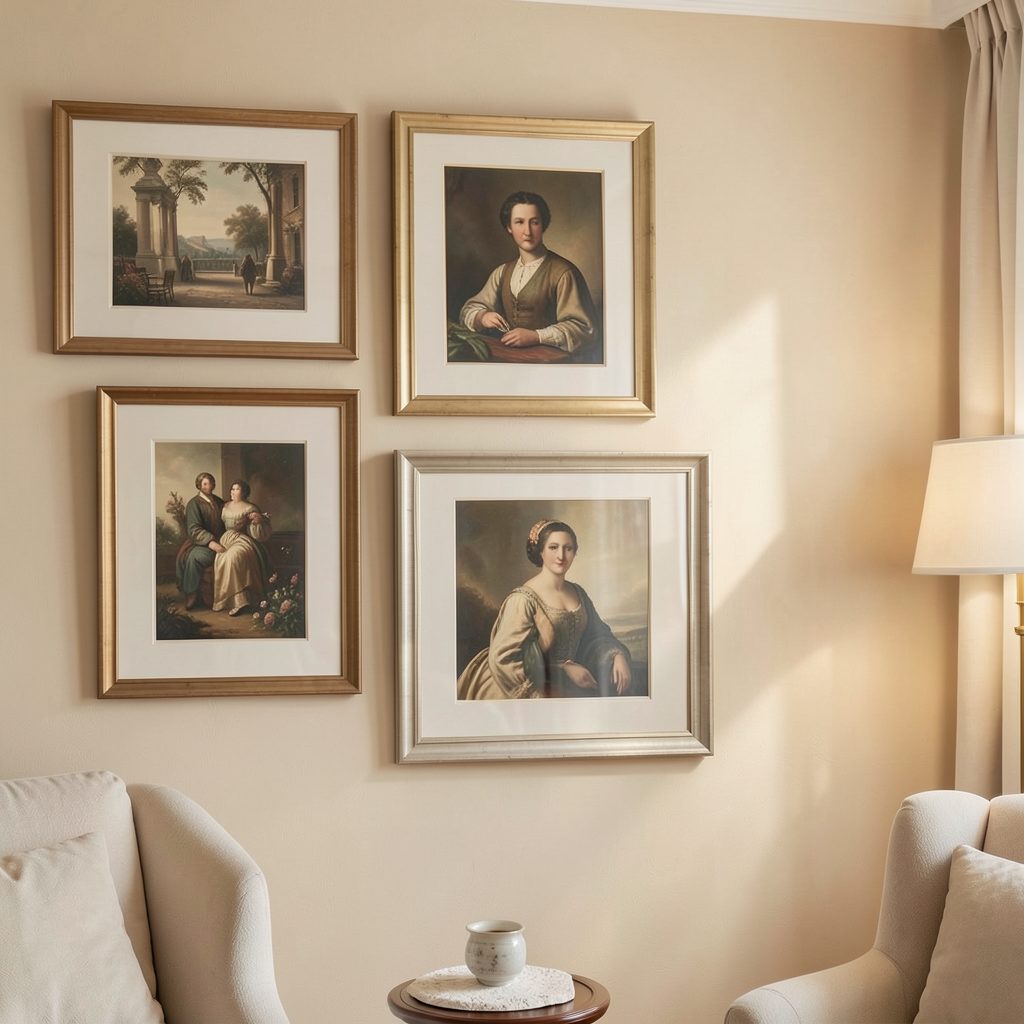
Notice the details that translate well to a home. Look at the distance between frames, the height of wall-mounted pieces, the use of negative space, and the way a single strong artwork anchors a room. If you are building a personal display, ideas from family photo arrangements can help you combine intimate images with collected art.
Know what to expect at an opening
A gallery opening is usually informal. You may encounter drinks, short speeches, a crowd of visitors, and the artist or curator moving through the room. Some openings are highly social, while others are quiet and focused on viewing the work. Comfortable clothing and respectful curiosity are generally enough.
Arrive near the advertised start time if you want to hear an introduction or meet the artist before the room becomes busy. Arrive later if you prefer a calmer viewing experience. You do not need to buy anything, stay for the entire event, or understand every piece immediately.
Take a few notes on your phone after leaving each space. Record the artist’s name, the exhibition title, and any display ideas worth remembering. A quick note such as “large monochrome print over low console” or “mixed frame finishes looked intentional” can become valuable when you redecorate.
Compare venues and display ideas
Different types of galleries create different kinds of inspiration. A commercial gallery may show polished framing and carefully edited groupings, while an artist-run space may demonstrate bold installations or unusual materials. Museums can offer lessons in proportion and visual pacing, even when their collections are far removed from domestic interiors.
| Venue type | What to observe | Home decorating lesson |
|---|---|---|
| Commercial gallery | Framing, spacing, and coordinated series | Repeat a color or material across several artworks |
| Artist-run space | Experimental layouts and mixed media | Give unusual pieces room to breathe |
| Museum exhibition | Scale, rhythm, and lighting | Build a display around visual movement |
| Art school show | Emerging styles and affordable formats | Mix fresh work with established pieces |
| Design-led venue | Art placed alongside furniture | Connect artwork to the room’s textures and proportions |
When comparing exhibitions, focus on the relationship between the work and its surroundings. A print may appear restrained on a white wall but become striking beside painted paneling or warm wood. These observations can guide decisions about frame color, mat width, and the balance between art and furniture.
Turn gallery visits into decorating research
Photographing an exhibition may be restricted, so check the venue’s policy before taking pictures. If photography is allowed, capture broad details rather than documenting every artwork. A picture of a wall arrangement, doorway, or lighting scheme can preserve the atmosphere without replacing the experience of seeing the work in person.
Pay attention to how your taste changes from room to room. You may discover that you respond to quiet botanical prints, saturated abstract paintings, architectural photography, or small works grouped closely together. Keeping a simple digital folder of references can help you recognize consistent preferences over time.
When you are ready to source pieces, limited-edition prints can make an exhibition-inspired interior more accessible. This guide to limited-edition print sources is useful for finding artwork that feels considered without requiring the budget of a major original.
Build a regular opening-night habit
Choose one evening each month for local art events and add promising openings to your calendar immediately. Subscribe to a few gallery mailing lists, since email invitations often include private viewing times, artist talks, and details that are missing from public listings. A modest schedule is easier to maintain than trying to attend everything.
Invite a friend with similar interests, or go alone when you want to concentrate. Discussing a show can clarify what you liked, while solo visits allow more time to study details. Either approach can turn art discovery into a steady source of ideas for your home.
Before your next visit, look through gallery-inspired home ideas for ways to translate exhibition principles into everyday rooms. Then choose one detail to study closely, such as lighting, frame coordination, or the placement of a small artwork within a larger wall.
Make your next local opening part of your decorating practice. Save the date, explore a new venue, and bring home a sharper sense of what makes an artwork—and the room around it—feel memorable. Subscribe to the Focus LDN email updates for further guidance on gallery walls, framing, and stylish home living.