How to Create a Gallery Wall with Postcards and Ephemera
A gallery wall made from postcards and ephemera can bring personality to a room without the expense or formality of a fine-art collection. Travel cards, exhibition tickets, handwritten notes, stamps, recipes, book pages, and vintage paper goods all carry visual history, making the display feel collected rather than manufactured.
The key is to give these small, varied pieces enough structure. A considered arrangement, consistent spacing, and a thoughtful frame scheme will make even the most eclectic collection look calm and intentional. This approach works in living rooms, bedrooms, hallways, home offices, and compact reading corners.
Start With a Clear Visual Story
Begin by gathering more material than you expect to use. Spread postcards, letters, photographs, packaging, maps, and other paper keepsakes across the floor or a large table. Look for recurring colours, subjects, textures, or eras that can connect the collection.
A visual story might centre on coastal travel, botanical illustrations, black-and-white photography, local architecture, or a particular colour palette. It does not need to be rigid. A few contrasting items can create energy, while repeated tones help the finished gallery wall feel unified.
Consider the room before making final selections. A bedroom may suit soft neutrals and personal mementos, while a hallway can handle stronger typography and saturated colour. In a minimalist interior, leave more breathing room between pieces so the ephemera feels curated instead of cluttered.
Choose, Edit, and Prepare Your Pieces
Paper objects often vary in size and condition, so editing is essential. Select a mixture of larger anchor pieces and smaller accents, aiming for a collection with different proportions. Avoid using every favourite item in one display; a little restraint gives the arrangement room to breathe.
Flatten curled paper under heavy books for a few days, and photograph anything especially fragile before framing it. Valuable or irreplaceable ephemera should be protected behind UV-filtering glass or acrylic and mounted with archival, acid-free materials. Avoid ordinary adhesive tape, which can stain paper and cause damage over time.
If a postcard has a beautiful reverse side, use a double-sided frame or leave part of it visible with a float mount. Small details such as handwriting, postage marks, and faded edges add depth when they remain readable.
Build a Balanced Layout
Before putting anything on the wall, create a floor layout. Start with the largest piece near the centre, then place medium-sized works around it. Fill gaps with smaller cards and fragments while keeping the overall outline roughly rectangular, square, or softly organic.
Use paper templates cut to each frame’s dimensions and attach them to the wall with low-tack tape. This makes it easy to test the composition, adjust the outer edges, and protect the wall from unnecessary holes. Keep the distance between frames consistent, usually between five and ten centimetres.
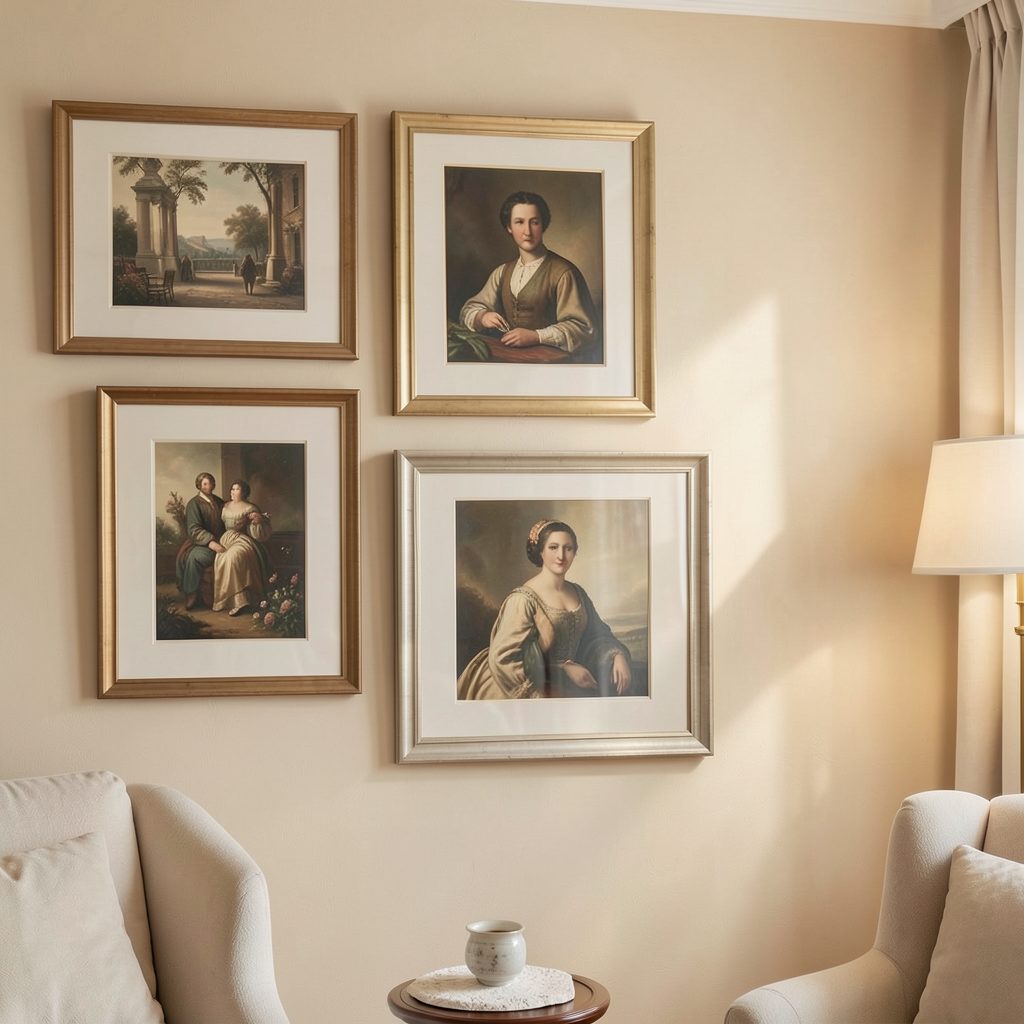
A structured grid can make mixed ephemera look modern, while a salon-style arrangement feels more relaxed and collected. If you prefer an informal layout, establish an invisible centre line or baseline to prevent the display from appearing scattered. For further guidance, review these gallery wall mistakes before committing to the final placement.
Match Frames, Mounts, and Materials
Frames create the visual language of a postcard display. Matching frames produce a clean, contemporary effect, while a combination of wood, metal, and painted finishes creates a more vintage cabinet-of-curiosities mood. Repeating one element, such as black edges or warm oak, will keep different frames connected.
Mounts are especially useful for small artwork and thin paper. A wide white border can make a tiny postcard feel important, while a coloured mount can draw out a particular shade from the image. Float mounting, where the paper appears slightly lifted from the backing, adds shadow and highlights worn edges.
| Display approach | Best for | Visual effect | Practical note |
|---|---|---|---|
| Matching black frames | Graphic prints and monochrome cards | Crisp and architectural | Works well in modern rooms |
| Natural wood frames | Travel souvenirs and botanical pieces | Warm and relaxed | Suits bedrooms and living areas |
| Mixed vintage frames | Eclectic ephemera collections | Layered and collected | Repeat one colour for cohesion |
| Deep box frames | Objects, badges, and folded paper | Sculptural and dimensional | Useful for fragile or bulky items |
| Clip frames | Frequently changing displays | Casual and flexible | Handle paper gently to prevent marks |
For an apartment with limited wall space, use a narrow ledge alongside framed pieces. Leaning a few postcards against the wall introduces depth and makes seasonal updates simple. A picture ledge also allows you to display an open book, a small ceramic object, or a ticket stub in a protective sleeve.
Install Securely and Protect the Arrangement
Once the paper templates look right, mark the hanging points through the template and install suitable hardware for the wall type. Plaster, brick, and stud walls each require different fixings, so choose anchors that can support the frame weight rather than relying on a standard nail.
Keep the display away from direct sunlight, radiators, steamy bathrooms, and areas where furniture may brush against the wall. Sunlight can fade inks and dyes, while moisture can warp paper and encourage mould. In a bathroom, use reproductions or sealed copies instead of irreplaceable originals.
Check the arrangement from several viewpoints, including the doorway and nearby seating. The centre of the composition should generally sit around eye level, but furniture can change that measurement. Above a sofa or console, leave enough space for the furniture to feel connected without making the frames appear crowded.
Keep the Display Feeling Personal
A successful ephemera wall should evolve. Replace a postcard after a trip, add a programme from a memorable exhibition, or rotate seasonal colours without dismantling the whole arrangement. Removable clips, ledges, and a few unglazed frames make these changes easy.
Personal meaning matters more than perfect matching. A faded card from a second-hand shop can sit comfortably beside a contemporary print when the scale and spacing are controlled. In a quiet corner, combine the display with layered textiles and warm lighting; these reading nook ideas can help turn a small wall into a more inviting retreat.
Details That Make the Display Work
- Keep three or four colours recurring across the collection.
- Mix horizontal and vertical pieces to avoid a stiff rhythm.
- Use archival mounts for sentimental or valuable paper.
- Leave a small amount of negative space around the outer edges.
- Photograph the finished arrangement so it can be rebuilt after decorating or moving.
A postcard gallery wall becomes most effective when it reflects real interests, places, and memories. Gather pieces slowly, test the layout on the floor, and let the frames provide the order that the paper itself does not have. Save favourite finds as you go, then shape them into a display that gives your home a distinctive visual story.