How to Build a Collection of Affordable Art Over Time
A personal art collection does not need a large budget, a designer address or a single dramatic shopping spree. The most appealing walls often develop gradually, with each print, photograph, painting or ceramic piece carrying a memory, a local connection or a visual quality that suits the home.
For Australian decorators, collecting slowly also makes practical sense. Shipping can be expensive across such a large country, rental walls may limit what can be installed, and original work from emerging artists is often easier to discover through markets, open studios and small galleries than through major auction houses.
Define A Collection Before You Shop
Start by deciding what “collection” means in your home. It might be a group of black-and-white photographs, abstract works in warm earth tones, vintage botanical prints or small paintings by Australian artists. A loose theme gives your purchases a relationship without making the display feel overly matched.
Look around the room where the art will live. Note the timber tones, upholstery, rug colours and natural light throughout the day. A breezy coastal apartment in Newcastle may suit sun-faded blues and line drawings, while a darker Melbourne terrace could carry rich ochre, charcoal and rust more effectively.
Establish A Simple Visual Language
Affordable art feels considered when a few repeated details connect the pieces. You might choose a consistent frame finish, keep every work within a restrained palette or repeat one subject, such as landscapes, architecture or botanical forms. The artwork can vary in style while the overall arrangement remains calm.
Size is another useful organising tool. Begin with a few small works, then add one medium or large piece when the collection has a clear direction. Keeping a record of dimensions on your phone prevents accidental purchases that have nowhere to go, especially in compact apartments where wall space is limited.
Find Art Through Australian Channels
Local art markets, student exhibitions, community galleries and open-studio weekends are excellent places to find original work at approachable prices. Keep an eye on events in inner-city areas such as Fitzroy, Newtown, West End and Northbridge, where emerging artists often sell small editions, risograph prints and works on paper directly.
Online platforms can widen the search, particularly when you follow illustrators, photographers and ceramicists before they become widely collected. If you create work yourself or know an artist ready to reach a new audience, the artist submission page can be a useful route into a design-focused community.
Do not overlook op shops, weekend stalls and salvage stores. Salvos, Vinnies and independent vintage shops sometimes have unusual frames, old maps and overlooked prints that can be paired with contemporary pieces. A second-hand frame may need new glass or a careful clean, but it can give an inexpensive work far more presence.
Mix Price Points With Intention
A collection can combine free discoveries, affordable reproductions, limited editions and occasional original pieces. The key is to judge each purchase by its effect, not its price. A $35 screen print with a strong composition may hold attention longer than an expensive work bought simply because it seems investment-worthy.
Set aside a small art fund each month or quarter. This approach turns collecting into a manageable habit and gives you time to research the artist, compare editions and consider whether the piece genuinely suits your rooms. Australian buyers should also allow for postage, insurance and GST where relevant, especially when ordering from overseas sellers.
Build A Steady Buying Rhythm
Waiting between purchases helps you recognise what you actually like. Before buying, save the work to a folder and revisit it after a few days. If it still feels right alongside the pieces you own, it has a stronger chance of becoming a lasting part of the collection.
Use a few simple rules to keep spending and style under control:
- Choose one meaningful piece rather than several impulse buys.
- Keep a running note of artists, mediums, prices and preferred sizes.
- Set a spending limit before visiting a market or gallery opening.
- Leave room in the budget for framing, delivery and hanging hardware.
- Buy from artists whose work you would enjoy seeing every day.
A pause also creates opportunities to find better examples. You may discover a local printmaker through a gallery newsletter, see a photographer at an exhibition in Adelaide or find a small painting during a regional weekend away.
Frame Works For Longevity
Good framing can make modestly priced art appear polished, while the wrong frame can weaken an otherwise beautiful piece. Natural oak, pale timber and simple white frames work well in relaxed Australian interiors. Black frames provide structure for monochrome photography and graphic prints, especially when repeated across a gallery wall.
For valuable originals, use archival backing and UV-protective glazing where practical. Keep artwork away from direct afternoon sun, damp bathroom walls and areas where cooking grease can settle. In humid coastal locations such as Cairns or Darwin, avoid placing unprotected paper works in poorly ventilated spaces.
You can save money by buying standard-size prints that fit ready-made frames. Custom framing remains worthwhile for unusual dimensions, fragile paper or an important original, but it does not need to be the default for every purchase.
Curate The Display As It Grows
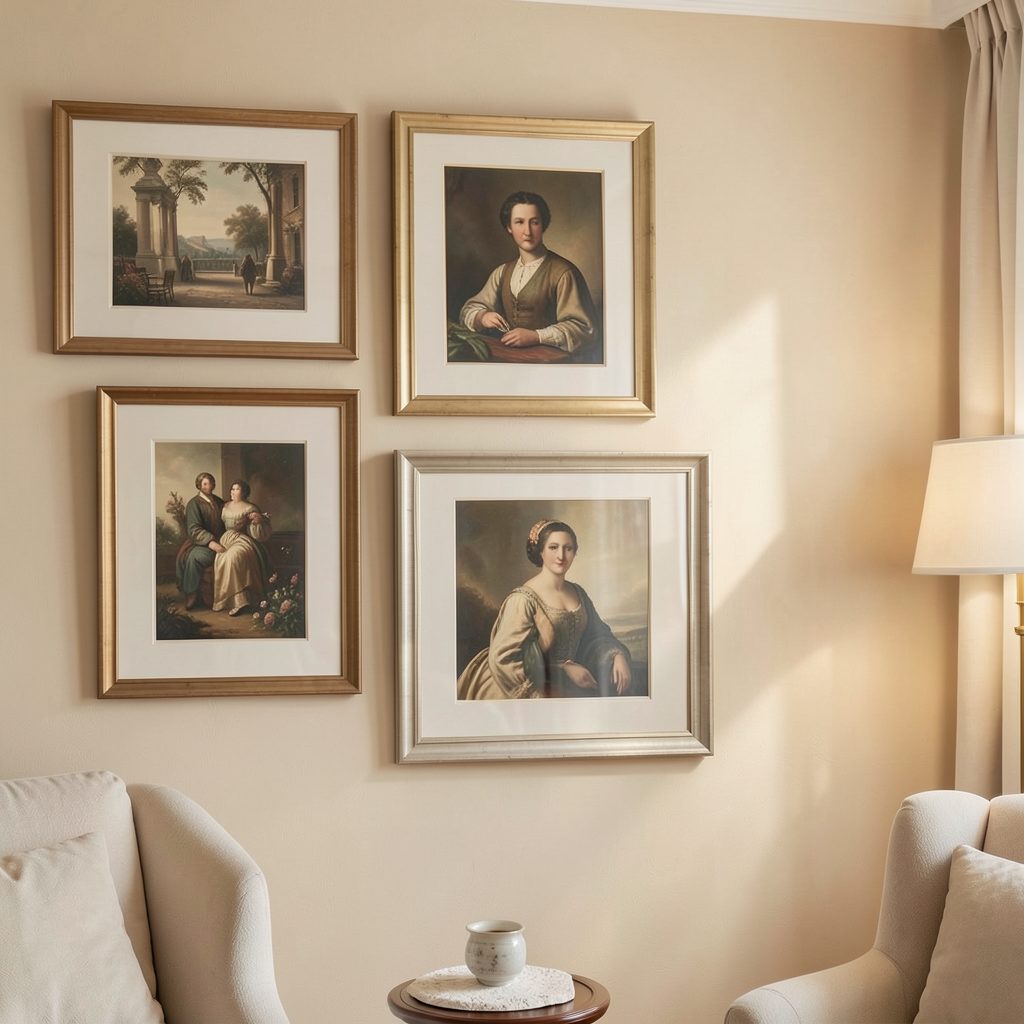
A collection can begin with one work above a desk and gradually expand into a layered gallery wall. Lay potential arrangements on the floor first, using paper templates to test spacing. A gap of five to eight centimetres often feels cohesive, while larger works may need more breathing room.
Mixing orientations adds movement, but repeat at least one element so the wall does not become visually noisy. Similar frame colours, a shared margin or a recurring accent shade can tie together pieces bought years apart. Keep the centre of the arrangement around eye level, adjusting for sofas, sideboards and other furniture.
If you rent, use removable hanging systems for lighter works and lean larger framed pieces on shelves or consoles. This creates an artful, changeable display without committing every wall to permanent holes. Rotate pieces seasonally or when a room needs a fresh focus; collecting is more enjoyable when the artwork remains part of daily life.
Set aside a small amount from each pay cycle for art, and begin with one piece that you would be happy to live with for years. Explore local exhibitions, independent makers and thoughtful second-hand sources, then let your collection develop at a pace that suits your home and budget.