How to Arrange a Salon-Style Gallery Wall Without Overwhelming a Room
A salon-style gallery wall brings the energy of an art collection into a home. Instead of displaying a single oversized piece, it layers paintings, prints, photographs, and objects across one area to create a curated, personal focal point. The result can feel collected and sophisticated, but careless spacing or too many competing colours can make a room feel crowded.
The best arrangements balance variety with visual rhythm. Each piece should have its own character while contributing to the shape, tone, and movement of the full composition. With a few planning techniques, even a modest apartment wall can support an expressive display without losing its sense of calm.
Before choosing frames or reaching for a hammer, consider the room’s architecture, existing furniture, and natural light. A gallery wall should feel connected to its surroundings, rather than appearing like a separate installation pasted onto an otherwise unrelated interior.
Start With The Wall And Furniture
Choose a wall that can hold visual interest without interrupting the room’s main function. Above a sofa, console, dining bench, or bed, the artwork should relate to the furniture below it. A useful starting point is to keep the overall arrangement approximately two-thirds the width of the furniture, leaving enough breathing room at each side.
The bottom edge of the collection should sit close enough to the furniture to feel anchored. For a sofa, this often means beginning around 15 to 25 centimetres above the back, depending on its height. In a hallway or open wall, use nearby door frames, shelving, or architectural details to establish a natural boundary.
Look closely at the wall colour as well. White walls allow bold frames and saturated art to take centre stage, while darker paint can unify mismatched pieces and create a more intimate gallery atmosphere. If the room already contains patterned upholstery or colourful accessories, a quieter collection may be the better choice.
Build A Cohesive Art Collection
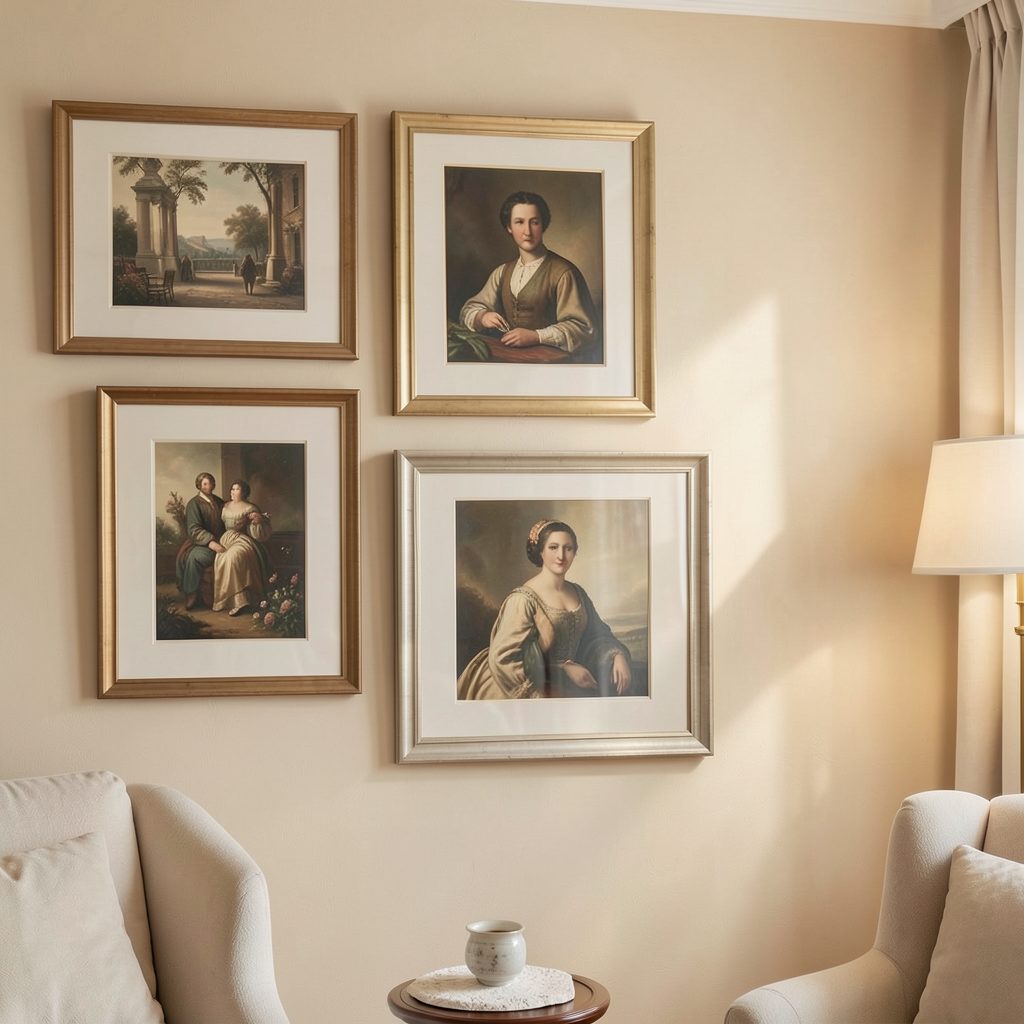
A successful salon arrangement does not require every piece to match. In fact, a mixture of abstract art, vintage illustrations, line drawings, family photographs, and small sculptural elements usually feels more lived-in. The connection can come from a shared colour, subject, era, texture, or frame finish.
Select one visual thread to repeat throughout the collection. Warm neutrals might appear in several prints, while black-and-white photography could balance a bright painting. Repetition gives the eye somewhere to rest, preventing the display from becoming a random assortment of unrelated decorations.
Scale is equally important. Combine large anchor works with medium pieces and smaller accents, but avoid filling every gap with tiny frames. A few substantial works create hierarchy, while smaller pieces can guide the eye around the edges and soften the geometry.
Plan The Layout Before Hanging
Arrange the artwork on the floor before mounting anything. Start with the largest piece near the centre or slightly off-centre, then place medium works around it. Add smaller pieces last, checking that the outer edge forms a considered silhouette rather than an accidental scatter.
Use paper templates if the collection is extensive. Trace each frame onto kraft paper, cut out the shapes, and attach them to the wall with removable tape. This method makes it easy to test spacing, adjust the balance, and protect the plaster from unnecessary holes.
| Element | Practical guideline | Visual effect |
|---|---|---|
| Overall width | About two-thirds of the furniture below | Creates proportion and stability |
| Outer spacing | Keep the perimeter intentional and gently varied | Prevents a messy silhouette |
| Gap between frames | Usually 5–10 centimetres | Keeps the collection connected |
| Large anchor piece | Place near the centre or a strong visual axis | Establishes hierarchy |
| Small artworks | Use as accents rather than filler | Adds rhythm without clutter |
| Frame alignment | Mix alignments, but repeat a few lines | Adds structure to an eclectic display |
Stand back from the templates at several distances. A composition that looks balanced up close may feel too dense from across the room. Check it from the doorway, from the sofa, and from the main circulation path, since that is how the arrangement will usually be experienced.
Control Frames, Spacing, And Colour
Frames are one of the easiest ways to make a diverse collection feel intentional. Matching black frames create a crisp, contemporary look, while a combination of oak, walnut, painted wood, and antique finishes feels more collected. If you mix materials, repeat each finish at least twice so no single frame appears accidental.
The spacing between works should be consistent enough to create a relationship without becoming rigid. Five to eight centimetres works well for many collections, although larger pieces can tolerate slightly wider gaps. Tight spacing produces a dense, traditional salon effect; generous spacing creates a lighter, more modern gallery wall.
A restrained palette can make a busy arrangement feel calm. Choose two or three dominant colours, then allow a few contrasting details to add energy. When the artwork is already highly varied, consider using a consistent mount or frame colour to provide a visual bridge.
Add Texture Without Adding Clutter
Artwork does not have to mean framed paper alone. A woven textile, ceramic plate, shallow mirror, small canvas, or unframed drawing can interrupt a repetitive grid and introduce depth. For a relaxed display, explore ideas for displaying art without frames while keeping the surrounding pieces more structured.
Three-dimensional additions should be used sparingly. A single decorative object can create a welcome pause, but several projecting items may make the wall feel physically crowded. Avoid placing fragile or heavy objects above seating unless they are securely mounted with appropriate hardware.
Lighting also affects whether the arrangement feels elegant or overwhelming. A picture light, adjustable wall sconces, or directional ceiling spots can highlight key pieces and create shadow between frames. Avoid intense glare, especially on glass, and choose warm light that complements the room’s existing lamps.
Keep The Room In Balance
A salon wall needs visual space around it. Leave nearby shelves, side tables, and surfaces relatively edited so the eye can appreciate the artwork. If every wall and tabletop is decorated, even a carefully planned collection may feel excessive.
Look for competing focal points before finalising the display. A patterned rug, dramatic pendant, sculptural furniture, or heavily styled bookcase may already command attention. In that case, reduce the number of artworks or choose a quieter arrangement with more negative space.
Treat the collection as something that can evolve. Rotate seasonal prints, replace a piece that no longer suits the room, or leave a temporary gap for a future find. The most convincing gallery walls often reflect gradual collecting rather than a single shopping trip. For further apartment styling and artwork ideas, browse Focus LDN for practical inspiration across bedrooms, bathrooms, and gallery-style interiors.
A Simple Editing Checklist
Before drilling into the wall, use these checks to refine the composition:
- Keep the collection connected to the furniture or architectural feature beneath it.
- Repeat at least one colour, frame finish, subject, or material across the arrangement.
- Include a clear anchor piece instead of giving every artwork equal visual weight.
- Leave enough negative space around the collection and between major room features.
- View the layout from across the room before making the final installation permanent.
A salon-style display should feel abundant, not oppressive. If the wall seems too busy, remove one or two minor pieces rather than rearranging everything. Often, a small reduction creates the breathing room needed for the strongest works to become more visible.
Take time to live with the paper templates, then hang the collection using suitable fixings for the wall type and frame weight. Once installed, step back and let the arrangement settle into the room. Subscribe to Focus LDN for more considered ideas on displaying art, styling an apartment, and creating a home with a distinctive visual point of view.