Art around a wall-mounted television for a cohesive room
A wall-mounted television creates a strong horizontal anchor, but the surrounding wall does not need to look like leftover space. Knowing how to arrange art around a wall-mounted television for a cohesive look starts with treating the screen, artwork, and nearby furniture as one visual composition rather than separate decorating tasks.
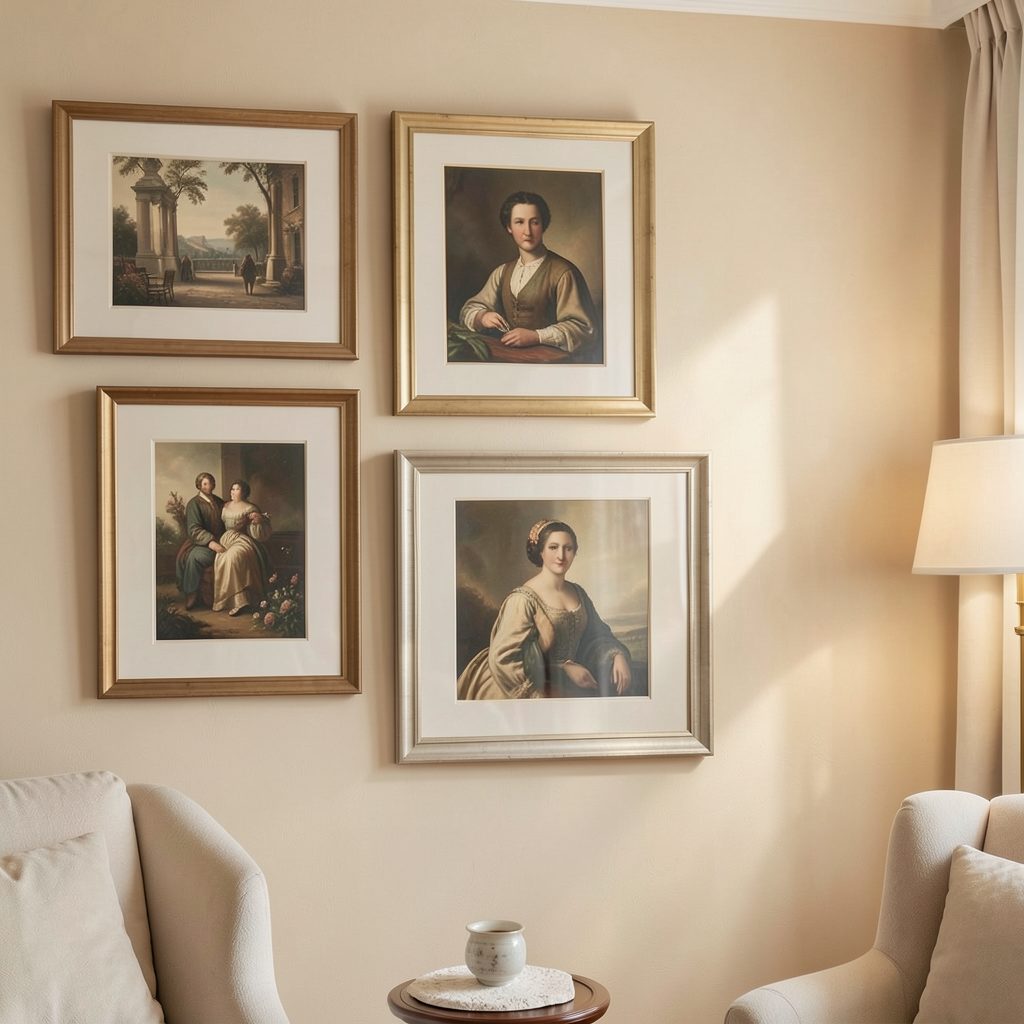
The aim is balance, not perfect symmetry. A pair of substantial prints can make a restrained scheme, while an eclectic salon-style grouping can suit a relaxed Australian home. Negative space around the television gives the eye somewhere to rest, while the right arrangement can make the screen feel like part of the décor.
Start with the wall, not the frames. Measure its usable width, note the television’s position, and sketch several possible arrangements before buying anything. Paper templates taped to the wall can reveal scale, spacing, and sightlines without the commitment of holes.
Measure the visual field
Measure from the actual wall edges, not simply the width of the television. Leave room for airflow around a recessed or wall-mounted screen and mark a clear buffer around its outer edge. This prevents artwork from looking cramped or interfering with vents and controls.
Decide whether the television will be centred within the entire wall composition or treated as an object with artwork to either side. A symmetrical layout often feels calm and architectural; an asymmetrical layout can feel more collected. In a narrow Sydney or Melbourne apartment, flanking the screen may use vertical space better than a crowded row above it.
Before purchasing, mock up the full arrangement at roughly actual size. For guidance on how to incorporate artwork into an existing scheme, use the same scale and spacing rules you would apply to original pieces. This makes it easier to judge the group as a whole.
Build one visual hierarchy
Choose an anchor work first. It may be a large print directly above the television, a pair of equally sized portraits on either side, or the largest piece near one end of a broader gallery wall. Tiny frames placed high above a large screen usually look undersized and disconnected.
Use consistent gaps between frames, commonly about 5 to 8 centimetres, and let edges create clean lines. A shared horizontal line can make separate works feel unified; varied heights can make the collection feel informal. Tape the outlines first, then step back from the couch to check the visual centre.
Balance weight, not just object count. Three dark, heavily framed works on one side may carry more visual weight than five pale minimalist prints on the other. Repeat one or two colours from the screen surround, rug, or cushions so the television feels integrated instead of pasted onto the wall.
Choose artwork that holds its own
Artwork should remain legible at couch distance. Select prints with enough scale and contrast to hold attention beside the dark rectangle of a television, while avoiding a busy image that competes with moving content. Mat boards can give smaller works presence without making them look like miniature posters.
Look for a controlled frame finish—black, timber, or a pale metal—and repeat it across the grouping. Australian buyers can explore local artists through galleries in Sydney, Melbourne, Brisbane, Perth, and Adelaide, often with the option to negotiate in Australian dollars. Mix sizes and mediums carefully, since too many frame styles quickly reduces cohesion.
A rug helps anchor the wall arrangement to the seating area. If the floor still feels disconnected, browse the latest rug and decor ideas for Australian interiors and choose a pattern or texture that quietly echoes a colour in the artwork.
Work with Australian apartment conditions
Check what sits behind the wall before mounting anything. Apartment interiors may combine concrete, masonry, brick, and plasterboard, so the correct anchors differ from building to building. Use a qualified installer where wiring, tiles, or load-bearing safety are involved, and keep clear of power points and concealed services.
If you rent, ask the landlord or body corporate before making permanent changes. Strata-managed buildings may have rules for common-property walls, hallways, and noise; removable hanging systems can be safer, provided they are rated for the weight and surface. In a compact unit, a television cabinet may also hide cables and equipment.
Climate matters as well. Strong Australian sunlight can fade paper and pigments, so keep vulnerable work out of direct rays or use UV-filtering glazing. Humid conditions in Brisbane can affect untreated timber frames and adhesives, while dry Perth heat can loosen poorly fixed hardware. A small gap from the wall also allows inspection and cleaning.
Bring the room together as one scheme
Repeat the artwork palette in cushions, throws, books, and the media console. Keep the console itself simple: one lamp, a low bowl, or a single plant is often enough when the wall carries the visual story. Conceal cables within trunking or behind the console rather than looping them across the arrangement.
Lighting can change the mood after dark. Aim a picture light or slim wall lamp across the upper edge of each frame, and use warm, diffused light rather than harsh spots. If you make or collect the work, you can also submit your own work through the site’s artist submission page, adding a personal story to the room.
Choose one layout, gather the pieces, and test it with taped paper templates before the first hole goes into the wall.