Mixing sculpture and paintings for a layered gallery wall at home
Apartment living across the country has always asked a lot of small spaces. In a Surry Hills studio, a Fitzroy terrace, or a Brisbane weatherboard, the walls become the main event because the floor is already spoken for. A mixed-media gallery wall — paintings hung alongside small bronze figures, ceramic plates, woven forms, or carved timber — answers that brief better than any single medium can. Learn more about Gallery Opening Attire.
There is something quietly satisfying about a wall that moves. Painters in Australia have long worked between flat surface and raised texture, and bringing that same conversation into a living room lets a home feel curated rather than catalogue-bought. Sculpture catches raking afternoon light from a balcony; a painting behind it gives the eye somewhere to rest.
A mixed-media arrangement is also forgiving. Pieces collected in Paddington, pieces inherited, a ceramic bought at a Sunday market in Fremantle — they all find a place when the wall is planned with a few practical moves in mind.
Planning the layout and measuring the wall
Before anything is hung, the wall earns a hard look. Measure the width and the drop, then mark out the floor plan with painter's tape in the same proportions. Australian apartments often present narrow, tall walls between doorways, so a vertical-leaning composition reads more comfortably than a wide horizontal one. Keep the grouping within roughly two-thirds of the wall width, with the centre about 145 to 155 centimetres from the floor, eye level for most adults.
Think about adjacent rooms too. A sculpture that throws a strong shadow can dovetail nicely with styling a bathroom nearby, where reflective surfaces double the play of light and form.
Choosing sculptural pieces that hold their own
Sculpture on a wall is judged from across the room and from close up, so pieces need to read at both distances. Smaller works in bronze, stoneware, or polished timber outperform oversized ones in the tighter footprints of inner-Sydney and inner-Melbourne homes. A carved piece, a small mask, a flattened ceramic disc, or a woven wall hanging sits comfortably alongside framed paintings without competing.
Materials matter for the climate. Salt air from Coogee to Cottesloe can pit raw metals, so sealed finishes hold up better. In humid Brisbane summers, untreated timber can warp; a coat of matte sealant from a Bunnings aisle is cheap insurance. Local makers are worth chasing too, with studios from the Southern Highlands to the Mornington Peninsula producing ceramic wall pieces that pair beautifully with prints from a recent state gallery visit.
Balancing two-dimensional and three-dimensional work
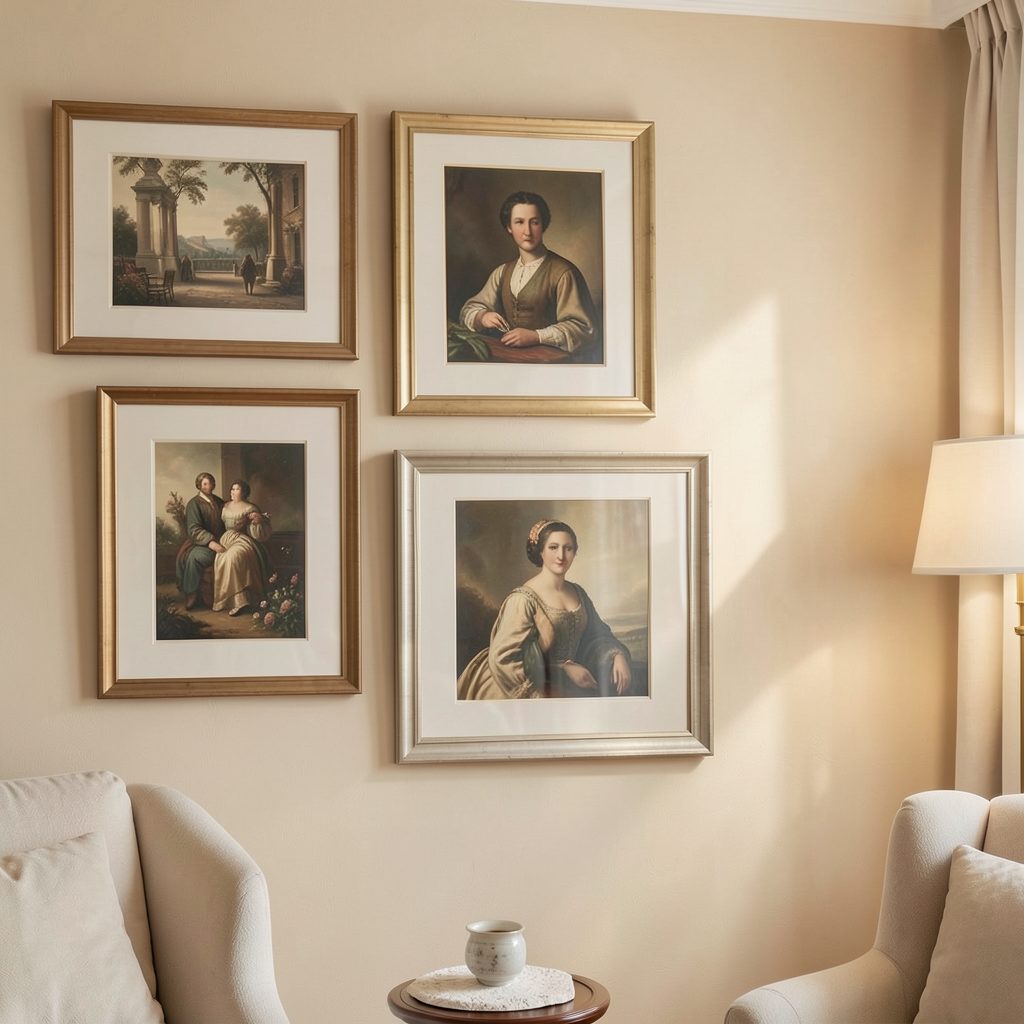
The trick to mixing paintings and sculpture is rhythm rather than symmetry. Cluster two framed works at slightly different heights, drop a sculptural piece in the negative space, then add another painting further along. The eye should travel in a loose Z-shape rather than stopping at any one object.
Negative space is doing real work, so resist the urge to fill every gap. Walls in older terraces often have quirks — a light switch, a doorway, a piece of architrave — that the arrangement can work around. Letting a small sculpture sit beside, rather than on, the same vertical line as a painting makes both pieces easier to appreciate.
Lighting techniques for wall-mounted sculpture
Light changes everything on a mixed-media wall. Picture lights above each painting flatten the depth, so a better approach is a wash from one side — an adjustable track on the ceiling, a wall washer, or a clamp lamp from a design store. The Australian sun does much of this work for free through east- and west-facing windows, so consider what time of day the wall will be seen most.
Aim for around 3000 Kelvin for warm, gallery-style light that flatters timber and oil paint without washing out acrylic. A dimmer lets the wall shift from a bright morning read to an evening mood without rearranging anything.
Hanging hardware and fixings for heavier pieces
Plasterboard walls in many newer Australian apartment blocks will not hold a heavy sculpture with a standard nail. A stud finder locates the timber behind the board, and a screw into the stud is the safest fix for anything over two kilograms. For pieces in between, hollow-wall anchors from a hardware shop are dependable.
Sculpture needs a different approach to hanging than a flat frame. D-rings, cleats, and French cleats allow a piece to sit flush without protruding hardware. For ceramics or fragile objects, a small shelf routed into a stud turns the work into a dimensional display. Picture rails are underrated in older Melbourne and Sydney homes, taking the weight off the plaster and letting pieces be rearranged without new holes.
Travelling the wall from Sydney to Perth
A move is a useful prompt to rethink a gallery wall. Renters benefit from gentler fixings, including adhesive strips rated for the piece's weight and removable hooks that leave walls intact, which makes the rental check at the end of a lease far easier.
Before reinstalling, lay every piece on the floor in the new room and photograph the arrangement from above. What looked balanced in a Brunswick apartment with high ceilings can feel top-heavy in a lower Studley Park townhouse. For those collecting from regional galleries on a long drive, packing small sculpture in a boot lined with rolled towels keeps fragile edges safe.
Refreshing the display through the year
A mixed-media wall earns its place partly because it can be edited. Once a season, swap a painting for a textile, add a small ceramic found at a market, or take something down to the spare room. Local galleries run affordable rotation shows, and openings are a great way to see how curators handle the same problem of mixing heights, depths, and materials. The advice on gallery opening attire and the broader etiquette of new shows is worth a quick read.
If something feels stale, the answer is rarely more pieces. Often it is a single replacement and a fresh coat of wall paint, or a swap of one sculpture for a piece that catches the light differently at four o'clock.
If the layering described here has stirred the urge to start a wall of your own, the how to use guide in the journal covers the underlying principles of grouping, spacing, and editing. Subscribe to the Focus LDN email list for fresh pieces on gallery walls, framing, and the everyday business of making a home feel considered.