Framing DIY prints vs. buying ready-made art
Decorating with art does not have to begin with an expensive original or a perfectly curated collection. A downloaded illustration, a vintage poster, or a professionally printed photograph can give an apartment personality when it is paired with the right frame. Ready-made artwork offers a quicker route, yet the creative control of a DIY print can be equally rewarding.
The better choice depends on your budget, the room, and how much time you want to spend refining the details. Paper quality, frame proportions, mounting methods, and color all influence whether a piece looks considered or temporary.
A useful approach is to treat the artwork and its frame as one design decision. The image establishes mood, while the frame controls scale, polish, and how naturally the piece belongs within your interior.
When a DIY print makes sense
DIY prints work especially well when you already have a clear idea of the colors or subject you want. Botanical illustrations, abstract shapes, architectural photographs, and typography can be sourced or created to suit a specific wall. This makes it easier to coordinate art with bedding, curtains, rugs, or an existing gallery wall.
The main advantage is flexibility. You can print several sizes, test a monochrome version, or replace the image later without buying an entirely new frame. A set of related prints can also create rhythm above a sofa or along a narrow hallway without making the arrangement feel overly formal.
Quality matters from the start. Choose archival or heavyweight matte paper where possible, and check the resolution before printing. A low-resolution file enlarged too far may look blurred, while glossy paper can create distracting reflections near windows or strong lamps.
What ready-made art offers
Ready-made art removes much of the decision-making. The image, paper, frame, and often the mount have already been selected, so the piece can go from shop to wall quickly. This is useful when you are furnishing a new apartment, preparing a room for guests, or trying to finish a gallery wall on a fixed schedule.
It can also provide a stronger sense of finish. Professional art sellers usually offer consistent printing, accurate color reproduction, and frames designed for the artwork’s proportions. A coordinated pair or triptych may be easier to hang than a collection assembled from unrelated prints.
The trade-off is less customization and, often, a higher price. A ready-made piece may have the right mood but the wrong dimensions for your wall. Before buying, measure the available space and consider the furniture beneath it. A beautiful print can feel undersized above a broad console or crowded when placed beside tall shelving.
Matching the frame to the room
For DIY artwork, frame selection is where a casual print becomes part of the room’s architecture. Thin black frames suit graphic images and minimalist interiors, while pale oak introduces warmth around soft landscapes or neutral photography. Brass and antique gold can bring depth to traditional rooms, though they work best when repeated in small accents elsewhere.
White walls give you plenty of freedom, but the safest choice is not always a white frame. A darker edge can define delicate artwork, while a natural wood finish prevents a pale image from disappearing. For more guidance on coordinating the frame with your wall color, explore these frame color ideas.
Ready-made art often arrives with a frame that reflects the seller’s styling rather than your home. If the print is removable, consider whether it would look better in a different profile or finish. Swapping the frame may preserve the convenience of a purchased piece while giving it a more personal appearance.
Comparing the practical details
The choice becomes clearer when you compare the full process rather than the artwork price alone. DIY prints may appear inexpensive, but paper, test prints, mounts, glazing, and delivery can add up. Ready-made art generally costs more upfront, yet it includes several finishing decisions that would otherwise take time and experimentation.
Think about how permanent you want the arrangement to be. A rented apartment or frequently changing bedroom may benefit from adaptable prints, while a long-term home may justify investing in a framed piece with better materials and lasting visual appeal.
| Consideration | DIY print | Ready-made art |
|---|---|---|
| Initial cost | Usually lower, depending on printing and framing | Often higher but more predictable |
| Creative control | High; image, size, paper, and frame can be chosen separately | Limited to the available designs and sizes |
| Convenience | Requires sourcing, printing, and assembly | Usually ready to hang |
| Finish | Depends on materials and framing skill | Generally consistent and professionally presented |
| Flexibility | Easy to replace or update the print | May require replacing the whole piece |
| Best for | Personal collections, gallery walls, changing decor | Quick styling, statement pieces, gifts |
Using art in smaller rooms
Small spaces reward restraint. One well-proportioned print can make a compact room feel intentional, while several small pieces may create visual noise if they are hung without a clear structure. In a bathroom, choose protected glazing and artwork that can tolerate changes in humidity. Avoid placing unsealed paper directly beside a shower or sink.
A small print can work above a towel rail, on a shelf, or opposite a mirror where it adds interest without reducing the sense of space. For layout ideas that extend beyond artwork, these small bathroom decorating ideas can help you balance storage, color, and wall decoration.
In bedrooms, softer imagery and quieter frames often support a restful atmosphere. Try a single oversized piece above the bed for a calm focal point, or use two matching frames on bedside tables. DIY prints are especially useful here because you can adjust the palette to complement changing linens.
Building a cohesive gallery wall
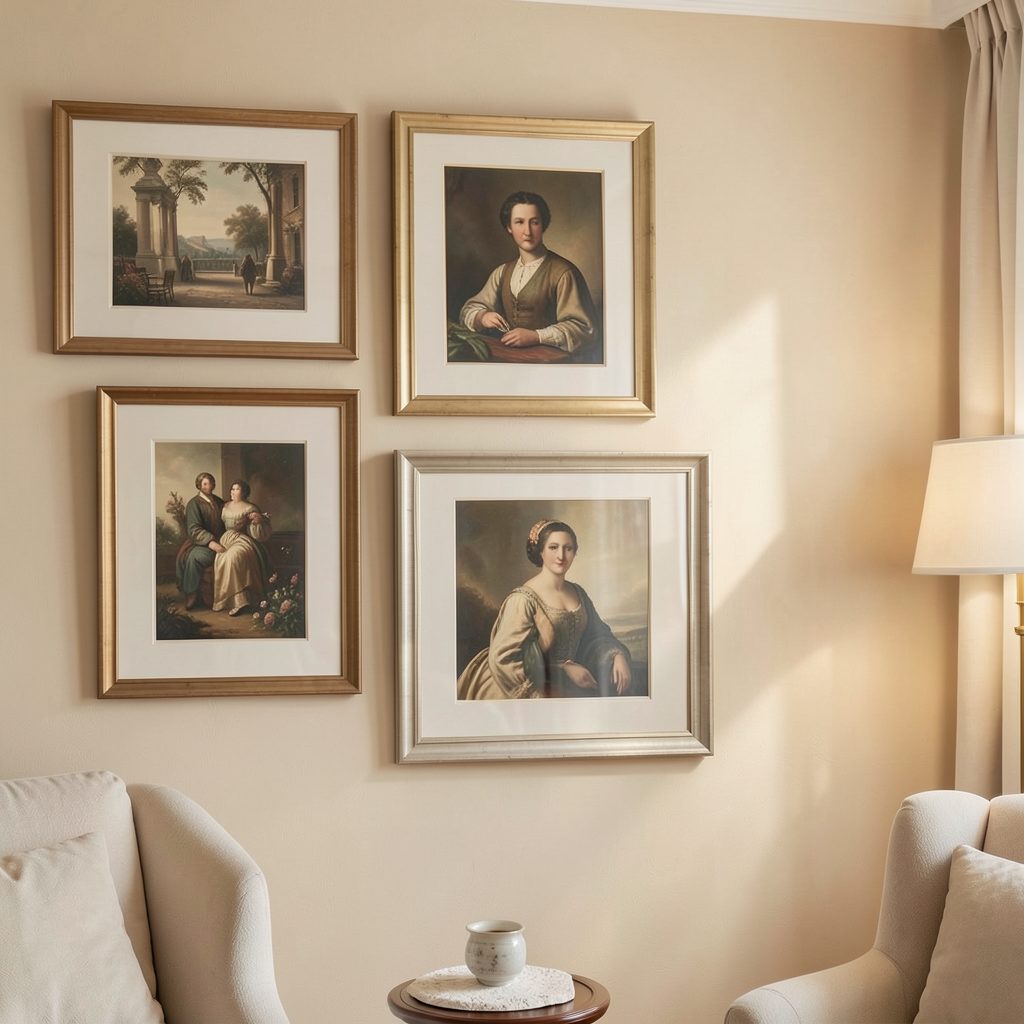
A gallery wall does not need every piece to match. Cohesion can come from repeated frame colors, a shared subject, similar margins, or a controlled palette. Mixing one ready-made artwork with several DIY prints can create a collection that feels collected over time rather than purchased as a single set.
Lay the pieces on the floor before drilling. Begin with the largest work, then position smaller frames around it while keeping the gaps relatively consistent. A paper template taped to the wall can reveal awkward spacing and help you avoid unnecessary holes.
If you prefer a minimalist arrangement, use identical frames and vary the artwork inside them. For a more eclectic display, keep one element consistent, such as black frames or warm neutral imagery. The goal is visual balance rather than perfect symmetry.
A sensible buying checklist
Before committing to either option, assess the wall, the artwork, and the practical conditions around it. These checks will help you avoid spending money on a print that looks wrong once it reaches home.
- Measure the wall and the furniture below it before choosing a size.
- Check paper weight, print resolution, and color accuracy for DIY artwork.
- Select UV-protective glazing for sunny rooms or valuable prints.
- Keep frame finishes consistent when creating a calm gallery wall.
- Leave room in the budget for mounting, hanging hardware, and delivery.
Personal taste should have the final say. A ready-made piece can become distinctive when placed thoughtfully, while an inexpensive DIY print can look elevated with a generous mount and well-made frame.
Browse Focus LDN for further ideas on apartment decorating, artwork display, gallery walls, and stylish home living. Then choose one wall to work on first, test the proportions, and let the frame support the atmosphere you want to create.