Five ways to display art in a tiny bathroom
A small bathroom can support far more personality than its floor plan suggests. The right artwork, placed with care, can turn a blank wall, cabinet door, or overlooked corner into a polished focal point without making the room feel crowded.
Bathrooms require a slightly different decorating approach because humidity, splashes, limited wall space, and strong lighting all affect how art performs. Lightweight pieces, sealed frames, and thoughtful positioning help create a gallery-style interior that remains practical.
The best display is rarely the largest one. In a compact washroom, scale, spacing, and visual balance matter more than quantity. These five ideas make it easier to bring prints, photographs, paintings, and sculptural details into the room.
Make one narrow wall work harder
A slim vertical wall beside the basin, mirror, or door is often the most useful place for bathroom artwork. Instead of trying to fill the entire surface, choose one tall print or a stack of two small pieces. The vertical arrangement draws the eye upward and gives the room a greater sense of height.
Keep the artwork several inches away from taps and areas that receive direct spray. A minimalist black frame can create definition against pale tiles, while a light oak or natural wood frame softens bathrooms with white, grey, or stone finishes. For a cohesive gallery wall, repeat one colour from the room’s towels, fittings, or ceramics.
When the available wall is unusually slim, standard frames may leave awkward gaps. A guide to framing unusual sizes can help you adapt the proportions without forcing the artwork into an unsuitable mount.
Turn the door into a display surface
The inside of a bathroom door provides valuable decorating space while remaining largely unused. A small framed print, a vintage botanical illustration, or a typographic piece can sit above the towel rail or on the upper half of the door. This position keeps the artwork away from most splashes and makes the room feel considered from every angle.
Weight is important. Use a lightweight frame and secure it with strong picture-hanging strips or suitable hardware that will not damage the door. Avoid placing glass close to the handle, where repeated movement could cause knocks. If the door is painted, a single piece with generous breathing room usually looks cleaner than a crowded arrangement.
For renters, removable hanging solutions make this idea especially useful. Choose artwork with a sealed surface, such as a coated print or photograph, and avoid valuable originals in a space where temperature and moisture fluctuate.
Use a ledge or cabinet-front arrangement
A shallow picture ledge above the toilet or beside the basin creates a flexible display without requiring a large installation. Layer two or three small artworks at different heights, allowing the front piece to overlap the one behind it slightly. This relaxed arrangement adds depth while taking up almost no floor area.
A wall-mounted cabinet can offer a similar opportunity. Place a small print on top if there is a safe ledge, or consider a decorative panel on the cabinet front. Adhesive hooks, slim magnetic rails, and lightweight clip frames are useful when drilling is not practical. Keep the display clear of toiletries so it reads as an intentional art moment rather than extra storage.
| Display method | Best for | Main advantage | Watch carefully |
|---|---|---|---|
| Narrow vertical stack | Empty wall beside a mirror | Adds height and symmetry | Keep it away from direct splashes |
| Door-mounted print | Renters and unused surfaces | Uses overlooked space | Choose lightweight, secure framing |
| Picture ledge | Flexible seasonal styling | Easy to rearrange | Prevent pieces from slipping |
| Cabinet-front artwork | Plain vanity doors | Makes practical furniture decorative | Use moisture-resistant materials |
| Small grouped gallery | Larger blank wall | Creates a strong focal point | Leave enough negative space |
Build a small vertical composition
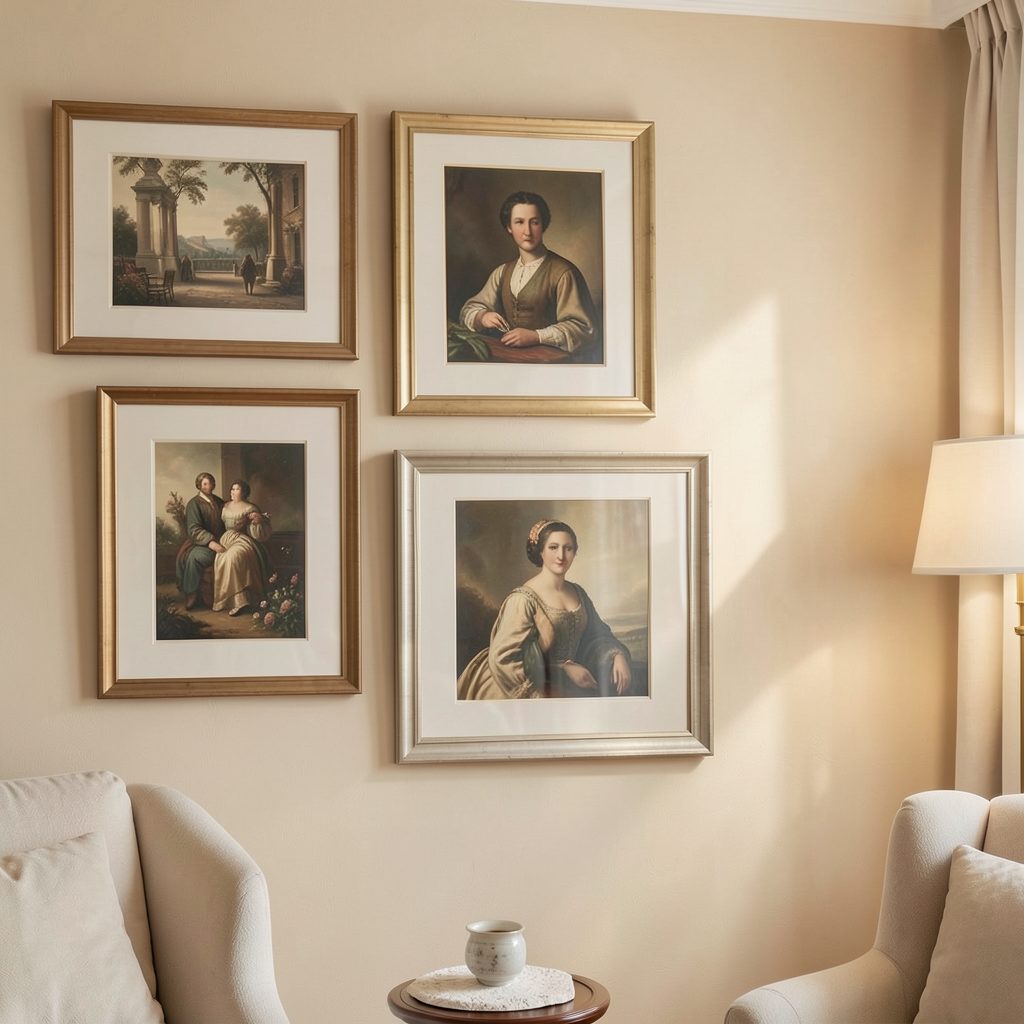
A tiny bathroom can accommodate a gallery wall when the arrangement is edited carefully. Three small works arranged vertically often feel more spacious than four or five pieces spread across a broad surface. Select a shared thread, such as monochrome photography, muted landscapes, architectural sketches, or simple line drawings.
Begin by measuring the wall and laying the frames on the floor. Leave consistent gaps of around two to three inches between pieces, then position the centre of the arrangement at eye level. In a bathroom, artwork may be viewed from close range, so fine details and delicate marks can be more effective than busy, high-contrast images.
You can start an art gallery with inexpensive prints before investing in custom framing. Mixing one larger frame with two smaller companions creates hierarchy, while matching mounts keep the collection calm and unified.
Use functional objects as artwork
Art does not have to mean a traditional framed picture. A sculptural soap dish, a patterned ceramic tile, a small woven piece, or a beautifully shaped mirror can contribute to the room’s visual story. These objects bring texture and dimension to a space where ordinary wall art may feel too flat or vulnerable.
Consider displaying a decorative tray on a vanity, hanging a small textile away from the shower, or choosing a mirror with an unusual silhouette. A collection of handmade ceramics can create the atmosphere of a small design gallery while remaining connected to the bathroom’s everyday purpose.
Colour should be controlled in a compact room. Two or three related tones are usually enough, particularly when the tiles and sanitaryware already provide a strong backdrop. Let one object act as the accent, then support it with quieter shapes and finishes.
Protect the display and refine the edit
Humidity does not automatically rule out artwork, but it does make material choices important. Keep valuable paper pieces away from steam-heavy areas, use sealed frames where possible, and provide ventilation after showers. Acrylic glazing is lighter and safer than glass for door-mounted or narrow-wall displays.
Before fixing anything permanently, test the arrangement with paper templates. This reveals whether the artwork competes with the mirror, interrupts cabinet doors, or makes the room feel visually compressed. A few minutes of planning can prevent unnecessary holes and expensive framing mistakes.
Use these checks when selecting the final display:
- Choose lightweight frames for doors, ledges, and adhesive hanging systems.
- Keep paper artwork away from direct steam, shower spray, and wet towels.
- Match frame finishes to existing hardware, cabinetry, or tile colours.
- Leave negative space around each piece so the room still feels open.
- Select sealed prints, ceramics, or protected surfaces for better durability.
A tiny bathroom becomes more memorable when every object has a clear role. Start with one wall or overlooked surface, choose artwork that suits the room’s moisture and scale, and build the display slowly. Explore more gallery-wall ideas and subscribe to the Focus LDN email updates for practical inspiration that brings art into everyday spaces.