Five small bathroom decorating ideas that maximize space
A small bathroom can feel polished and generous when every surface has a clear purpose. The right colors, lighting, storage, and artwork placement can create the impression of extra room without changing the floor plan.
Good decorating is less about adding more and more about choosing details that work harder. A slim shelf can display a favorite print, a mirrored cabinet can hide toiletries, and a consistent palette can make awkward corners feel intentional.
These five small bathroom decorating ideas that maximize space are easy to adapt for a rental, powder room, ensuite, or compact family bathroom. They focus on visual openness, useful storage, and the refined gallery-style character associated with gallery wall ideas.
Let light do the visual work
Light colors remain one of the simplest ways to make a compact bathroom appear larger. Soft white, warm ivory, pale stone, and muted gray reflect daylight and keep the walls from feeling visually heavy. If an all-white room feels too stark, introduce contrast through brushed brass, natural wood, or black-framed details.
Mirrors can extend this effect. A large mirror above the basin reflects light across the room, while a mirrored medicine cabinet provides concealed storage. Choose a shape that responds to the architecture: a rounded mirror softens a narrow room, while a wide rectangular design can make a short wall feel broader.
Layered lighting also matters. Combine an overhead fitting with wall lights beside the mirror so the room remains bright without relying on a single harsh source. Dimmable bulbs are useful in a powder room, where a softer evening setting creates a more relaxed atmosphere.
Choose storage that earns its footprint
In a small bathroom, floor space is valuable, so bulky cabinets can quickly make the room feel crowded. A floating vanity keeps the floor visible beneath it and creates a lighter silhouette. Select a model with drawers rather than a deep cupboard when possible, since drawers make everyday items easier to reach.
Use the unused areas above the toilet, beside the vanity, or behind the door. A narrow tower cabinet can hold towels and cleaning supplies, while a shallow ledge can accommodate soap, a small plant, or rolled hand towels. Keep the display edited so storage feels deliberate rather than improvised.
Baskets and matching containers help control visual noise. Group cotton pads, spare toiletries, and hair accessories in discreet boxes, leaving only a few attractive objects on open shelves. The room will feel calmer when every item has a designated home.
Use vertical surfaces creatively
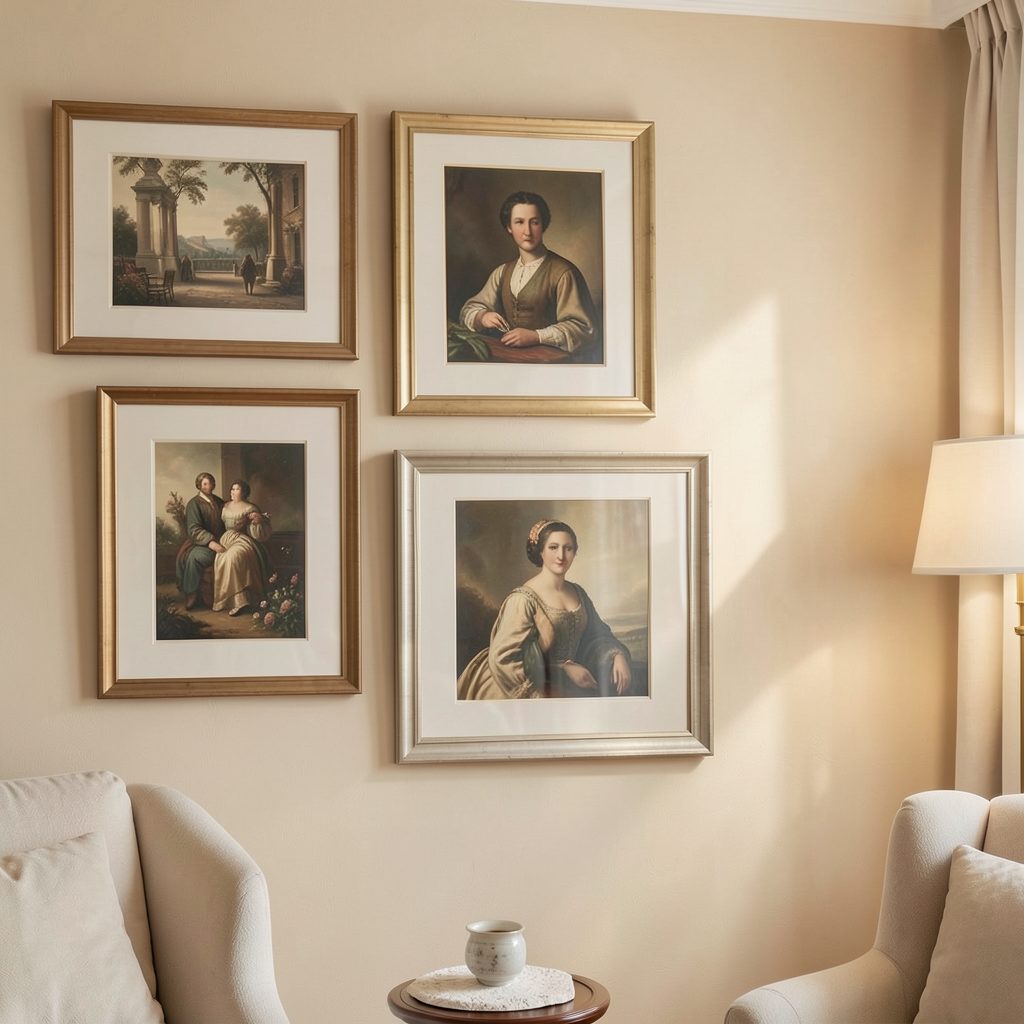
Walls provide valuable decorating space when the floor plan is tight. A single framed artwork above the towel rail or beside the mirror can add personality without taking up usable space. Choose a moisture-resistant print or place artwork away from direct splashes, particularly in a shower room with high humidity.
A slim picture ledge gives you flexibility. Lean one or two small prints against the wall, then add a petite vase or sculptural object. This arrangement is easier to update than a permanently fixed gallery wall and allows you to change the composition as your style develops.
For a more curated finish, small identification cards can give artwork a gallery-inspired presence. The practical gallery labels approach works especially well when you want a bathroom display to feel considered rather than purely decorative. Keep the typography simple and mount labels neatly beneath selected pieces.
Build a calm, continuous palette
Visual continuity helps a small bathroom feel less divided. Repeat one or two finishes across the room, such as the same metal on the tap, mirror frame, hooks, and light fitting. This connection makes separate functional elements read as part of a single design.
Tiles can support the same effect. Large-format tiles with narrow grout lines create fewer visual breaks than small, busy patterns. If you prefer decorative tile, use it in one focused area—behind the basin or inside the shower niche—and keep the remaining surfaces quiet.
Textiles offer an easy way to introduce warmth. Choose towels, a bath mat, and a shower curtain in related shades rather than unrelated colors. A limited palette of sand, clay, sage, or dusty blue can bring character while preserving the room’s airy quality.
Match each idea to the available space
The best compact bathroom design depends on the room’s proportions, natural light, and storage needs. A narrow bathroom may benefit most from a wall-mounted vanity, while a windowless powder room may need reflective finishes and brighter layered lighting. Use the guide below to prioritize the changes with the greatest visual impact.
| Decorating idea | Space benefit | Practical move |
|---|---|---|
| Large mirror | Expands light and perceived width | Fit one above the basin or across a broad wall |
| Floating vanity | Reveals more floor area | Choose drawers and a slim depth |
| Vertical storage | Uses neglected wall space | Add a narrow cabinet, ledge, or rail |
| Continuous palette | Reduces visual interruption | Repeat two or three finishes |
| Curated artwork | Adds style without cluttering surfaces | Display one print or a small, edited grouping |
Measure before buying anything. Record the width of the basin wall, the door swing, the clearance around the toilet, and the distance from wet areas to artwork. A few minutes with a tape measure can prevent storage units and decorative accessories from overwhelming the room.
Add detail without creating clutter
Accessories should contribute texture, function, or personality. A small ceramic soap dispenser, one framed botanical print, and a woven hand towel may be enough to make the room feel finished. Repeating a material, such as rattan or aged brass, creates cohesion without filling every surface.
Plants can work in a compact bathroom if they suit the available light and humidity. Try a small fern, trailing pothos, or humidity-loving orchid on a high shelf. For low-light rooms, a convincing faux stem may be more practical than a struggling live plant.
Avoid placing too many small objects around the basin, where they collect water and interrupt cleaning. One substantial accessory usually has more impact than several tiny pieces. The aim is a bathroom that feels styled but remains easy to use every day.
Prioritize the changes with the greatest impact
When the budget or time is limited, start with improvements that affect both appearance and function. These choices can make a compact bathroom feel more spacious without requiring a full renovation:
- Replace a crowded vanity with a floating or slimline model.
- Install a generously sized mirror with integrated or nearby lighting.
- Move toiletries into drawers, baskets, or a narrow vertical cabinet.
- Keep wall art away from direct spray and use moisture-resistant materials.
- Repeat a restrained palette through tiles, towels, hardware, and accessories.
After the essential changes are complete, refine the room through framing, textiles, and small decorative accents. A coordinated finish will make even inexpensive updates appear intentional, while an overcrowded arrangement can undermine an otherwise beautiful renovation.
Give your bathroom one focused refresh at a time: clear the surfaces, measure the available walls, choose a calm palette, and add one useful decorative feature. With thoughtful placement and a gallery-minded eye, a small room can become one of the most elegant spaces in the home.