Decorating a Rental Living Room With Peel-and-Stick Picture Ledges
Peel-and-stick picture ledges offer renters a flexible way to display art without committing to a permanent gallery wall. They create a slim, layered arrangement for framed prints, photographs and small objects, while keeping the living room easy to update when your taste or lease changes.
The look suits Australian apartments particularly well, from compact Sydney terraces to open-plan Melbourne units. A few carefully placed ledges can add personality to a blank wall without making the room feel crowded, which is useful when furniture, storage and natural light are already competing for space.
The best result comes from treating the ledges as part of the room’s architecture rather than as isolated shelves. Consider the wall colour, sofa height, frame finishes and the weight of each object before applying anything. A relaxed arrangement can still look polished when the practical details are planned first.
| Ledge approach | Best for | Main advantage | Watch out for |
|---|---|---|---|
| Single narrow ledge | Small rentals and bedrooms | Simple, airy display | Can look sparse without careful spacing |
| Two aligned ledges | Sofas and larger walls | Strong gallery effect | Requires accurate levelling |
| Staggered ledges | Eclectic interiors | Adds movement and depth | Needs a controlled colour palette |
| Deep ledge with objects | Art and decor combinations | Displays books and ceramics | Heavier items need secure support |
| Full-width ledge | Modern living rooms | Creates a clear visual anchor | May overwhelm a narrow room |
Choose a Rental-Friendly Ledge System
Start by checking whether the product is genuinely removable and designed for painted plasterboard, rendered walls or another surface in your rental. Some adhesive picture ledges use strips, while others rely on lightweight mounting pads. Read the weight limit carefully, because the limit usually includes the ledge, frame and every object placed on it.
Australian rental homes vary widely in wall materials. A newer Brisbane apartment may have painted plasterboard, while an older Adelaide or Perth property may have masonry, textured paint or fragile surfaces. Test the adhesive on a discreet area and keep the packaging and instructions in case your property manager asks about the installation.
Choose ledges with a shallow profile if the room is narrow. White or timber-look options blend into most interiors, while black ledges create a stronger graphic line. For a minimalist gallery-style living room, use one finish throughout rather than mixing several shelf colours.
Plan Scale Around the Room
Measure the sofa, television unit and nearby doorways before choosing the ledge length. A display that is roughly two-thirds the width of the sofa usually feels balanced, although a full-width arrangement can suit a long, low Melbourne living room. Keep enough clearance above the sofa for people to sit comfortably without brushing against frames.
Create a paper template from newspaper or cardboard and attach it temporarily to the wall. This lets you judge the height from different parts of the room and prevents a common rental mistake: applying adhesive before discovering that the arrangement sits too high.
For a compact apartment, two short ledges may work better than one long shelf. They can frame a sofa or occupy a narrow return wall without interrupting circulation. Leave breathing room at each end so the display feels intentional rather than squeezed into every available centimetre.
Build a Balanced Gallery Arrangement
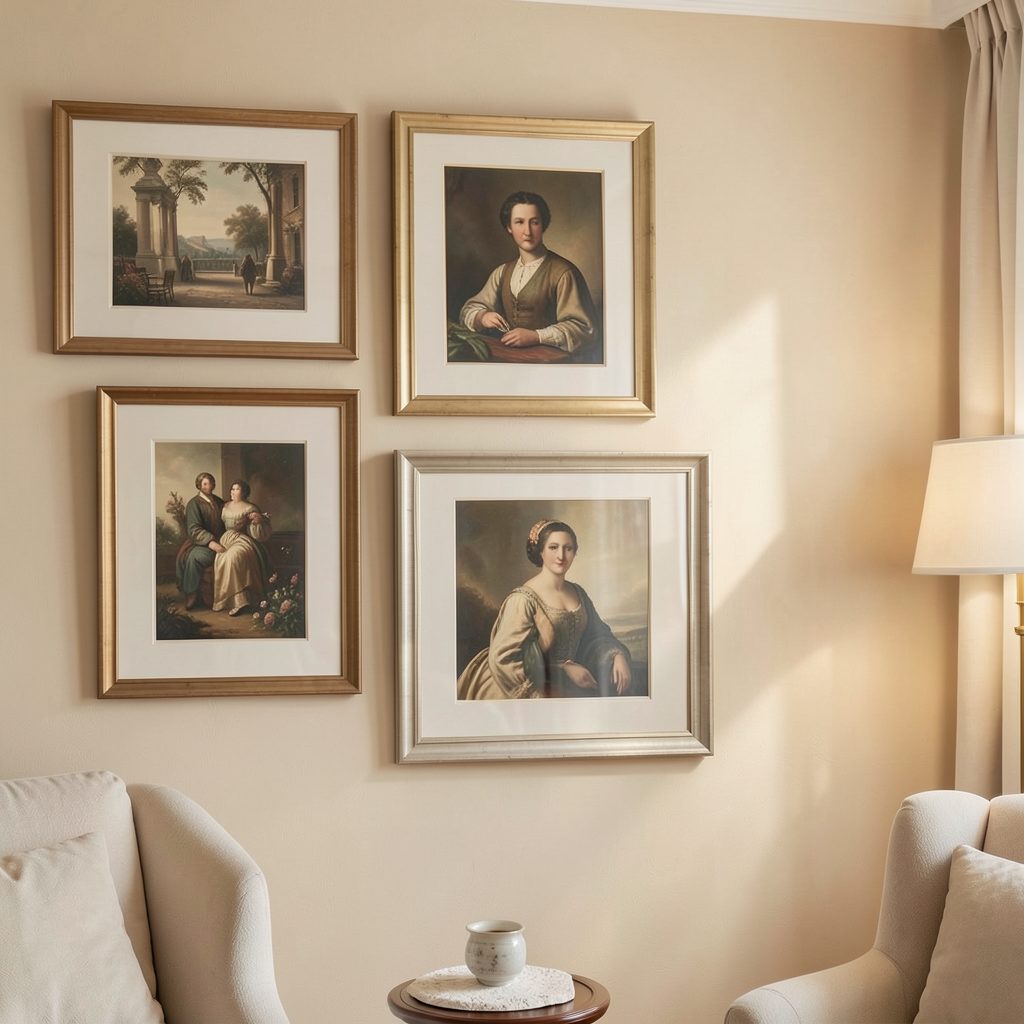
Begin with the largest artwork at the centre or slightly off-centre. Add medium frames beside it, then use smaller pieces to create a gentle rhythm. Vary the heights and orientations, but repeat at least one element, such as a warm timber frame, a black border or a shared mat colour.
For guidance on the role of negative space, think about the gaps between frames as active parts of the design. A few centimetres between pieces can look calm and contemporary, while tightly grouped artwork creates a more collected salon effect. Both approaches work when the spacing is consistent.
Lean frames rather than hanging every piece flat against the wall. Layer a small print in front of a larger one, but keep the lower frame stable and avoid blocking important details. A slim book, ceramic vessel or small sculptural object can add dimension without turning the ledge into general storage.
Style Art Without Visual Clutter
A rental living room benefits from a limited palette. Try black, cream and ochre for a graphic scheme, or soft blue, muted green and natural timber for an Australian coastal feel. If the artwork is colourful, keep the frames simple; if the frames are expressive, choose quieter prints.
Mix formats thoughtfully. Photography, line drawings, abstract art and vintage-style posters can sit together when they share a visual connection. Local Australian artists are a useful source of distinctive work, and Focus LDN’s art submission page offers a relevant pathway for discovering or presenting creative work.
Avoid filling every centimetre immediately. Leave one or two places open so the arrangement can evolve after you live with it. Seasonal changes, a new market find or a holiday photograph can then be added without forcing the display into an overcrowded composition.
Work With Australian Light and Climate
Strong northern light can fade inexpensive prints, particularly in bright Sydney, Brisbane or Darwin rooms. Keep valuable originals away from direct afternoon sun and choose UV-protective glazing where practical. For affordable displays, rotate prints occasionally or use reproductions that can be replaced easily.
Humidity also affects materials. In coastal Queensland or northern New South Wales, avoid placing unsealed timber, paper objects or delicate textiles directly beside a frequently opened balcony door. A clear acrylic frame can be lighter and safer for an adhesive ledge than a heavy glass frame.
Consider the room’s existing light temperature as well. Warm lamps suit sepia photography and earthy artwork, while cooler daylight can sharpen black-and-white prints. A small picture light is usually unnecessary on a rental ledge; a floor lamp or adjustable wall-free spotlight can provide a similar effect without new wiring.
Protect Walls and Your Bond
Follow the removal instructions precisely. Most adhesive strips need a clean, dry surface and time to cure before carrying weight. Do not attach them over loose paint, dusty plaster or recently painted walls. When removing the ledge, pull the strip slowly in the recommended direction instead of yanking it away from the wall.
Keep the display safely below the product’s stated limit. Heavy ceramic pieces, glass frames and large mirrors are poor choices for a peel-and-stick system unless the manufacturer specifically approves them. Use lightweight acrylic glazing, foam-board prints and small decorative objects for a lower-risk arrangement.
Photograph the wall before installation and retain spare adhesive strips. At the end of the tenancy, remove the display early enough to make minor repairs if necessary. This simple record can be useful when preparing for a routine inspection or final bond assessment.
Make the Ledges Work Harder
Use the display to connect the living room with adjoining areas rather than treating it as a separate feature. Repeat a colour from the rug in one print, echo the timber of a dining chair in the frames, or place a small plant nearby to soften a clean-lined arrangement.
A few practical choices will keep the ledges attractive and manageable:
- Select lightweight frames with acrylic rather than glass.
- Keep the heaviest artwork closest to the centre of the ledge.
- Leave clear space around switches, vents and door openings.
- Use removable museum gel beneath small objects in busy households.
- Recheck the adhesive and shelf level after the first week.
With the right scale, spacing and materials, decorating a rental living room with peel-and-stick picture ledges can feel considered rather than temporary. Build the arrangement slowly, use artwork that reflects the character of the home, and let the ledges provide a flexible foundation for your next display.