Decorating a Minimalist Bedroom with a Single Art Piece
A minimalist bedroom does not need bare walls to feel calm. One carefully chosen artwork can give the room personality, create a visual anchor, and add warmth without disturbing its quiet atmosphere. The key is to let the piece breathe rather than surrounding it with competing decoration.
A single art piece works especially well in bedrooms because the space already has a strong purpose: rest. Instead of building a busy gallery wall, you can use scale, texture, color, and placement to create a refined focal point above the bed, opposite the entrance, or beside a reading chair.
The most successful schemes treat artwork as part of the room’s architecture. Bedding, wall color, lighting, furniture proportions, and negative space should support the art while remaining visually restrained.
Start with visual restraint
Minimalist bedroom design depends on editing. Before selecting artwork, look at what is already present: the bed frame, bedside tables, lamps, curtains, rugs, and decorative objects. If these elements have strong shapes or contrasting finishes, choose art with a simpler composition. If the room feels plain, a more expressive painting or photograph can provide the needed character.
Negative space is equally important. A blank wall around one artwork makes it feel intentional rather than unfinished. Resist the urge to fill every open surface. The visual pause between the art, ceiling, furniture, and corners helps the bedroom retain its peaceful quality.
Choose artwork with presence
A single piece should have enough scale to hold attention without overpowering the bed. As a general guide, artwork above a double or king-size bed often looks balanced when it spans roughly half to two-thirds of the headboard width. This is a starting point rather than a strict rule; a narrow vertical canvas can work beautifully when the wall is tall or the bedroom has limited width.
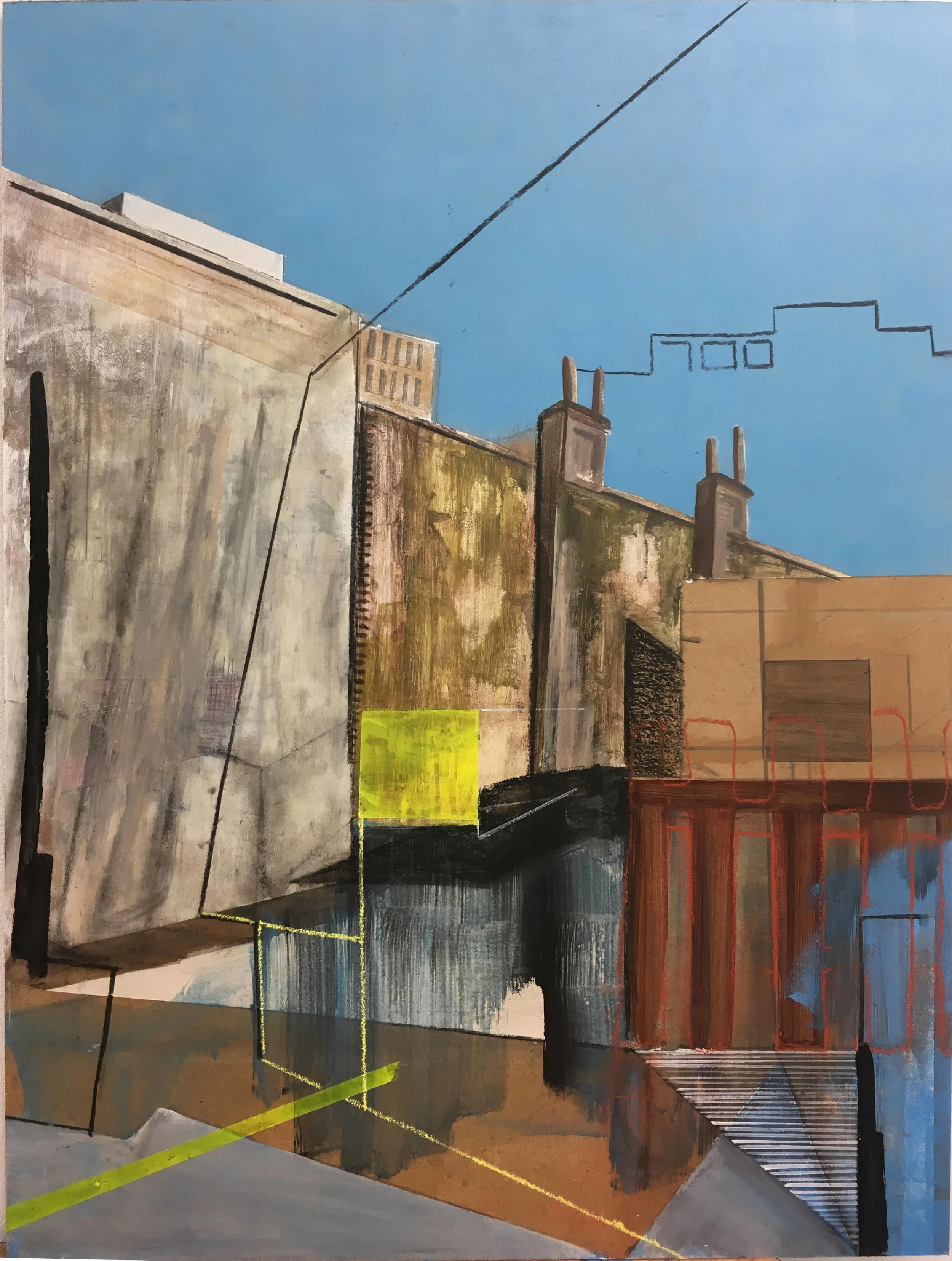
Consider the emotional effect of the image. Soft abstract forms, muted landscapes, monochrome photography, and line drawings tend to suit restful interiors. A bolder artwork can also work, especially when its palette is echoed in a cushion, throw, or small decorative detail. Choose one dominant visual idea and allow it to lead the room.
If you are an artist or collector, you can also submit your art to bring a more personal perspective into your decorating story. A meaningful piece often creates a stronger connection than a print selected only because it matches the bedding.
Build the room around the artwork
Once the art is selected, identify two or three colors or materials within it that can be repeated subtly. A warm beige in a painting might appear in linen bedding, while a charcoal mark could relate to a black bedside lamp. These echoes should be quiet rather than exact, creating cohesion without making the room look overly coordinated.
Texture can provide balance when the art is visually smooth. Pair a flat print with a boucle bench, washed linen, woven rug, or timber bedside table. Conversely, an expressive textured canvas may need clean surfaces and understated textiles around it. The aim is to create contrast through materials while keeping the overall composition simple.
| Artwork choice | Best supporting palette | Suitable placement | Overall effect |
|---|---|---|---|
| Soft abstract painting | Warm white, taupe, pale wood | Above the bed | Calm and organic |
| Monochrome photograph | Charcoal, ivory, black accents | Opposite the bed | Graphic and refined |
| Small colorful print | Neutral bedding with one echoed tone | Beside a chair or dresser | Personal and lively |
| Large textured canvas | Simple furniture and plain linens | On the main feature wall | Sculptural and tactile |
Frame and position with care
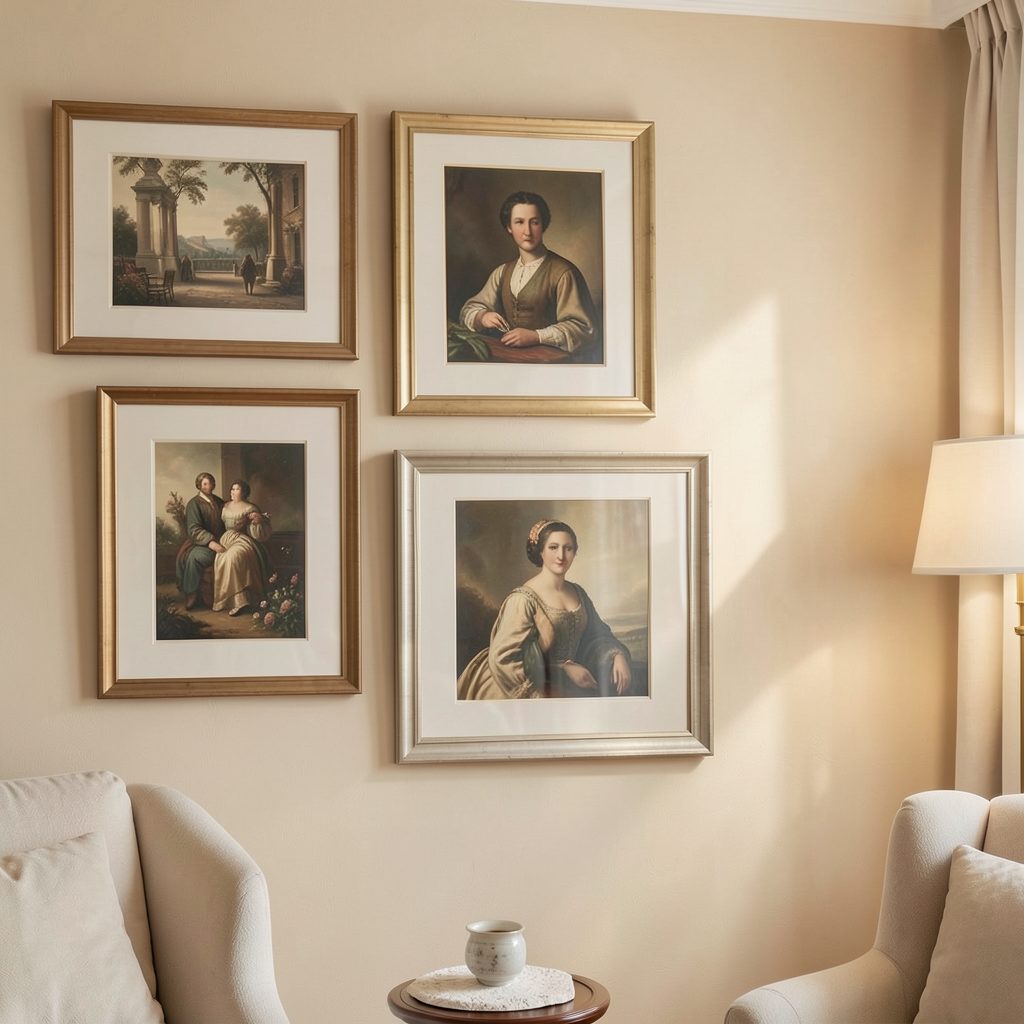
The frame should support the artwork rather than compete with it. A slim black frame gives definition to a monochrome image, while pale oak can soften a neutral bedroom. Gallery-style framing with a generous mount works particularly well for smaller works because it increases their visual presence and gives the composition room to breathe.
When hanging art above the bed, leave enough space between the lower edge and the headboard so the arrangement feels connected but not cramped. In many bedrooms, approximately 15 to 25 centimeters creates a comfortable relationship, although a tall headboard may require a little more distance. Always view the proposed position from the doorway and from the pillows before making final holes.
If the artwork sits above a console or dresser elsewhere in the room, use the furniture as an anchor and keep the arrangement proportional. Focus LDN’s guide to styling a console offers useful principles for balancing wall art with the surface below, even when you are displaying just one piece.
Let lighting reveal the work
Lighting changes how artwork feels throughout the day. Natural light can bring out subtle colors and surface detail, but direct sunlight may damage delicate prints or fade pigments over time. Position valuable work away from harsh afternoon rays, or use curtains and blinds to control exposure.
At night, avoid relying solely on a bright ceiling fixture. A bedside lamp, wall light, or directional picture light can gently illuminate the artwork while creating a more restful bedroom atmosphere. Warm bulbs usually flatter neutral palettes and natural materials, while a cooler light can make pale interiors feel stark.
Keep the lighting source visually quiet. A small adjustable wall lamp may be preferable to an oversized picture light in a compact bedroom. The art should remain the focus, with illumination supporting its presence rather than announcing itself.
Use architecture as part of the composition
The best placement responds to the room’s existing lines. A centered artwork can emphasize symmetry, while an offset position may balance a window, door, or angled wall. Pay attention to verticals and horizontals: the top of the artwork might align with a door frame, while its lower edge can relate to the headboard or bedside tables.
Artwork can also soften a room filled with hard edges. A flowing painting or organic photograph placed against a rectangular wall, sharp headboard, and linear furniture introduces visual movement. For more ideas, explore this guidance on softening architectural lines with artwork.
In a small bedroom, placing one piece opposite the bed can create a destination for the eye without adding furniture. In a larger room, a work above a reading chair can define a quiet corner and make the space feel considered rather than sparse.
Refine the final details
A minimalist scheme succeeds through thoughtful repetition and removal. Before finishing the room, step back and assess whether the artwork still feels central. If another object is competing with it, move or remove that object instead of adding more decoration around the art.
Use these practical checks to keep the composition balanced:
- Match the artwork’s scale to the bed, wall, or furniture beneath it.
- Repeat one color or material from the piece in a restrained way.
- Choose a frame that complements the room’s metal, timber, or textile finishes.
- Leave generous negative space around the artwork.
- Test the view from the doorway, bedside, and seated position.
A single art piece should feel discovered within the room, not imposed upon it. Give yourself time to live with the placement, especially if the artwork is large or visually expressive. Small changes in height, lighting, or surrounding texture can significantly alter the bedroom’s mood.
Choose the artwork that makes the room feel most like your own, then give it the space, light, and quiet setting it deserves. With careful placement and a restrained palette, one piece can transform a minimalist bedroom into a personal, restful retreat.