Art That Balances a Bold Patterned Sofa
A bold patterned sofa sets the room’s tempo. Choosing artwork for a room with this statement piece is not about repeating the upholstery; it is about creating contrast, balance, and a place for the eye to rest. The sofa can stay lively while the wall feels composed.
Start with what you already have. Examine the sofa’s largest shapes, strongest colours, and pattern direction, then measure the wall and track daylight. In Australia, a west-facing room can look different at sunset from a bright northern-facing room, so test colours and paper samples before committing.
Read the sofa before you choose art
Give the sofa visual priority. If the upholstery is large-scale, high-contrast, or dense, one busy artwork can make the room feel crowded. If it is patterned but soft in tone, artwork can carry more colour or drama. Decide which element should be noticed first.
Think of the sofa as pattern occupying the lower half of the room. Artwork should answer it from above, not mirror it exactly. Repeating the same visual weight creates noise; a quieter shape, simpler composition, or different scale feels intentional. A tiny print can look undersized over a wide sofa, while an oversized canvas can overpower a compact one. Aim for one dominant element, one supporting element, and neutral space for both.
Build a palette that gives the room breathing space
Pull a restrained palette from the sofa rather than adding every accent. Choose two colours already present, add a neutral such as warm white, charcoal, or sand, and reserve a brighter hue for a small detail in the artwork or elsewhere in the room. This gives the artwork a place in the scheme without making the sofa compete with every colour.
Colour matching need not be exact. A blue line in an abstract print can pick up a cobalt cushion, while terracotta can connect with a patterned throw and timber tones. Eucalyptus green, ochre, rust, deep navy, and chalky white are useful Australian references, but the sofa should decide the direction. Test samples in the room: finishes reflect daylight differently, and strong Australian sun can fade delicate colours. Ask about UV-filtering glazing for a sunny wall.
Choose a contrasting visual language
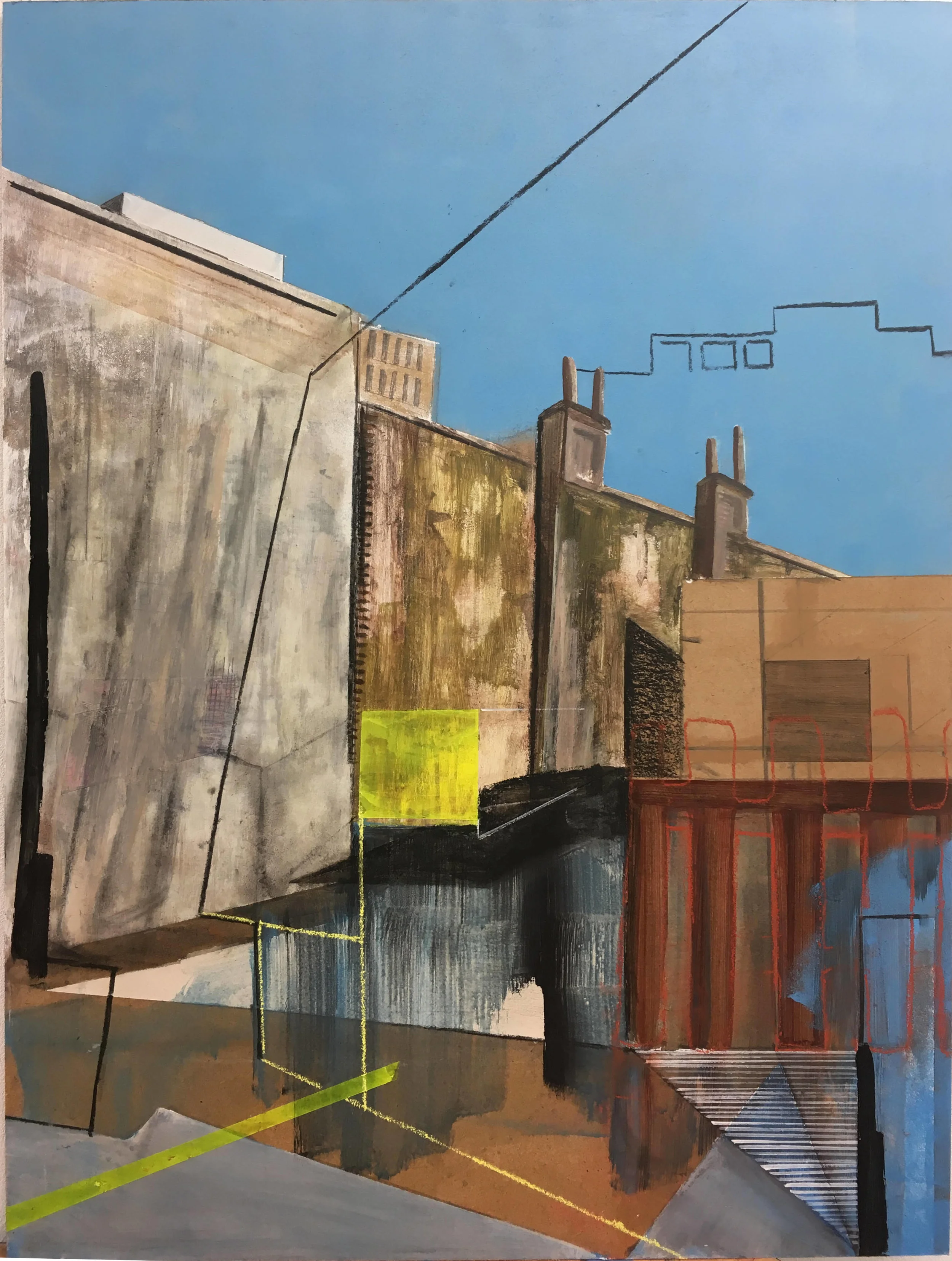
Look for contrast in visual language rather than trying to outdo the sofa. Against geometric or floral upholstery, a loose abstract painting, a botanical study, a black-and-white photograph, or spare line drawing creates calm with character and gives the eye an easier way into the room.
Scale is part of the artwork’s voice. A large, simple composition has enough presence over a wide sofa, whereas smaller pieces work best as a considered group. A vertical print can counter a horizontal sofa; a horizontal canvas can reinforce its shape when its colours are quiet.
Subject matter can echo the upholstery without repeating it. A literal botanical print beneath a leaf-patterned sofa feels repetitive, but a loosely rendered branch becomes a quiet connection. Soften sharp geometry with brushy edges, or pair crisp line work with a rounded, flowing pattern.
Plan the wall, frame, and spacing
Before hanging, treat the wall as a composition. Centre the arrangement over the sofa rather than the room, unless the layout supports an intentional shift. Keep the lower edge of the frame a considered distance above the backrest and check the proportion from the doorway. The Focus LDN guide on decorating around art offers a step-by-step approach to balancing a patterned centrepiece.
- Measure the sofa and wall width before choosing a frame.
- View the artwork at actual size from across the room.
- Note the wall’s light and nearby furniture heights.
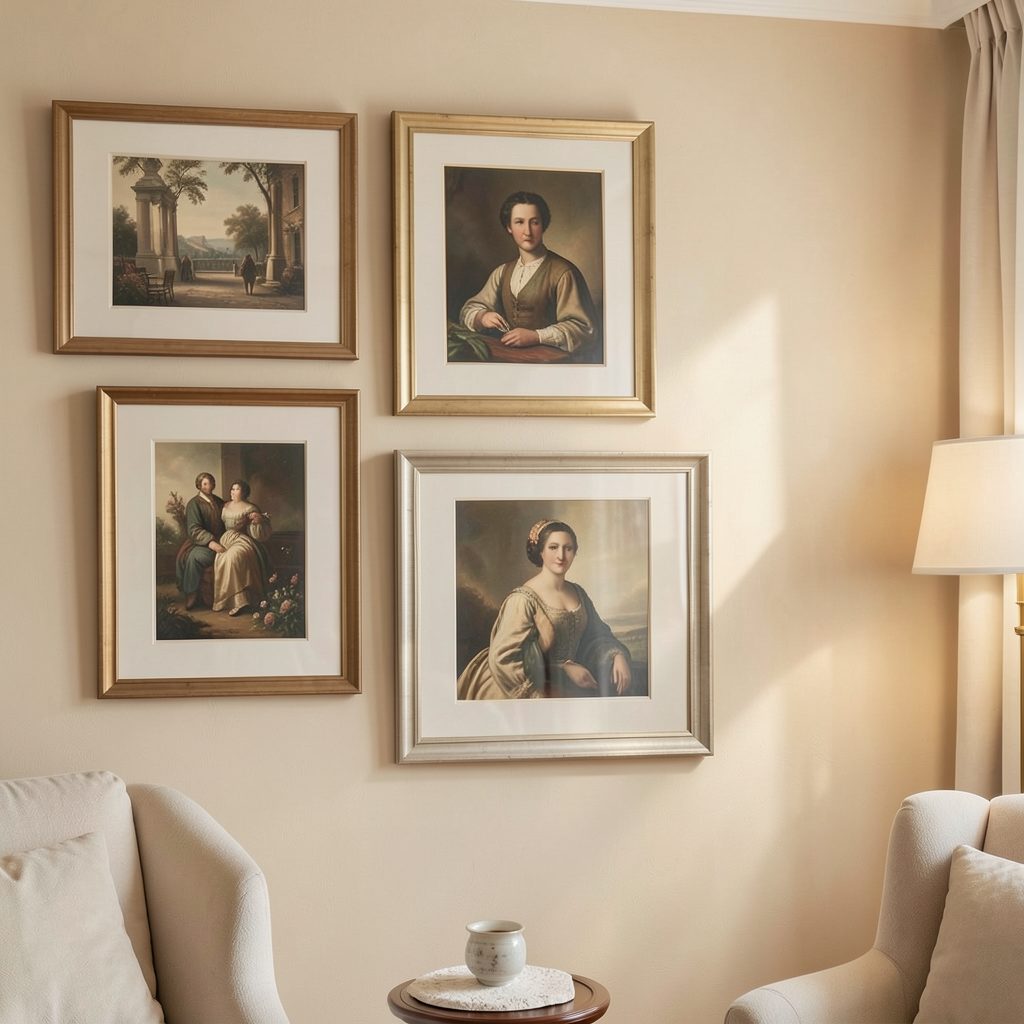
The frame is part of the artwork’s contrast. A slim frame suits graphic work, while a deeper frame gives textured or vintage pieces more presence. A pale mount creates separation when image edges feel busy.
- Add a light mount for extra visual space.
- Keep hardware and hanging heights consistent in a group.
- Repeat one frame detail, not every one.
A final look from the doorway should reveal a clear relationship between sofa and artwork. If your eye travels between them without competing distractions, the scale and spacing are working. For a gallery wall, keep one frame profile and measure the gaps.
Find artwork that feels distinctly Australian
Local visual references can connect artwork to the room, especially in a city apartment or coastal house. Eucalyptus leaves, native grasses, ochre earth, harbour blues, and muted bushland greens sit well beside patterned upholstery. The subjects need not be literal; a colour relationship or organic line can carry the connection.
Melbourne, Sydney, Brisbane, Adelaide, and Perth each have commercial galleries, artist studios, and smaller open studios, so look beyond the big names. Melbourne’s studio culture, Sydney’s commercial gallery scene, and local open studios across the country can introduce you to emerging makers. Browse gallery art for a wider edit of gallery-led pieces.
Australian buyers should compare freight, framing, and insurance alongside prices in Australian dollars. A local maker may be easier to view and simpler to transport than a large canvas shipped interstate, while an interstate purchase can offer more variety. Galleries often separate artist proof prices from standard editions, and commissions may require a deposit. At an opening, “Do you have anything smaller?” is a casual way to ask about work that suits a first-home budget.
Compare the strongest art directions
Before you commit, compare contrast, scale, and colour. The right choice depends on whether the sofa remains the room’s anchor and the artwork gains enough attention to be appreciated.
Use this comparison to narrow the field:
| Artwork direction | How it balances the sofa | Best paired with | Keep in mind |
|---|---|---|---|
| Large abstract in one or two colours | Calm focal point for a wide sofa | Neutral wall, simple side table | Echo one upholstery colour |
| Quiet botanical print | Organic contrast without another motif | Linen, timber, pale wall | Keep the composition loose |
| Black-and-white photography | Texture and shape with controlled colour | Patterned cushions, black frame | Use a simple background |
| Graphic line drawing | Geometry with a lighter touch | Clean frame, empty wall | Keep marks sparse |
The strongest choice gives the sofa room to be expressive while making the artwork feel deliberate. If two options work, the quieter piece will usually sit more comfortably over time and leave space for future accessories.
Finish with one confident focal point
Once the artwork is chosen, give it room to be seen. A single well-proportioned piece can make a patterned sofa feel more intentional than a crowded wall. Let the upholstery, artwork, and wall occupy distinct visual roles so the room feels layered rather than busy.
If you have an artwork or a considered Australian interior to share, submit art and send it to the Focus LDN editorial team for consideration.