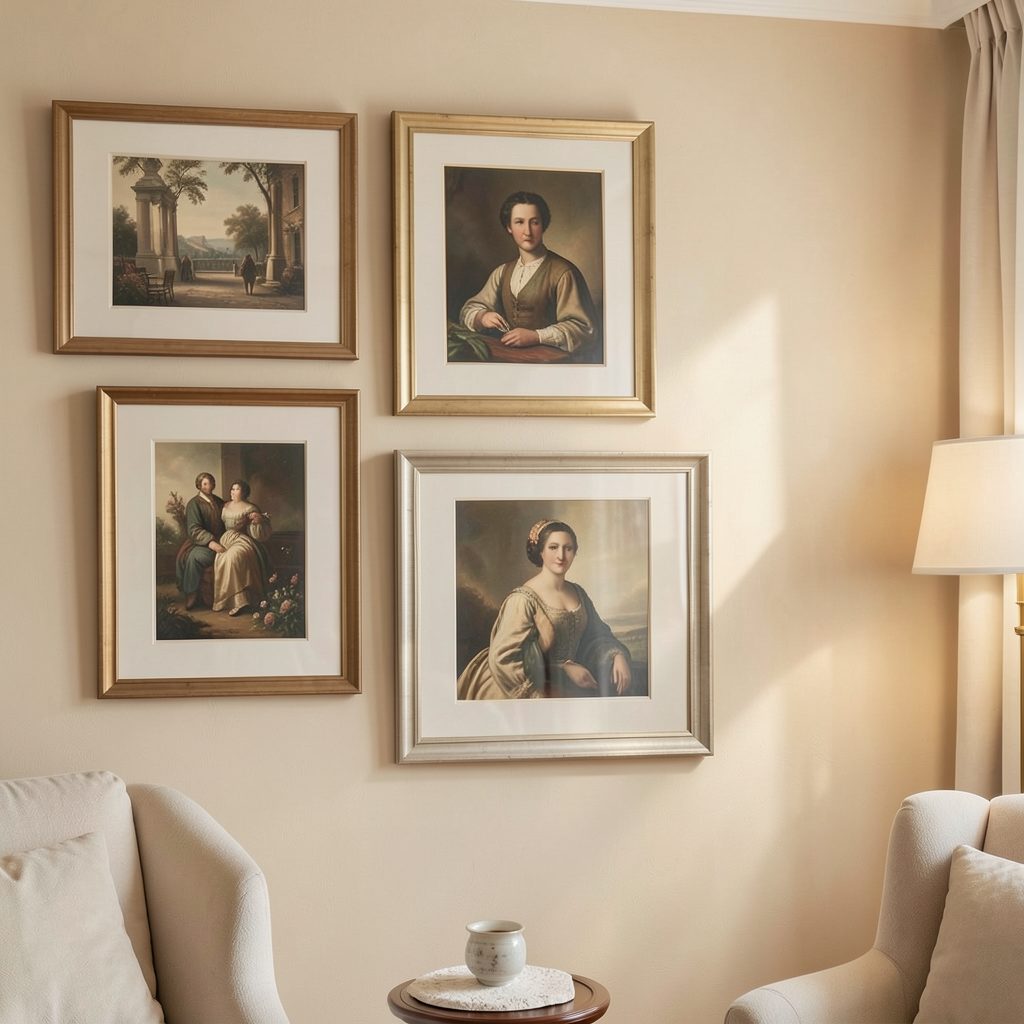
Coastal Bedroom Art and Frame Ideas
Choosing art and frames for a coastal-style bedroom starts with a feeling: calm, airy and naturally gathered rather than formally matched. The artwork should pick up the room’s light, textures and colours without making every object compete. Think pale timber, washed linen, soft white walls and the muted blue-green of shallow water, then use one or two stronger pieces to give the space character.
Begin with the room you actually have. Measure the wall, note where the sun falls and decide whether the display will sit above a bed, a desk or a reading chair. This prevents a common mismatch: beautiful art that feels too small in a broad Australian bedroom or too large in a compact Sydney apartment.
Begin with the Coastal Colour Story
Keep the base palette quiet, allowing the artwork to provide the strongest colour. A backdrop of warm white, sand, pale grey or soft blue will suit most coastal interiors, while natural oak furniture and textured linen prevent the room from feeling stark. The goal is a relaxed visual rhythm, not a strict match between the bedding, curtains and frames.
Artwork can repeat those colours without depicting the beach literally. Look for abstracts with brushed marine tones, botanical studies, black-and-white coastal photographs and prints inspired by erosion, reefs or open sky. A vivid navy or coral work can work beautifully in a neutral room. In coastal areas such as Byron Bay, locally created pieces may also capture the landscape more personally than generic ocean-themed prints.
Select Art for the Room’s Real Scale
Scale should determine the format before style. A large horizontal artwork can suit a wide wall above a king-size bed, while a pair of vertical prints may suit a narrower Sydney terrace bedroom. For a compact space, one generous print can look more confident than several small pieces. Leave enough breathing room around the work, but avoid a vast expanse of empty wall that makes it appear undersized.
Choose subjects that hold your attention from the bed. Fine details may disappear across the room, so consider bolder shapes, tonal contrasts or sufficiently large photographs. Australian buyers can explore original work through galleries in Melbourne, Sydney, Canberra and regional areas, or purchase limited editions directly from emerging artists. When buying Aboriginal artwork, source it through the artist or an authorised gallery and confirm attribution, reproduction rights and display requirements.
Choose Lightweight Frames with Staying Power
Light-coloured timber frames complement natural furniture without visually weighing down the wall. Pale oak, driftwood-finished moulding, off-white profiles and slim metal frames all work in a coastal bedroom. Canvas or paper with a natural edge can create an informal finish, while a simple white frame suits a more minimalist gallery-style interior. Avoid dark, heavily moulded frames unless they provide a deliberate contrast.
Consider the Australian climate as well as the look. Coastal homes may encounter humidity, salt air and strong ultraviolet light, particularly where windows overlook the ocean or face western sun. Ask about UV-filtering glazing, archival mounts and acid-free materials. Australian framers commonly work with A-series sizes such as A2, A3 and A4, and comparing quotes in Australian dollars can make custom framing easier to budget.
A Practical Checklist for Art, Frames and Layout
Start with the largest piece and build around it. Decide whether the composition will be symmetrical, asymmetrical or deliberately sparse before bringing home smaller works. These ways to display artwork offer useful guidance on spacing, visual weight and combining different frame styles.
Use this checklist when planning the display:
- Measure the available wall and the furniture beneath it before selecting any artwork.
- Build the colour scheme around two or three shared tones rather than matching everything perfectly.
- Mix one dominant piece with smaller works to create a clear focal point.
- Keep frames visually light, coordinating them through colour or material rather than identical profiles.
- Check the unframed dimensions, as finished framing can change both the appearance and scale.
- Leave time for delivery and custom framing, especially when ordering directly from an Australian gallery.
Bring Everything Together and Take the Next Step
Once the art is chosen, style the surrounding room so it supports rather than overwhelms the display. Drape the bedding loosely, add a woven basket or ceramic vessel and let natural materials provide texture. A few nautical objects can be effective, but shells, anchors and blue-and-white stripes used together may make the room feel themed. Restraint keeps the coastal mood convincing.
Plan the hanging method as well. For a brick wall, use suitable masonry fixings; for a timber wall, select anchors appropriate to the stud or frame. Renters can ask a professional installer about removable hanging systems or choose one substantial artwork that requires fewer fixings. Before the final piece arrives, view it in the room at different times of day, especially where afternoon sunlight reaches the wall.
Choose one artwork you love, arrange the room around it and gather supporting pieces before the frame order is finalised. Explore home decorating stories and subscribe for more ideas on gallery walls, frame selection and calm coastal interiors.