Clever places to hang art in a studio apartment
Living in a studio apartment often means making every square metre count. Australia's major cities — Sydney, Melbourne, Brisbane, Perth and Adelaide — all have thriving apartment markets where renters and buyers are getting used to compact footprints that demand creative solutions. With wall space reduced to bare plaster, a single feature wall, or one awkward gap beside a wardrobe, deciding where to hang art can start to feel like a puzzle rather than a pleasure.
For art lovers, though, the constraint is also an invitation. Hanging artwork in a studio is less about filling empty rooms and more about choosing the spots that anchor the eye, balance the layout and reflect the way you actually live. A single well-placed canvas over the sofa can transform the room, while a small framed print next to the kettle can turn a forgettable corner into a moment of daily joy.
The good news is that gallery-style interiors have never been more popular across the country. From the whitewashed terraces of Surry Hills to the warehouse conversions of Fitzroy and the high-rise studios of the Brisbane CBD, locals are leaning into minimalism, neutral palettes and carefully curated displays. The trick is treating your walls like a small but mighty stage, where every piece earns its place.
The following guide walks through unexpected corners, overlooked voids and prime focal points that work beautifully in compact Australian rentals. Each idea balances visual impact with the practicalities of small-space living, so the art enhances the apartment rather than overwhelming it.
Above the sofa or the bed
The single largest uninterrupted wall in most studios is the one running behind the sofa or directly above the bed. This is your headline wall, and it deserves a piece of equal ambition. In a snug Carlton apartment or a light-filled Newtown loft, anchoring this surface with one statement artwork creates a sense of grandeur that the rest of the room quietly supports.
For renters working within Sydney's competitive market, this is also the safest spot to commit to nails or rail hooks without later patching too many holes. A gallery rail, installed once and reused, lets you refresh the display seasonally without redecorating. Many locals pair this with themes borrowed from nearby institutions such as the Art Gallery of New South Wales or the National Gallery of Victoria, drawing inspiration from touring exhibitions and bringing a museum sensibility home.
Hallways and entryways
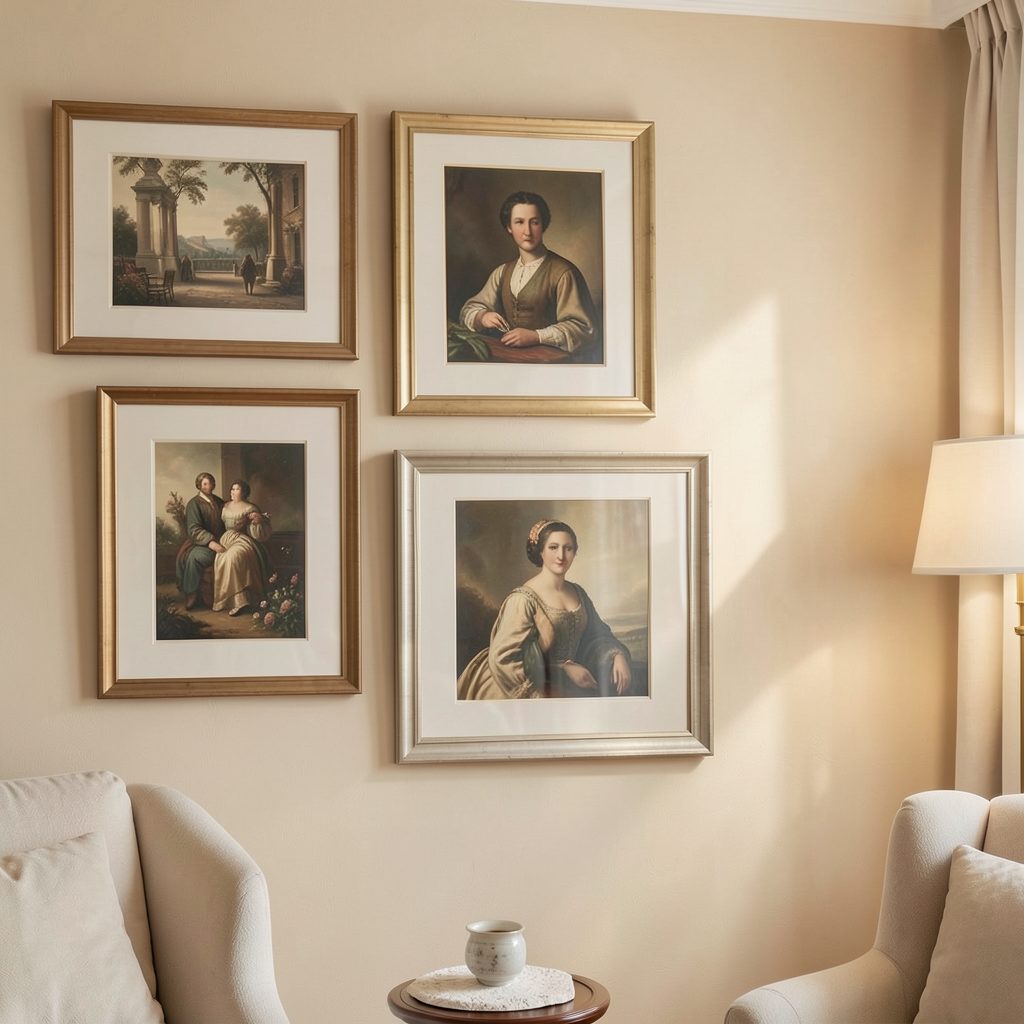
Hallways in inner-city studios are often narrow and under-lit, yet they offer the perfect corridor for a vertical gallery moment. Run a tight cluster of small frames down the length of the wall, keep spacing consistent and the eye is gently led through the space rather than stalled by it.
In a Brisbane apartment off Brunswick Street or a Melbourne flat in Brunswick itself, where original Victorian hallways sometimes survive, this approach actually complements the architecture. Hang each piece at eye level for the average adult — roughly 150 cm to the centre of the frame — and resist the temptation to centre everything perfectly. A slight stagger feels curated rather than clinical, which is the difference between a hallway and an honest-to-goodness gallery wall.
Above doorways and tall, awkward walls
Studio apartments frequently come with one wall that climbs well above head height and ends where a window or built-in robe begins. Rather than leaving that upper stretch empty, treat it as an opportunity to train the eye upward and trick the room into feeling taller. A print hung high above a doorway rewards anyone tall enough to spot it, while a narrow vertical piece can slot into the gap between a window frame and a wardrobe.
This trick is particularly effective in the older art deco apartment blocks of St Kilda and Potts Point, where ceiling heights run higher than average. For renters concerned about damaging cornices or heritage detailing, adhesive strips rated for local humidity do a clean job. Keep proportions in mind: a piece too small disappears into the void above the door, while something too large overwhelms the ceiling line.
Bathrooms and the kitchen splashback
Two of the most overlooked walls in any studio are right next to the shower and behind the kitchen bench, and both can host art when the conditions are right. Behind glass, away from direct water contact, a small framed print or textile-based work thrives in the humidity of a bathroom, giving guests something genuinely unexpected to look at while they brush their teeth.
In the galley kitchens common in Adelaide and Perth apartments, art near the splashback injects colour where tile catalogues usually dominate. Stick to works under glass, framed in sealed timber or metal, and avoid direct placement over the cooktop where steam and grease are unavoidable. A pair of coastal-themed pieces above a slim bench echoes the relaxed Australian palette while still reading as proper artwork.
Corners, alcoves and floating shelves
Every studio hides at least one corner that defies obvious furniture placement, and these awkward niches are ideal homes for a small piece of art. Beside a bedhead, between built-in cabinetry, or tucked against an angled wall under a loft bed, a propped canvas or single framed photograph can soften the corner without filling it.
Lean unframed works against the wall on a console, mount a floating shelf in a narrow gap, or build a tiny ledge using two brackets and a length of Tasmanian oak. The aim is to let the artwork feel discovered rather than displayed, the way a quiet object rewards a slow walk through the room. Curating a calm, considered home often comes down to a few well-chosen moments scattered through the apartment.
Simple guidelines for getting placement right
- Hang the centre of each frame at roughly 150 cm from the floor, then adjust in pairs so the visual line stays steady.
- Leave around 5 cm of breathing room between grouped pieces, and double the gap in particularly small rooms.
- Pick one wall as the focal point and let the others play supporting roles rather than competing with it.
- Mix frame finishes only after committing to one consistent element — colour, scale or subject matter.
- Photograph the wall before drilling to check spacing, using painter's tape to mark each corner first.
- Protect works from harsh direct sunlight, especially in north-facing Sydney apartments where UV exposure is strongest.
- When in doubt, lean rather than hang; a propped canvas moves in minutes and is ideal for renters.
Explore more apartment art ideas and gallery wall inspiration on Focus LDN, or subscribe for new decorating stories delivered to your inbox each week and start shaping the studio you've been imagining.