Quiet canvas: choosing art subjects for a Zen meditation room
A small meditation corner tucked into a Sydney apartment or a dedicated yoga room in a Brisbane townhouse can transform a stressful day into something softer. In Australian homes, where floor space often competes with bright windows and harbour or bushland views, the artwork on the wall needs to work quietly rather than loudly. Choosing subjects that slow the eye and steady the breath turns a corner of the home into a true restorative space.
The subject matter matters as much as the frame or the palette. Photorealistic portraits, busy street scenes, or high-contrast graphic prints can pull attention outward, while softer motifs invite the gaze to rest. For anyone curating a meditation area in Melbourne's inner-city flats or a sunroom in Adelaide, the rule is simple: choose subjects that feel like a long exhale.
Botanical studies and quiet greenery
Plants and flowers have long been associated with calm, and the right botanical artwork can anchor a meditation nook without crowding it. A single pressed eucalyptus print, a watercolour of native wattle, or a delicate ink study of a fern speaks of growth without urgency. In coastal Australian homes, where banksia, tea tree and grevillea grow in nearly every garden, choosing artwork that echoes these familiar shapes creates a sense of continuity between indoors and the bush outside.
When selecting pieces, look for compositions with breathing room. A lone stem against a blank background or a soft wash of sage and muted ochre is far more restful than a dense tropical mural. Subtle gradients and limited colour palettes also play well against timber floors and linen cushions, two staples of the relaxed Australian interior.
Horizon lines and water imagery
Few subjects relax the mind as effectively as a calm horizon. Seascapes of the Great Ocean Road, washes of pale blue recalling Sydney Harbour at dawn, or a minimalist line where sea meets sand all work beautifully in a meditation room. The eye follows horizontals naturally, which encourages slower breathing and a quieter pulse. Prints and paintings in this style also tend to suit the low-profile furniture common in Australian apartments, where a meditation cushion, floor lamp and small side table often form the entire room.
Photographs of mist over the Dandenong Ranges or still water at Broome's Cable Beach can perform the same function as fine art, provided the tonal range stays gentle. Avoid stormy skies or choppy surf; the aim is the visual equivalent of slow, rhythmic breath.
Line drawings and contemplative marks
Line-based art, including Japanese-inspired ink work, continuous contour drawings, and simple botanical outlines, suits a Zen-influenced room particularly well. The economy of a single confident stroke leaves space for the imagination, which mirrors the mental quiet cultivated in meditation practice. Many Australian printmakers and ceramicists sell small editions of these works at weekend markets in Fitzroy, Paddington and Fremantle, making it easy to find pieces with local character without overwhelming the room.
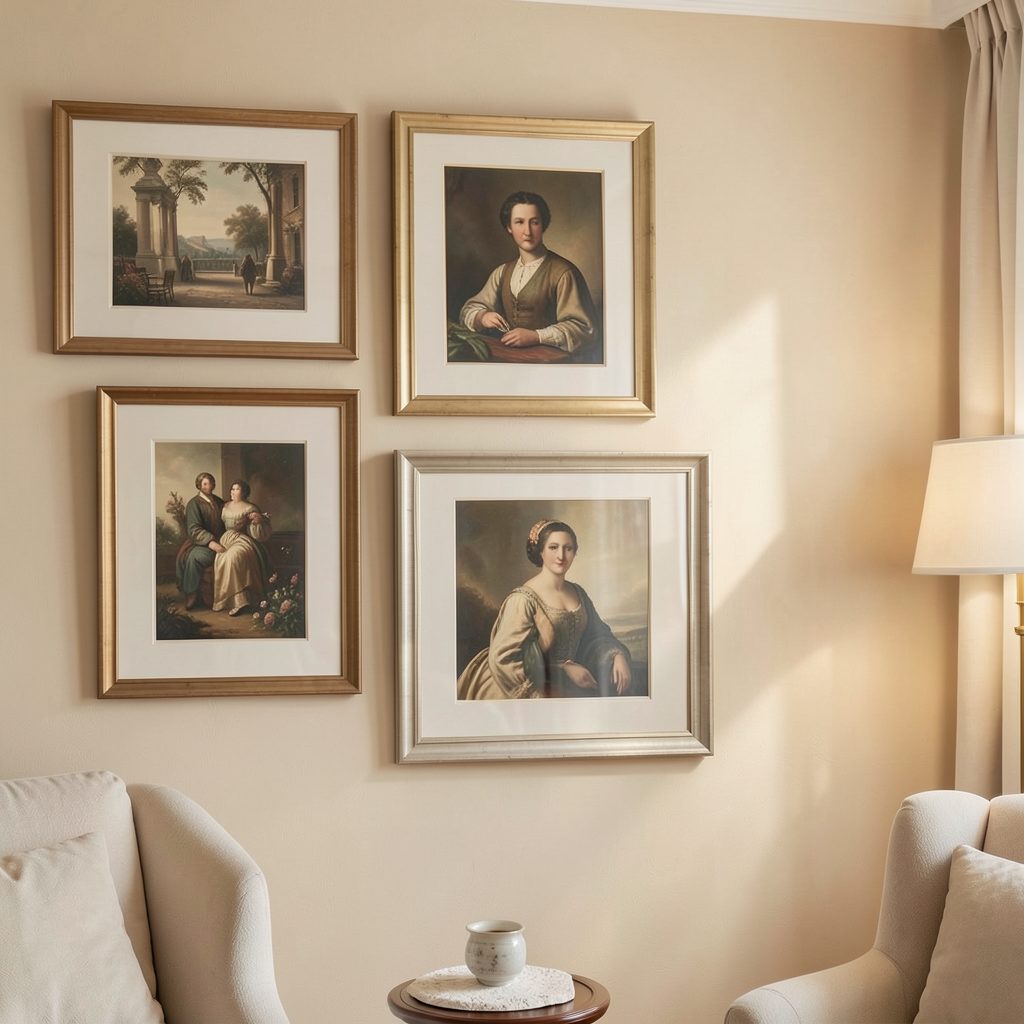
Pairing line drawings with a neutral matboard and a thin oak or black frame keeps the composition airy. Those who prefer gallery-style arrangements can explore decorating a minimalist gallery wall for layout ideas that preserve openness between pieces. The goal is to let each mark breathe rather than compete.
Soft abstraction and colour fields
Abstract washes, gradient skies and large fields of muted colour create a meditative backdrop without imposing a narrative. Think soft sand tones, dusty rose, faded terracotta, or pale eucalyptus green, colours drawn directly from the Australian palette. These pieces function almost like a visual breath, offering the eye something to rest upon without demanding interpretation.
Rothko-inspired colour field works have grown popular in Australian design circles, partly because they pair well with the soft natural light that pours into north-facing rooms during the southern hemisphere's longer summer afternoons. Hanging one large piece above a meditation bench, rather than a cluster of smaller works, allows the room to feel expansive rather than curated.
Indigenous art with cultural respect
For many Australians, a meditation room is also a place to honour Country, and Indigenous artwork can bring profound meaning to such a space. Aboriginal and Torres Strait Islander art carries deep spiritual content tied to land, ancestors and dreaming stories, so it deserves careful sourcing. Always buy from reputable galleries, Indigenous-owned studios, or certified art centres represented by bodies such as the Indigenous Art Code. Under Australia's Resale Royalty scheme, eligible artists receive a percentage when their work is resold, supporting ongoing creative practice.
When displaying Indigenous works in a meditation room, treat the piece with the reverence it carries. Avoid hanging it above a cluttered shelf or in direct harsh sunlight, and consider the orientation and lighting as part of the respect shown to the artist and their story.
Quiet landscapes and soft photography
Photography has its own place in a Zen-influenced room, particularly when the subjects are unhurried. Fog over the Blue Mountains, light on a Norfolk pine at sunset, or a single boat resting on still water all work as visual mantras. Local photographers in Tasmania, the Margaret River region, and along the NSW south coast frequently produce limited-edition prints suited to this purpose.
Choose large-format images with minimal foreground detail, and consider black-and-white or sepia tones for an even quieter effect. A single photographic print behind the meditation seat can act as a window to a place the mind can travel to during practice.
Choosing the right subject for your practice
- A lone botanical study, such as pressed eucalyptus or a wattle branch, in muted greens
- A soft horizon line with calm water, in blues, sands or pale greys
- Continuous line drawings of organic forms, framed in thin oak or matte black
- Large colour field works in tones borrowed from the Australian landscape
- A respectful Indigenous print from a certified art centre, displayed with care
- Misty or minimal landscape photography from local regions like the Blue Mountains or Tasmania
- Abstract washes that echo the natural light of your specific room orientation
For more inspiration on building a calm interior, explore the home decor journal where gallery wall layouts, frame guides, and minimalist room ideas are regularly published. Art lovers who also attend exhibitions will find practical advice on what to wear to gallery openings helpful when sourcing new pieces in person, particularly during the warmer months when Sydney and Melbourne host a packed calendar of openings.
Bring home a single piece that already feels like silence, hang it where the morning light can find it, and let the room settle around it.