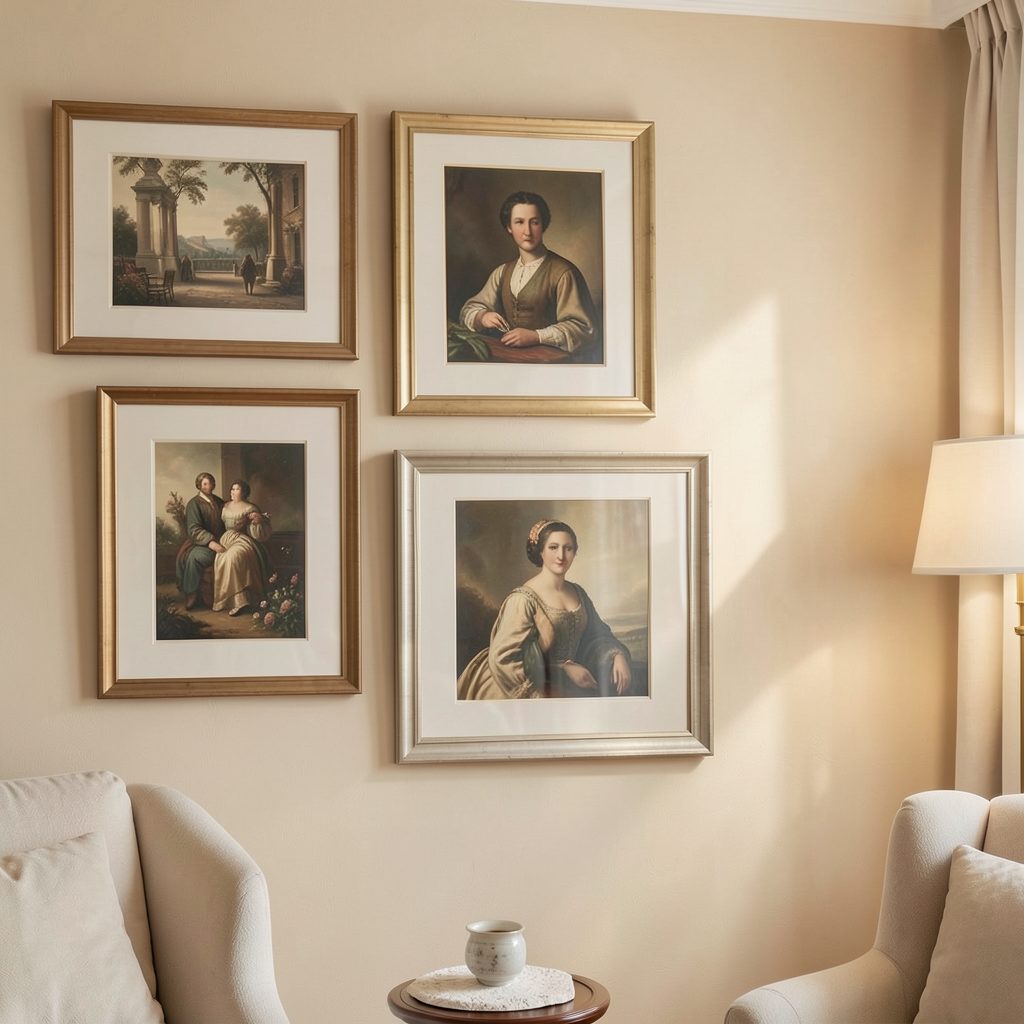
Bedroom gallery walls that feel calm, personal, and polished
The space above a headboard has powerful visual influence. It sits at eye level when you enter the room, frames the bed, and can determine whether the bedroom feels restful or unfinished. A thoughtfully arranged collection of prints, paintings, photographs, or small objects gives the wall a considered focal point without making the room feel overdecorated.
The best bedroom gallery walls balance composition with comfort. Artwork should relate to the width of the bed, echo the room’s color palette, and leave enough breathing room to preserve a sense of calm. The right arrangement can work in a compact city bedroom, a generous primary suite, or a guest room with a simple upholstered headboard.
Before choosing individual pieces, think about the mood you want to create. Soft landscapes, abstract shapes, botanical studies, and monochrome photography are naturally suited to a sleeping space, while brighter artwork can add energy when the rest of the room is restrained.
Choose a layout that suits the bed
A symmetrical arrangement is the easiest place to begin. Matching frames placed in a neat grid create order and make the bed feel anchored. Two rows of three smaller works can suit a wide headboard, while a single row of three or four prints works well above a narrower bed.
A more relaxed salon-style layout introduces varied frame sizes and a less rigid outline. Keep the overall shape balanced, even if the individual pieces differ. Arrange the artwork on the floor first, using paper templates if necessary, so you can adjust the composition before making holes in the wall.
The width of the collection should generally be between half and two-thirds of the bed’s width. This proportion gives the display presence while keeping the wall visually connected to the furniture below. If the headboard is especially tall, leave a clear gap between its top edge and the lowest frame.
Match scale to the sleeping space
Large artwork creates a quiet, sophisticated statement above a headboard. A single oversized canvas or framed textile can be especially effective in a minimalist bedroom because it provides color and texture without introducing many separate objects. Choose a piece with a strong composition that can be appreciated from across the room.
Smaller works offer greater flexibility and allow the collection to evolve. They are useful when you already own several prints or want to combine personal photographs with purchased art. Keep the spacing consistent, usually between five and eight centimeters, to prevent the display from appearing scattered.
| Arrangement | Best for | Visual effect | Suggested spacing |
|---|---|---|---|
| One large piece | Minimal bedrooms and wide walls | Calm and dramatic | 10–15 cm above the headboard |
| Three aligned works | Narrow or medium beds | Balanced and adaptable | 5–8 cm between frames |
| Two-row grid | Broad headboards | Structured and polished | Equal gaps on every side |
| Organic cluster | Eclectic interiors | Collected and personal | Vary slightly, but maintain an outer boundary |
Build a calming visual palette
A bedroom art collection does not have to match the bedding exactly. Instead, repeat one or two colors from the room in subtle ways. A rust-colored detail in a print might connect with a wool throw, while a muted blue can link artwork to curtains or painted walls.
Texture is equally important. Linen mounts, wooden frames, handmade paper, and lightly raised surfaces add depth without demanding intense color. For a serene gallery wall, combine matte finishes with a limited palette of cream, charcoal, clay, olive, or dusty blue.
Black-and-white artwork is a reliable foundation for a modern bedroom, particularly when the room already contains patterned textiles. If the interior is very neutral, introduce one tonal accent through a smaller print rather than filling the entire display with competing shades.
Select frames and spacing with care
Frames provide structure and help separate the gallery wall from the surrounding decor. Matching frames create a crisp, architectural look, while a carefully edited mix of oak, painted wood, metal, and antique finishes creates warmth. When mixing styles, repeat at least one element, such as the same mount color or a shared frame depth.
The frame should also relate to the headboard. A pale oak headboard pairs naturally with light timber or off-white frames, while a dark upholstered headboard can support black, bronze, or richly stained wood. Avoid using too many highly reflective finishes directly above the bed, where glare from bedside lighting may become distracting.
Mounts can make small artwork feel more substantial. A generous white or warm-toned border gives each image room to breathe and creates consistency across different proportions. Use acrylic glazing in rooms where safety is a concern, especially above a child’s bed or in a frequently rearranged guest room.
Add personality without visual clutter
A gallery wall should reveal something about the people who sleep in the room. Include a travel photograph, a family image, a small drawing, or a meaningful piece collected from an artist. The display feels more authentic when some works carry personal associations rather than being chosen purely for color.
For an unusual architectural touch, consider how a marked or textured surface might become part of the composition. A small framed piece inspired by brick engraving can introduce tactile character and connect the artwork to the history of a building, particularly in a loft or converted apartment.
Keep personal details edited. A collection of six strong pieces will usually feel more sophisticated than twelve items competing for attention. If you want to display sentimental objects, use one shadow box or shallow shelf rather than adding many small decorations to the wall itself.
Make the display work in daily life
Position the artwork securely and consider how the room is used at night. Frames should sit firmly against the wall, and heavier pieces require appropriate fixings rather than a single lightweight nail. Avoid placing fragile objects on narrow ledges above the bed, where they may shift during cleaning or movement.
Lighting can change the appearance of a gallery wall dramatically. Wall sconces, picture lights, or adjustable ceiling fixtures should illuminate the collection evenly without shining directly into the bed. Warm bulbs generally flatter artwork and support the restful atmosphere expected in a bedroom.
A simple edit before hanging can prevent common mistakes:
- Measure the bed, headboard, and available wall area before buying frames.
- Lay every piece on the floor and photograph possible arrangements.
- Keep the center of the composition close to eye level when standing.
- Check that bedside lamps, doors, and curtains will not interrupt the display.
- Use paper templates and painter’s tape to test the final outline.
Curating the wall can become part of a wider interest in how artwork is selected, grouped, and presented. Exploring gallery collection ideas can help you think beyond isolated decorations and create a more coherent story across the bedroom.
A successful display should feel intentional without looking overly designed. Start with the bed as the anchor, select artwork that supports the room’s mood, and adjust the arrangement until the negative space feels as considered as the pieces themselves. Sketch your preferred layout, gather a few frame samples, and begin with the work you would most enjoy seeing each morning.