Art Ideas for a Kids’ Bedroom That Can Grow With Them
A child’s bedroom needs to change as quickly as they do. Nursery prints can feel too young within a few years, while highly specific themes may become difficult to live with when a dinosaur-loving preschooler turns into a music-mad teenager. Art offers a flexible way to refresh the room without replacing every piece of furniture.
The most successful children’s rooms combine personality with a calm foundation. A considered mix of framed illustrations, photographs, posters and handmade pieces can suit a toddler, primary-school child and older teen with only a few swaps. The key is choosing artwork and display methods that can evolve.
Begin With A Flexible Colour Story
Start with two or three background colours that will remain appealing over time. Warm white, soft clay, dusty blue, sage and muted ochre work well with Australian light and can support changing artwork. A neutral wall does not have to look plain when layered with colourful prints, woven textures and timber frames.
Instead of matching every artwork to the bedding, choose a loose palette. A room inspired by the Australian bush might include eucalyptus green, sandstone, cream and charcoal, while a coastal scheme could use faded blue, pale timber and coral accents. These colours can still feel suitable when cartoon posters give way to photography or graphic design.
Choose Art With A Longer Lifespan
Look for images that invite interpretation rather than relying on a short-lived character or trend. Botanical studies, animal illustrations, planets, maps, abstract shapes and line drawings can suit several age groups. A large world map may begin as a source of bedtime stories and later become a useful reference for school projects.
Personal artwork deserves space too. Frame a rotating selection of paintings, collages and school projects rather than covering the entire room with them. A simple A3 frame with a deep mount can make a child’s drawing feel intentional, and the contents can be replaced without changing the overall arrangement.
For something distinctly local, consider prints by Australian illustrators or photographs of native birds and landscapes. If using First Nations artwork, buy from an Aboriginal-owned gallery or an established artist and learn about the work’s cultural context. This creates a meaningful connection to place rather than treating Indigenous motifs as a decorative pattern.
Build A Gallery Wall That Can Adapt
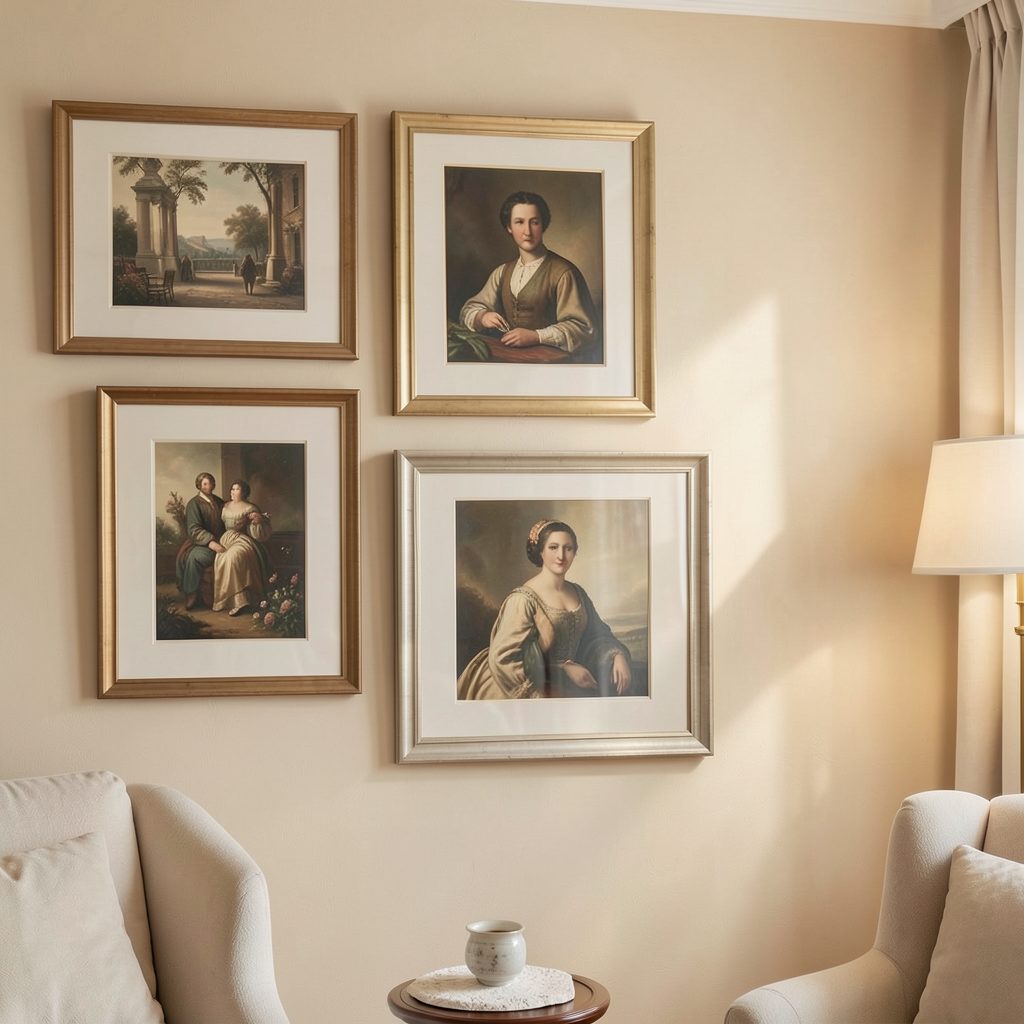
A modular gallery wall is ideal for a growing child because it can expand, contract or be rearranged. Begin with three to five pieces, leaving enough breathing room for future additions. Matching frames create a polished look, while a consistent mat colour can unify different artwork styles.
Use removable picture-hanging strips where possible, particularly in a rental in Melbourne, Sydney or Brisbane. For heavier frames, secure them properly into studs or use suitable wall anchors. Australian family homes often have plasterboard walls, and a lightweight frame system makes it easier to update the display without a trail of unnecessary holes.
Keep the layout relaxed rather than overly symmetrical. A large central print can anchor smaller works, while a narrow vertical piece can balance a low bookshelf. Before hanging anything, cut paper templates to the size of each frame and arrange them on the floor or wall with painter’s tape.
Match Display Ideas To Each Age
Different stages call for different types of artwork and access. A baby’s room benefits from bold, high-contrast shapes positioned where they can be seen from the cot. For preschoolers, place sturdy framed prints at eye level and add simple pictures of animals, vehicles or familiar places.
Primary-school children often enjoy having a say in the display. Create a small pinboard or magnetic rail for changing treasures, leaving the more permanent gallery arrangement above it. Older children may prefer band posters, film stills, architectural photography or their own digital artwork printed in a restrained format.
| Age stage | Art direction | Practical display choice |
|---|---|---|
| Baby and toddler | High-contrast shapes, gentle animals, simple landscapes | Secure frames high on the wall |
| Preschool years | Storybook scenes, letters, native wildlife | Sturdy frames and a low picture rail |
| Primary school | Maps, hobbies, handmade art and graphic prints | Magnetic rail or pinboard for rotation |
| Teen years | Photography, posters, typography and personal collections | Interchangeable frames with room to edit |
Make Room For Rotation And Storage
A growing collection needs a place to live between displays. Keep spare prints flat in an archival folder or portfolio, separated with acid-free tissue where possible. This prevents favourite pieces from being damaged in a cupboard and makes seasonal changes easier.
A narrow picture ledge can hold books and small framed works, but avoid placing heavy objects above a bed. If the room is compact, borrow the same thinking used in small bathroom storage: use vertical surfaces, choose slim furniture and keep frequently changed items accessible. A lidded box under the bed can hold old artwork, postcards and school certificates.
Rotation can follow the school calendar, a birthday or a change in interests. In Australia, strong summer sunlight can fade paper surprisingly quickly, especially in north-facing rooms. Use UV-filtering glazing for valuable prints and position delicate work away from direct afternoon sun.
Add Texture Beyond Framed Prints
Art does not have to mean a wall covered exclusively in rectangles. A woven wall hanging, fabric banner, small ceramic piece or carved timber object can soften the arrangement. These tactile elements are particularly effective in minimalist bedrooms, where a little texture prevents the scheme from feeling sterile.
A child’s room can also display objects connected to real experiences: a pressed leaf from a family trip, a shell collected responsibly from a beach, or a handmade pennant from a local market. Keep fragile and small items out of reach of toddlers, and check that every hanging object is firmly secured.
Australian interiors often benefit from natural materials that echo the outdoors. Cane, linen, wool and light timber sit comfortably beside artwork featuring gum leaves, native flowers or desert colours. The result feels connected to the local landscape without becoming a themed room.
Keep Framing Simple And Consistent
A restrained frame collection helps artwork transition from childhood to adolescence. Light oak suits colourful illustrations and coastal interiors, black frames give posters a sharper edge, and white frames keep small rooms feeling airy. Combining two finishes can work, but repeat each finish at least twice so the arrangement appears deliberate.
Choose acrylic glazing instead of glass for areas within easy reach, particularly in younger children’s rooms. Rounded corners, secure backing and properly fixed hooks improve safety. In homes where the room is used for play as well as sleep, avoid placing frames where toys regularly strike the wall.
Budget-conscious families can find affordable frames at Australian homewares retailers, craft shops and larger stores such as Kmart, while local framers are useful for unusual sizes or treasured pieces. Spend more on one or two archival-quality mounts and use ready-made frames for the rest.
Let The Child’s Voice Lead
A room should reflect its occupant, even when the overall styling is carefully edited. Invite children to choose one artwork, colour or subject that genuinely matters to them. The surrounding pieces can provide balance, so a favourite neon print does not need to dictate the entire room.
As tastes change, make editing part of the process rather than treating it as a decorating failure. Store sentimental pieces, donate what is no longer loved and give new work a considered place. Browse gallery wall ideas for ways to combine personal pieces with a polished arrangement that still feels relaxed.
Begin with one meaningful artwork, a dependable frame style and enough empty wall space for the years ahead. Add pieces slowly, protect them from harsh sun and make room for the child’s own creative work. Explore Focus LDN for further ideas on gallery-style interiors, then create a bedroom display that can keep pace with every new interest, phase and chapter.