Art for a dining room with a round table and no sideboard
A round dining table draws conversation toward the centre but can leave the surrounding walls visually empty. Without a sideboard, artwork must create a calm focal point and make the room feel finished.
Art for a dining room with a round table and no sideboard works best when scale begins with the furniture. The wall, pendant, table diameter and natural light should be considered together because a beautiful work in the wrong position can still make the room feel crowded.
In Australian homes, practical constraints shape the result: apartments may have short wall runs, terrace houses may offer one generous wall, and strong sunlight can damage vulnerable pieces. Arrange the display before buying to create a gallery-like room that still works for everyday dinners.
Measure the table and find the usable wall
Start with measurements rather than a picture. Note the round table's diameter, the distance from its edge to nearby walls, the ceiling height and the position of any pendant. Also mark doors, serving openings and windows, since these affect both walking space and the best viewing angle.
As a starting point, the artwork or grouped display should span roughly two-thirds to three-quarters of the table's diameter. On a 140 cm table, that suggests a composition about 95–105 cm wide. The artwork's lower edge can sit around 20–30 cm above the tabletop, but seated sightlines should have the final say. A paper template taped to the wall is more reliable than guessing.
Compact Sydney and Melbourne apartments often place dining within a combined kitchen-living area, where wall space and traffic routes are limited. Use our edit of compact-room artwork as a shortlist, then scale each idea to the available wall.
Build one strong focal composition
Choose the wall guests see upon entering. A long uninterrupted surface is ideal, but a shorter wall may work better if the alternative is beside a doorway, opposite glare or hidden by the pendant. Check the view from the adjoining room as well as from the table.
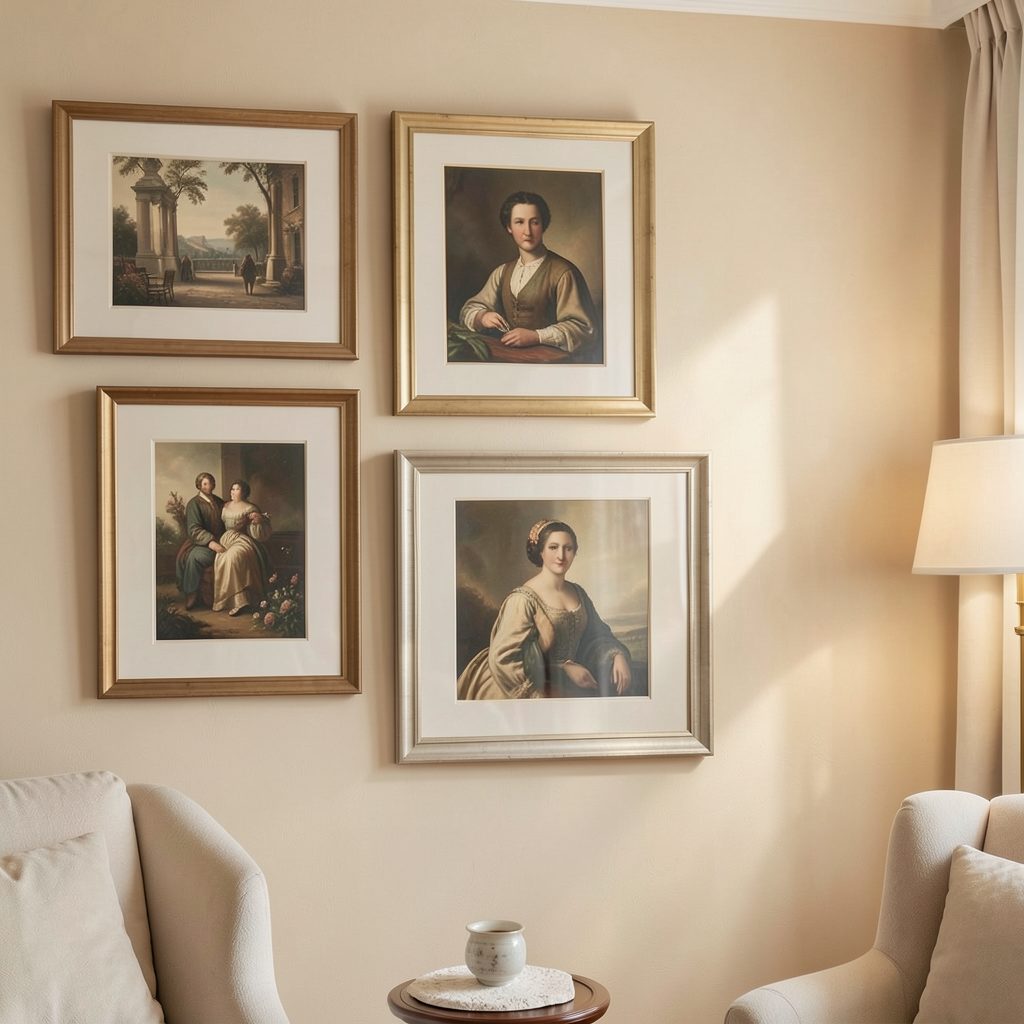
There are three dependable formats: one generous artwork, a balanced pair or a compact salon arrangement of five to seven pieces. A round frame can echo the table, while a horizontal composition can provide contrast and suit a wide wall. If the pendant is visually ornate, keep the wall display quieter; if the artwork is bold, choose a simple ceiling light.
Understanding the artwork's visual impact helps explain why scale beats quantity. With no sideboard to absorb visual weight, resist spreading many small pieces around the room. One clear relationship between table and wall usually feels more resolved.
Coordinate colour, frame and material
Pull one or two colours from the rug, chairs, table or crockery, then let the artwork introduce contrast. Deep green, rust, navy or charcoal can define a pale timber interior, while soft washed colours can settle a room with dark furniture. The frame should echo the architecture rather than compete with the print.
Australia has a strong custom-framing market, with skilled framers in Sydney, Melbourne and Brisbane working in timber, metal, acrylic and painted finishes. Ask for a sample or colour swatch before committing. A slim black frame can sharpen a light room, while natural timber can complement a warm, relaxed scheme.
For a salon wall, restrained identification adds polish without making the display feel domestic. Simple gallery label guidance can help with consistent label sizing and placement. For paper works, request UV-filtering glazing or acrylic, acid-free mounts and a sealed backing, particularly in Brisbane's humid climate or rooms with strong western sun.
Layer daylight with flattering evening light
Observe the room at several times of day before buying. Art opposite a window can look washed out, and west-facing Australian dining rooms can receive fierce afternoon sun. Sheer curtains, blinds or UV-filtering framing can reduce glare, but the chosen work should also hold its own in the room's normal light.
At night, the pendant and artwork need to share attention. A bold chandelier above a large framed work can create two competing centres, so keep one quieter and position lighting so shadows do not fall across the glass. Rechargeable LED picture lights suit rental homes; fixed wiring or dimmers should be handled by a licensed electrician.
With no sideboard for storage, keep the table uncluttered and practical. Choose a low, round centrepiece that echoes the table without blocking the view, perhaps a shallow bowl, small bud vase or Australian studio ceramics. Leave enough room for plates and shared dishes, and avoid tall flowers in front of the focal artwork.
Hang the work securely and check it in place
Australian wall construction varies. Older terrace homes in Sydney and Melbourne may have brick or masonry walls, while newer apartments can use plasterboard, concrete or composite panels. Buy anchors for the actual wall type and the weight of the frame; adhesive hooks are suitable only when both their rating and the surface are appropriate.
For a substantial piece, use two people, a level and the manufacturer's hanging hardware. Mark the centre of the arrangement on the wall, then transfer the measurements to the frame. Keep tools away from paper, pastel or a newly glazed surface.
Before fixing anything, tape a full-size paper mock-up to the wall and view it from the doorway and a seated chair. Check the lower edge against heads, the table edge and the pendant. This test prevents an artwork from looking balanced in isolation but interrupting conversation once people are seated.
Make focused choices for a polished room
Start with the room's strongest wall, then let the table and artwork establish a scale relationship. Keep the scheme cohesive by repeating a limited palette and balancing one substantial focal point with quieter details elsewhere.
Artwork and framing
- Select one uninterrupted wall before choosing a piece or print.
- Use roughly two-thirds to three-quarters of the table diameter as the display's total width.
- Repeat one or two room colours in the artwork, frame or mat.
- Specify UV protection, acid-free materials and a stable backing.
Layout and everyday use
- Test a paper template from standing and seated sightlines.
- Keep the centrepiece low and the table clear for serving.
- Layer daylight with a soft wash of evening light.
- Use wall-appropriate anchors or have a professional installer assess masonry.
Choose art for its scale, colour and connection to daily life, then select the frame to support it rather than define it. Subscribe to Focus LDN for practical decorating ideas, gallery-wall inspiration and fresh features for Australian homes.