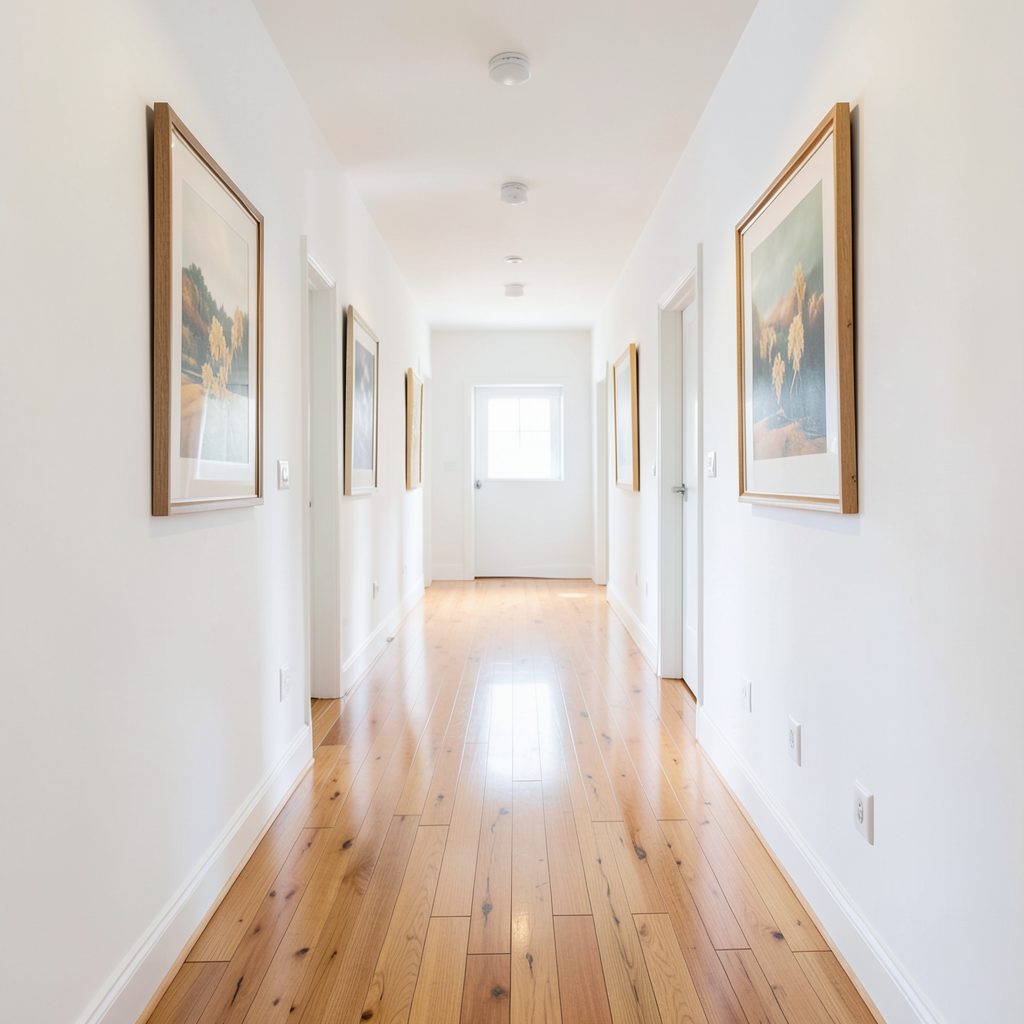
The term gallery has several meanings. In some contexts, it refers to a room or building where art is displayed for sale. In others, it describes a space where an artist can exhibit their work. A gallery in a house takes this concept and brings it into a residential setting — a dedicated room or passage designed specifically for displaying art.
In a domestic context, the gallery should not take up more than half of the floor space of the home. It exists to showcase a collection without dominating the main living areas.
Creating a Long Gallery in a House
A long gallery is one of the most effective ways to display art at home. This type of space — essentially an extended hallway or corridor — allows you to mix frame styles and orientations freely. Combining horizontal and vertical pieces along the same wall creates visual rhythm and keeps the eye moving.
When planning a long gallery, consider how the arrangement interacts with the architecture. The gallery should feel like a natural part of the home rather than an afterthought. Group works by theme, colour palette, or frame style to create cohesion across the length of the wall.
A long gallery in the home offers more than just a place to hang pictures; it becomes a curated journey through your personal taste. As you walk the corridor, each artwork contributes to a larger narrative, encouraging visitors to slow down and take in the details. Mixing different frame materials, from slim metal to chunky wood, adds texture and depth to the wall. Consider leaving generous breathing room between pieces so each work can be appreciated on its own terms. Lighting also plays a vital role — even, soft illumination along the length of the gallery ensures that every piece is visible without harsh glare or distracting shadows.
The scale and proportion of a long gallery should be determined by the architecture of the space itself. In narrower hallways, a single row of smaller works keeps the passage feeling open and uncluttered, while wider corridors can accommodate two staggered rows or a bold central anchor piece. Repeating a consistent element — such as a similar mat colour or frame finish — helps unify a diverse collection without making it feel monotonous. This thoughtful approach transforms an ordinary passageway into a destination within the home, giving the everyday journey between rooms a sense of purpose and delight.
For those who enjoy refreshing their interiors regularly, a long gallery offers remarkable flexibility. Swapping pieces seasonally or rotating artworks from storage keeps the display feeling current and engaging. This adaptability makes the gallery a living, evolving feature rather than a static installation. Whether you favour bold contemporary prints, delicate sketches, or family photographs, the extended wall format accommodates a wide variety of styles and sizes. By treating the hallway as a creative canvas, homeowners can express their personality continuously, ensuring the space never feels tired or overlooked, no matter how many times they pass through it.
Adding a Long Gallery to Your Home
If your home doesn't already have a long corridor suited to a gallery, you can create one by repurposing an existing space. A wide hallway, a landing, or even a passage between rooms can be transformed with careful placement of art and lighting.
Framing choices matter. Consistent frames lend a unified look, while mixing vintage and modern frames adds character. The key is to strike a balance that reflects your personal taste without overwhelming the space.
Size of a Long Gallery
The size of a long gallery depends on the available space in your home. Even a narrow hallway can work if the art is scaled appropriately. In larger homes, a gallery might span an entire corridor. The important consideration is proportion: artwork should be sized relative to the wall so that pieces neither crowd each other nor feel lost in too much empty space.
Location of a Long Gallery in a House
Choosing the right location is essential. A long gallery works best in a transitional space — somewhere people pass through naturally, such as a hallway connecting living areas. Avoid placing the gallery in a room that serves a competing function, like a busy kitchen or a home office. The gallery should complement the flow of the house rather than disrupt it.
Natural light can enhance the display, but direct sunlight may damage artwork over time. Consider the orientation of windows and use UV-filtering glass in frames where necessary.